“An external trigger communicates the next action the user should take. Often, the desired action is made explicitly clear.” — Nir Eyal Copy Share Image
“New habits are sparked by external triggers, but associations with internal triggers are what keeps users hooked.” — Nir Eyal Copy Share Image
“What would your user want to achieve by using your solution? Where and when will they use it? What emotions influence their… — Nir Eyal Copy Share Image
“companies generally use paid triggers to acquire new users and then leverage other triggers to bring them back.” — Nir Eyal Copy Share Image
“Internal triggers manifest automatically in your mind. Connecting internal triggers with a product is the brass ring of consumer technology.” — Nir Eyal Copy Share Image
“Hook Model, — trigger, action, variable reward, and investment — hooks form habits.” — Nir Eyal Copy Share Image
“Internal Triggers When a product becomes tightly coupled with a thought, an emotion, or a pre-existing routine, it leverages an internal trigger.” — Nir Eyal Copy Share Image
“In the case of internal triggers, the information about what to do next is encoded as a learned association in the user’s… — Nir Eyal Copy Share Image
“4. Owned Triggers Owned triggers consume a piece of real-estate in the user’s environment. They consistently show up in daily life and… — Nir Eyal Copy Share Image
“The Hook Model is designed to connect the user’s problem with the designer’s solution frequently enough to form a habit. It is… — Nir Eyal Copy Share Image
“But external triggers are only the first step. The ultimate goal of all external triggers is to propel users into and through… — Nir Eyal Copy Share Image
“Skill Investing time and effort into learning to use a product is a form of investment and stored value. Once a user… — Nir Eyal Copy Share Image
“variable rewards are a powerful inducement to repeat actions. Understanding what moves users to return to habit-forming products gives designers an opportunity… — Nir Eyal Copy Share Image
“In the Investment Phase, however, asking users to do a bit of work comes after users have received variable rewards, not before.… — Nir Eyal Copy Share Image
“1. Trigger A trigger is the actuator of behavior — the spark plug in the engine. Triggers come in two types: external… — Nir Eyal Copy Share Image
“Which Rewards Should You Offer? Fundamentally, variable reward systems must satisfy users’ needs, while leaving them wanting to re-engage. The most habit-forming… — Nir Eyal Copy Share Image
“an investment in the product serves as the string that pulls the user back. To do this, the habit-forming technology increases the… — Nir Eyal Copy Share Image
“2. Earned Triggers Earned triggers are free in that they can not be bought directly, but they often require investment in the… — Nir Eyal Copy Share Image
“3. Variable Reward What distinguishes the Hook Model from a plain vanilla feedback loop is the hook’s ability to create a craving.… — Nir Eyal Copy Share Image
“Loading the Next Trigger As described in chapter two, triggers bring users back to the product. Ultimately, habit-forming products create a mental… — Nir Eyal Copy Share Image
“Fostering consumer habits is an effective way to increase the value of a company by driving higher customer lifetime value (CLTV). CLTV… — Nir Eyal Copy Share Image
“Do This Now If you are building a habit-forming product, write down the answers to these questions: - What habits does your… — Nir Eyal Copy Share Image
“What do users really want? What pain is your product relieving? (Internal Trigger) 2. What brings users to your service? (External Trigger)… — Nir Eyal Copy Share Image
“You are now equipped to use the Hook Model to ask yourself these five fundamental questions for building effective hooks: 1. … — Nir Eyal Copy Share Image
“Remember and Share - The Investment Phase is the fourth step in the Hook Model. - Unlike the Action Phase, which delivers… — Nir Eyal Copy Share Image
“4. Investment The last phase of the Hook Model is where the user does a bit of work. The investment phase increases… — Nir Eyal Copy Share Image
“Remember and Share - For some businesses, forming habits is a critical component to success, but not every business requires habitual user… — Nir Eyal Copy Share Image
“Remember and Share - The Hook Model helps the product designer generate an initial prototype for a habit-forming technology. It also helps… — Nir Eyal Copy Share Image
“Remember and Share - Variable Reward is the third phase of the Hook Model, and there are three types of variable rewards:… — Nir Eyal Copy Share Image
“Before users create the mental associations that activate their automatic behaviors, they must first invest in the product.” — Nir Eyal Copy Share Image
“Step 1: Identify The initial question for Habit Testing is “Who are the product’s habitual users?” Remember, the more frequently your product… — Nir Eyal Copy Share Image
“Paid Triggers Advertising, search engine marketing, and other paid channels are commonly used to get users’ attention and prompt them to act.… — Nir Eyal Copy Share Image
“Then comes the investment. Newcomers are instructed to connect the app to their calendar service, granting Any.do access to the user’s schedule.… — Nir Eyal Copy Share Image
“Unlike in the Action Phase of the Hook discussed in chapter three, investments are about the anticipation of longer-term rewards, not immediate… — Nir Eyal Copy Share Image
“Owned triggers are only set after users sign up for an account, submit their email address, install an app, opt into newsletters,… — Nir Eyal Copy Share Image
“- Habits are defined as behaviors done with little or no conscious thought. - The convergence of access, data, and speed is… — Nir Eyal Copy Share Image
“Habit Testing.” It is a process inspired by the build-measure-learn methodology championed by the lean startup movement. Habit Testing offers insights and… — Nir Eyal Copy Share Image
“Pinterest clearly demonstrates the four stages of the Hook Model. It is a seamless flow, from the itch of the internal trigger… — Nir Eyal Copy Share Image
“Storing Value Unlike physical goods in the real world, the software that runs our technology products can adapt itself to our needs.… — Nir Eyal Copy Share Image
“Habit-forming technologies start changing behavior by first cueing users with a call-to-action.” — Nir Eyal Copy Share Image
“Imagine a time when your mobile phone rang but you didn’t answer it. Why not? Perhaps the phone was buried in a bag, making… — Nir Eyal Copy Share Image
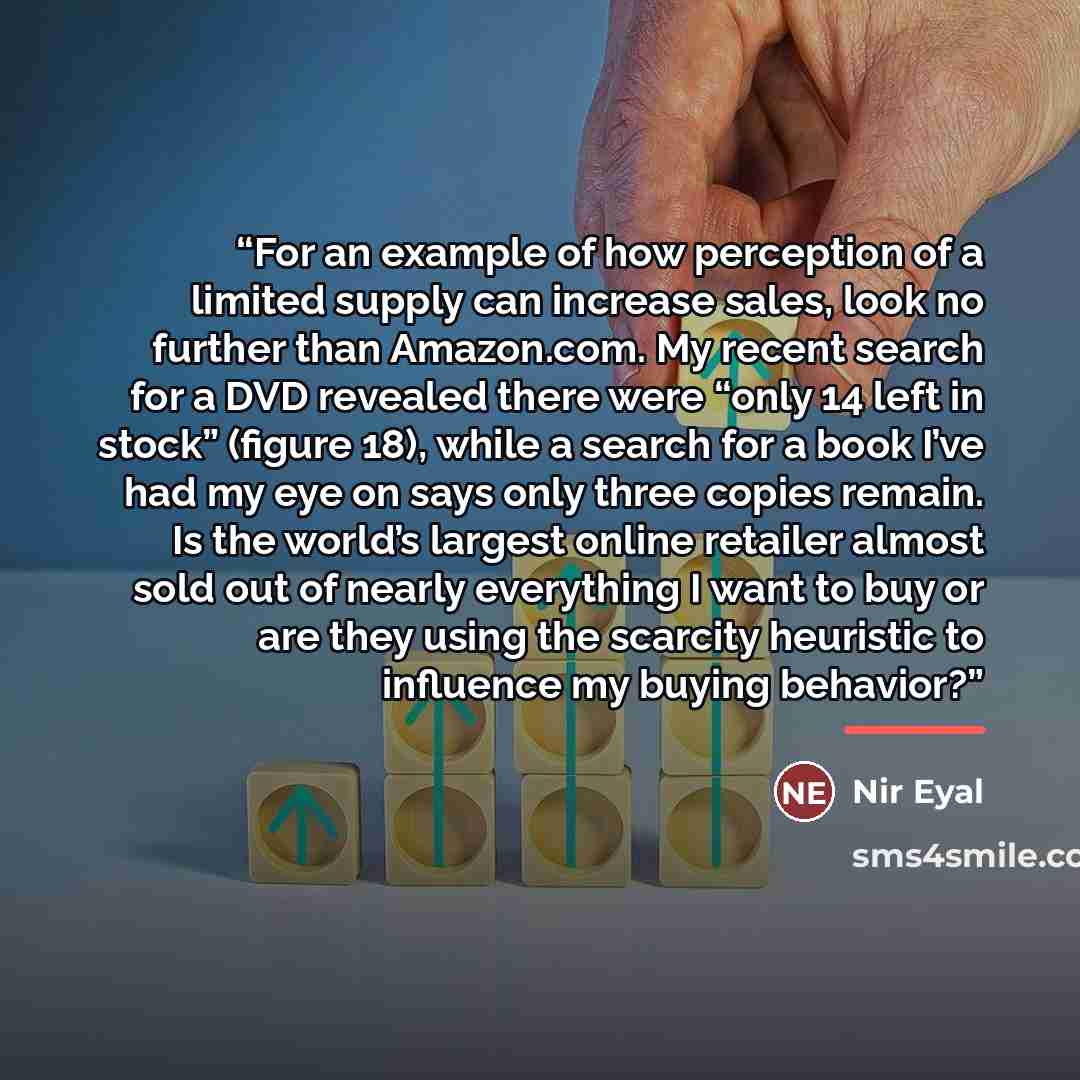
“For an example of how perception of a limited supply can increase sales, look no further than Amazon.com. My recent search for a DVD… — Nir Eyal Copy Share Image
“all humans are motivated to seek pleasure and avoid pain, to seek hope and avoid fear, and finally, to seek social acceptance and avoid… — Nir Eyal Copy Share Image
“The more users invest in a product through tiny bits of work, the more valuable the product becomes in their lives and the less… — Nir Eyal Copy Share Image
“Twitter The “feed” has become a social staple of many online products. The stream of limitless information displayed in a scrolling interface makes for… — Nir Eyal Copy Share Image
“Once a technology has created an association in users’ minds that the product is the solution of choice, they return on their own, no… — Nir Eyal Copy Share Image
“Instead of asking ‘what problem should I solve?’ ask ‘what problem do I wish someone else would solve for me?’”[cxxxi]” — Nir Eyal Copy Share Image
“Storing Value Unlike physical goods in the real world, the software that runs our technology products can adapt itself to our needs. To become… — Nir Eyal Copy Share Image
“From the follower side of the equation, the more Twitter users curate the list of people they follow, the better the service will be… — Nir Eyal Copy Share Image
“When bored, many people seek excitement and turn to dramatic news headlines. When we feel overly stressed we seek calm, perhaps finding relief in… — Nir Eyal Copy Share Image
“Remember and Share - Action is the second step in The Hook. - The action is the simplest behavior in anticipation of reward. -… — Nir Eyal Copy Share Image
Habit-forming products often start as nice-to-haves, but once the habit is formed, they become must-haves. — Nir Eyal Copy Share Image
![“1. Trigger A trigger is the actuator of behavior — the spark plug in the engine. Triggers come in two types: external and internal.[viii] Habit-forming products start by alerting users with external triggers like an email, a website link, or the app icon on a phone.” quote by Nir Eyal](https://sms4smile.com/quotes/img-quotes/7c6/nir-eyal-1258_habits_1-trigger-a-trigger-is-the-actuator-of-b_539667.jpg)



![“Instead of asking ‘what problem should I solve?’ ask ‘what problem do I wish someone else would solve for me?’”[cxxxi]” quote by Nir Eyal](https://sms4smile.com/quotes/img-quotes/805/nir-eyal-1258_problem-solving_instead-of-asking-what-problem-should-i_78727.jpg)