Comedy Quote by Kevin Simler
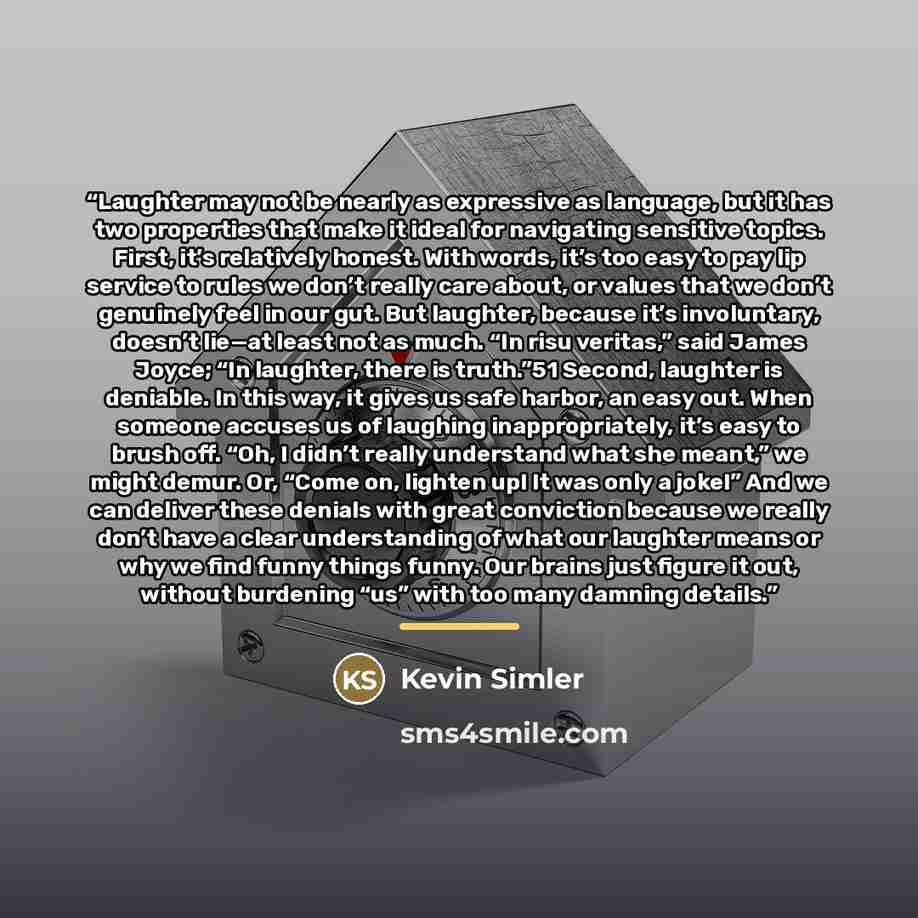
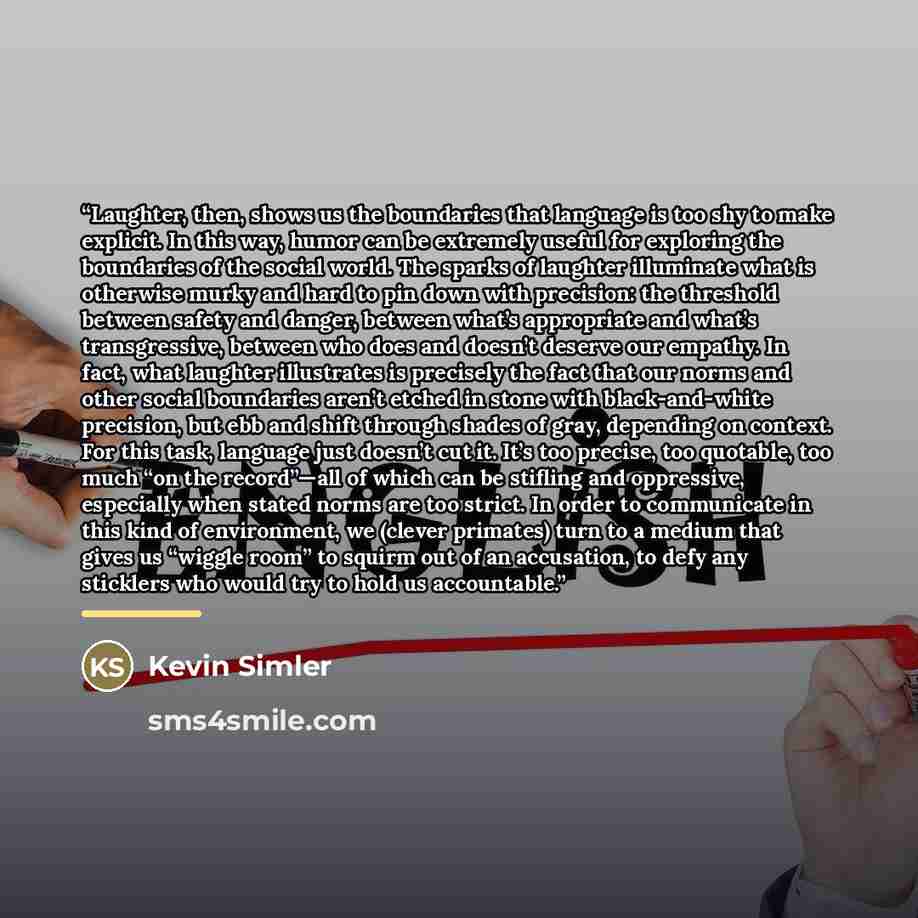
““Laughter may not be nearly as expressive as language, but it has two properties that make it ideal for navigating sensitive topics. First, it’s relatively honest. With words, it’s too easy to pay lip service to rules we don’t really care about, or values that we don’t genuinely feel in our gut. But laughter, because it’s involuntary, doesn’t lie—at least not as much. “In risu veritas,” said James Joyce; “In laughter, there is truth.”51 Second, laughter is deniable. In this way, it gives us safe harbor, an easy out. When someone accuses us of laughing inappropriately, it’s easy to brush off. “Oh, I didn’t really understand what she meant,” we might demur. Or, “Come on, lighten up! It was only a joke!” And we can deliver these denials with great conviction because we really don’t have a clear understanding of what our laughter means or why we find funny things funny. Our brains just figure it out, without burdening “us” with too many damning details.””
About This Quote
Laughter reveals honest feelings and offers a socially safe way to address delicate subjects, though it can be dismissed as frivolous.
In simple terms: Laughter shows truth and provides a safe exit.
Key Takeaway
Use humor to surface truth responsibly.
Themes
communication
truth
social dynamics
Mood
thoughtful
playful
Type
philosophical
inspirational
When to use this quote
- team meetings
- conflict resolution
- public speaking
- media commentary
Key Concepts
honesty
deflection
psychology
Questions to Reflect On
- When can laughter replace direct dialogue?
- How do you balance humor with respect?
A Different Perspective
Humor may be misinterpreted or undermine seriousness.