MAN, n. An animal so lost in rapturous contemplation of what he thinks he is as to overlook what he indubitably ought… — Ambrose Bierce Copy Share Image
“Man, n. An animal so lost in rapturous contemplation of what he thinks he is as to overlook what he indubitably out… — Ambrose Bierce Copy Share Image
PIG, n. An animal ("Porcus omnivorus") closely allied to the human race by the splendor and vivacity of its appetite, which, however,… — Ambrose Bierce Copy Share Image
MAMMALIA, n.pl. A family of vertebrate animals whose females in a state of nature suckle their young, but when civilized and enlightened… — Ambrose Bierce Copy Share Image
A single swallow, it is said, devours ten millions of insects every year. The supplying of these insects I take to be… — Ambrose Bierce Copy Share Image
MUMMY, n. - an ancient Egyptian handy, too, in museums in gratifying the vulgar curiosity that serves to distinguish man from the… — Ambrose Bierce Copy Share Image
Hippogriff, n. An animal (now extinct) which was half horse and half griffin. The griffin was itself a compound creature, half lion… — Ambrose Bierce Copy Share Image
WOMAN, n. An animal usually living in the vicinity of Man, and having a rudimentary susceptibility to domestication. — Ambrose Bierce Copy Share Image
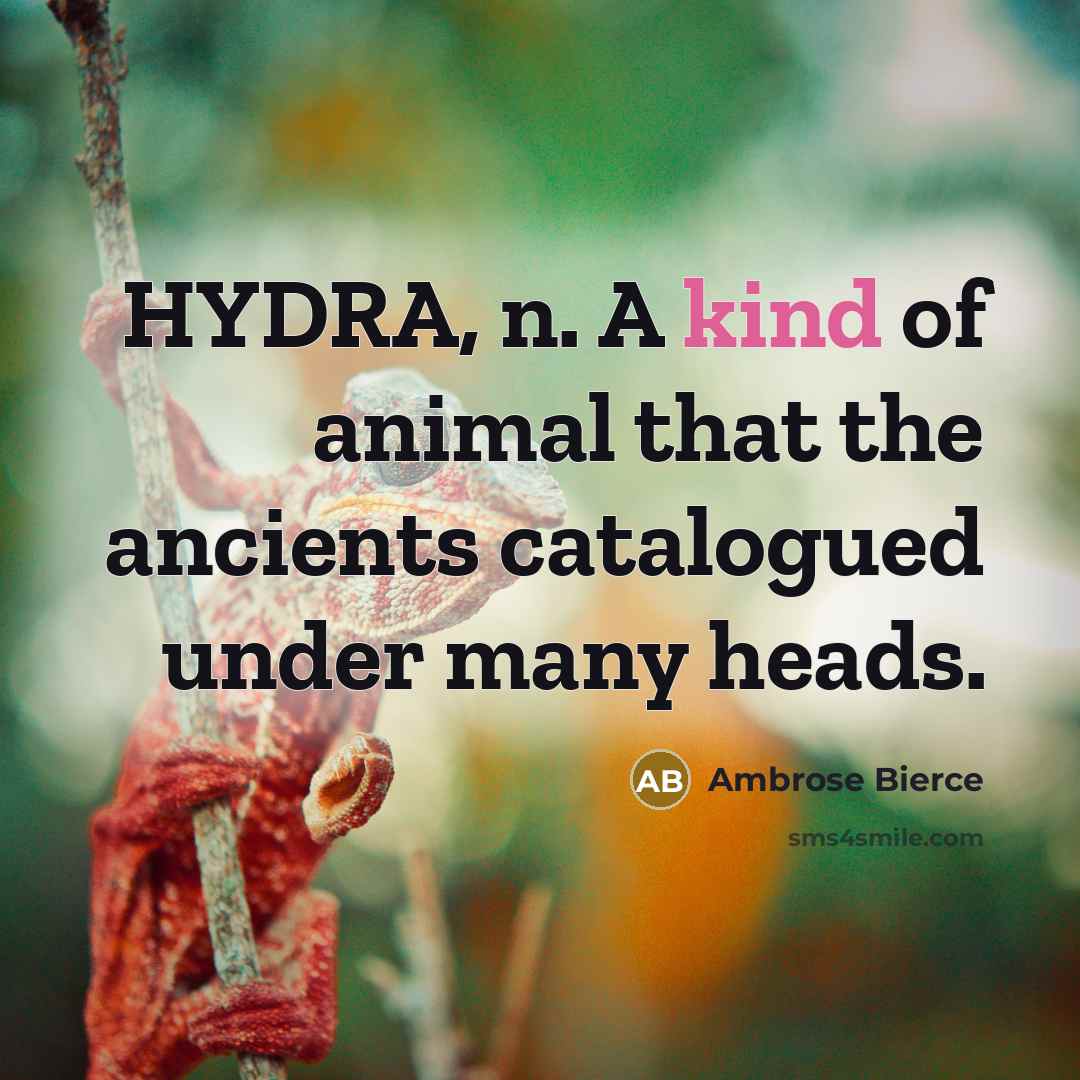
HYDRA, n. A kind of animal that the ancients catalogued under many heads. — Ambrose Bierce Copy Share Image
A leech who, having penetrated the shell of a turtle only to find that the creature has long been dead, deems it… — Ambrose Bierce Copy Share Image
CUNNING, n. The faculty that distinguishes a weak animal or person from a strong one. It brings its possessor much mental satisfaction… — Ambrose Bierce Copy Share Image
HYENA, n. A beast held in reverence by some oriental nations from its habit of frequenting at night the burial-places of the… — Ambrose Bierce Copy Share Image

LEVIATHAN, n. An enormous aquatic animal mentioned by Job. Some suppose it to have been the whale, but that distinguished ichthyologer, Dr.… — Ambrose Bierce Copy Share Image
ZOOLOGY, n. The science and history of the animal kingdom, including its king, the House Fly ("Musca maledicta"). The father of Zoology… — Ambrose Bierce Copy Share Image
ASS, n. A public singer with a good voice but no ear. In Virginia City, Nevada, he is called the Washoe Canary,… — Ambrose Bierce Copy Share Image
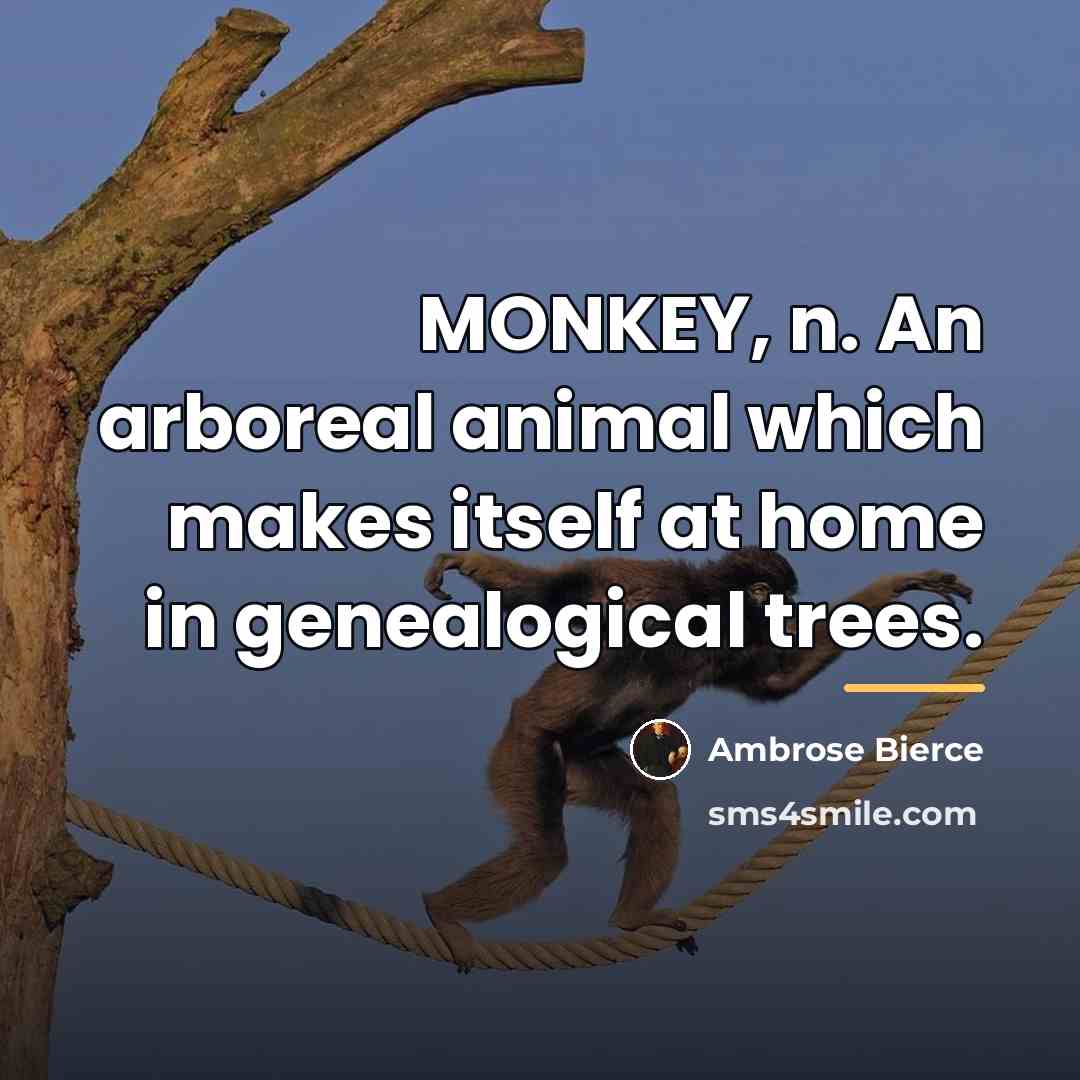
MONKEY, n. An arboreal animal which makes itself at home in genealogical trees. — Ambrose Bierce Copy Share Image
OBSESSED, p.p. Vexed by an evil spirit, like the Gadarene swine and other critics. Obsession was once more common than it is now. Arasthus… — Ambrose Bierce Copy Share Image
DECIDE, v.i. To succumb to the preponderance of one set of influences over another set. — Ambrose Bierce Copy Share Image
IMMORAL, adj. Inexpedient. Whatever in the long run and with regard to the greater number of instances men find to be generally inexpedient comes… — Ambrose Bierce Copy Share Image
REVIEW, v.t. To set your wisdom (holding not a doubt of it./ Although in truth there's neither bone nor skin to it)/ At work… — Ambrose Bierce Copy Share Image
CLOCK, n. A machine of great moral value to man, allaying his concern for the future by reminding him what a lot of time… — Ambrose Bierce Copy Share Image
RUBBISH, n. Worthless matter, such as the religions, philosophies, literatures, arts and sciences of the tribes infesting the regions lying due south from Boreaplas. — Ambrose Bierce Copy Share Image
There was never a genius who was not thought a fool until he disclosed himself; whereas he is a fool then only. — Ambrose Bierce Copy Share Image
Telephone, n. An invention of the devil which abrogates some of the advantages of making a disagreeable person keep his distance. — Ambrose Bierce Copy Share Image
WHANGDEPOOTENAWAH, n. In the Ojibwa tongue, disaster; an unexpected affliction that strikes hard. — Ambrose Bierce Copy Share Image
Jealous, adj. Unduly concerned about the preservation of that which can be lost only if not worth keeping. — Ambrose Bierce Copy Share Image
RIDICULE, n. Words designed to show that the person of whom they are uttered is devoid of the dignity of character distinguishing him who… — Ambrose Bierce Copy Share Image