TAKE, v.t. To acquire, frequently by force but preferably by stealth. — Ambrose Bierce Copy Share Image
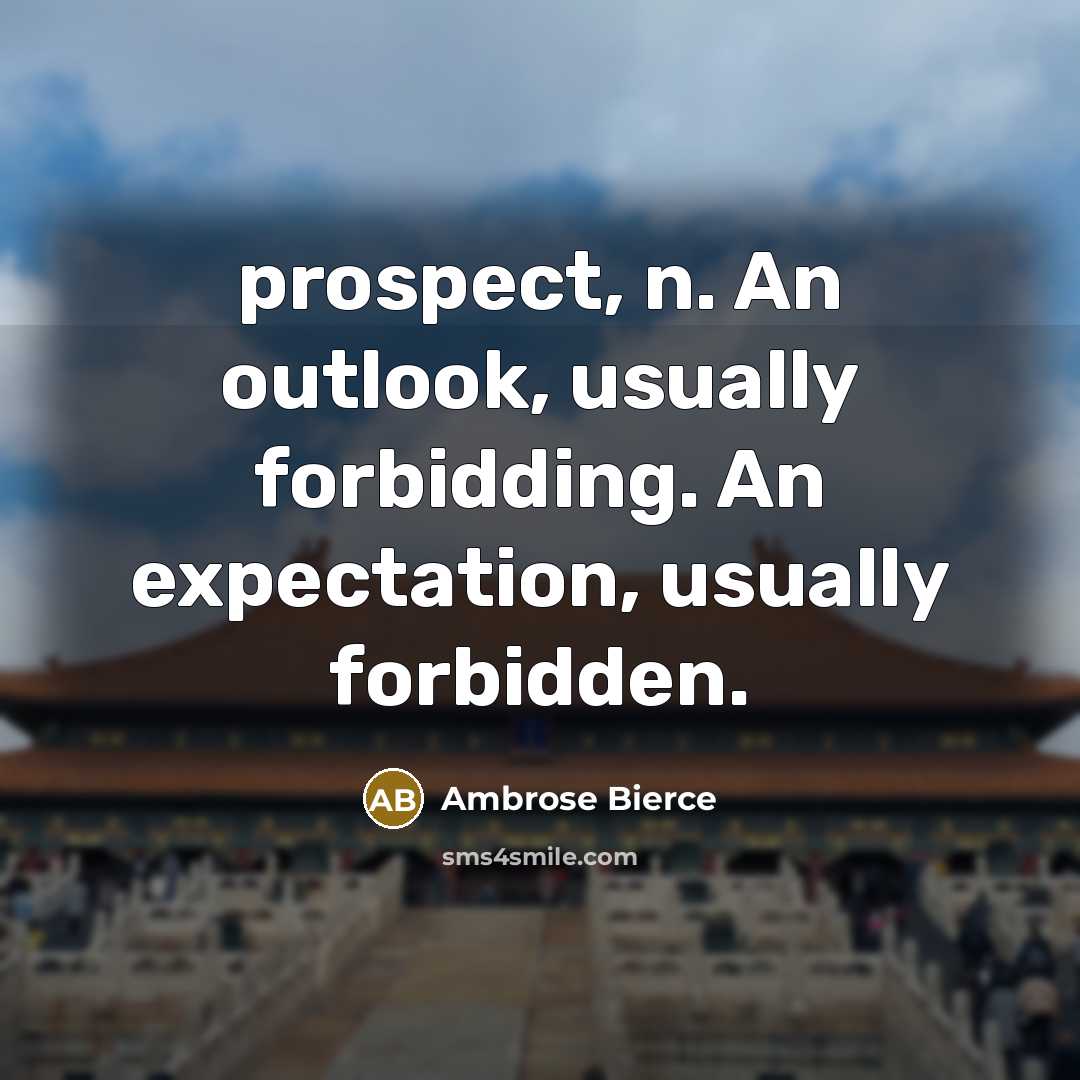
prospect, n. An outlook, usually forbidding. An expectation, usually forbidden. — Ambrose Bierce Copy Share Image
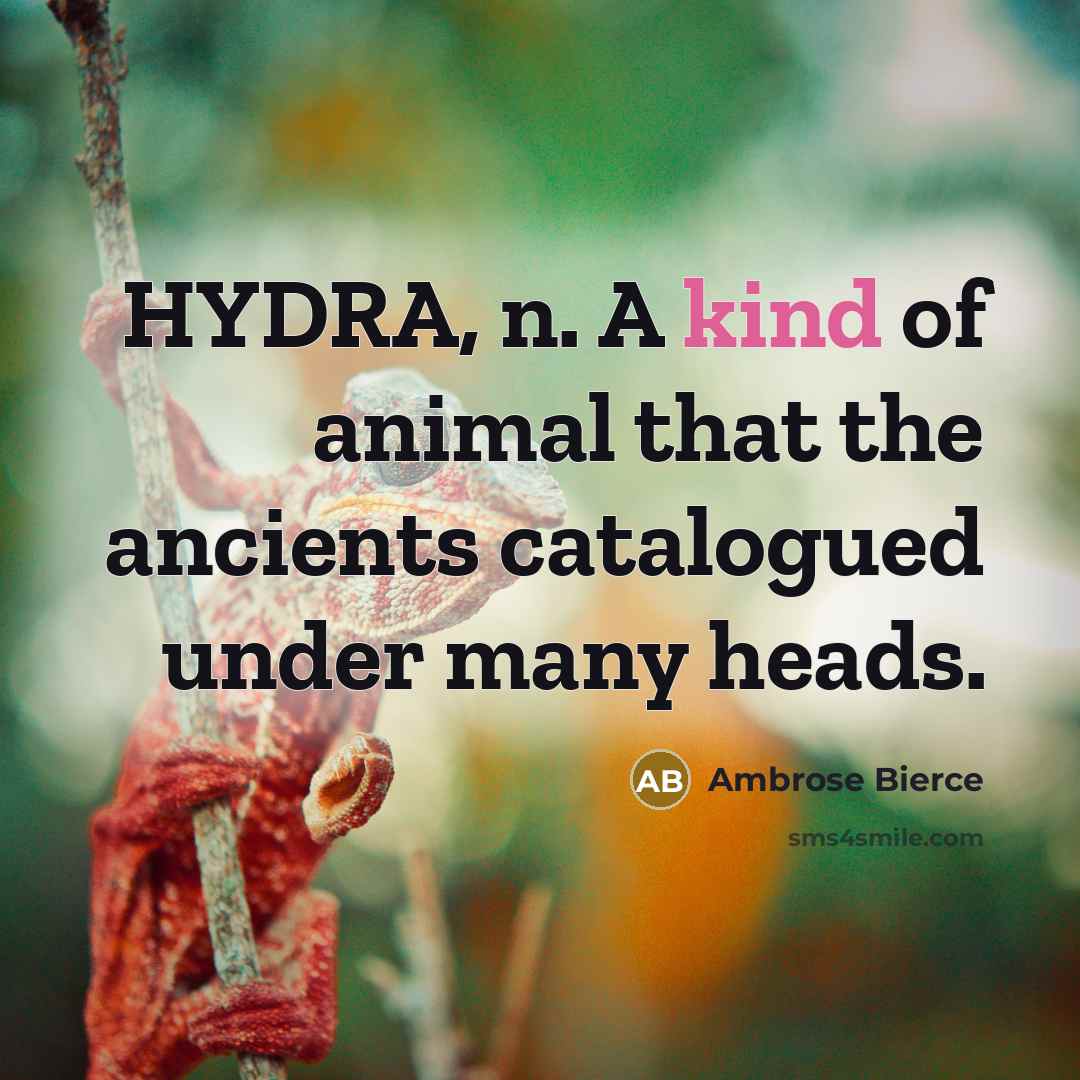
HYDRA, n. A kind of animal that the ancients catalogued under many heads. — Ambrose Bierce Copy Share Image
“No hay nada nuevo bajo el sol, pero hay muchas cosas viejas que nosotros no sabemos.” — Ambrose Bierce Copy Share Image
ACCUSE, v.t. To affirm another's guilt or unworth; most commonly as a justification of ourselves for having wronged him. — Ambrose Bierce Copy Share Image
SPOOKER, n. A writer whose imagination concerns itself with supernatural phenomena, especially in the doings of spooks. — Ambrose Bierce Copy Share Image
GRAVE, n. A place in which the dead are laid to await the coming of the medical student. — Ambrose Bierce Copy Share Image
REPARATION, n. Satisfaction that is made for a wrong and deducted from the satisfaction felt in committing it. — Ambrose Bierce Copy Share Image
GOOD, adj. Sensible, madam, to the worth of this present writer. Alive, sir, to the advantages of letting him alone. — Ambrose Bierce Copy Share Image
International arbitration may be defined as the substitution of many burning questions for a smoldering one — Ambrose Bierce Copy Share Image
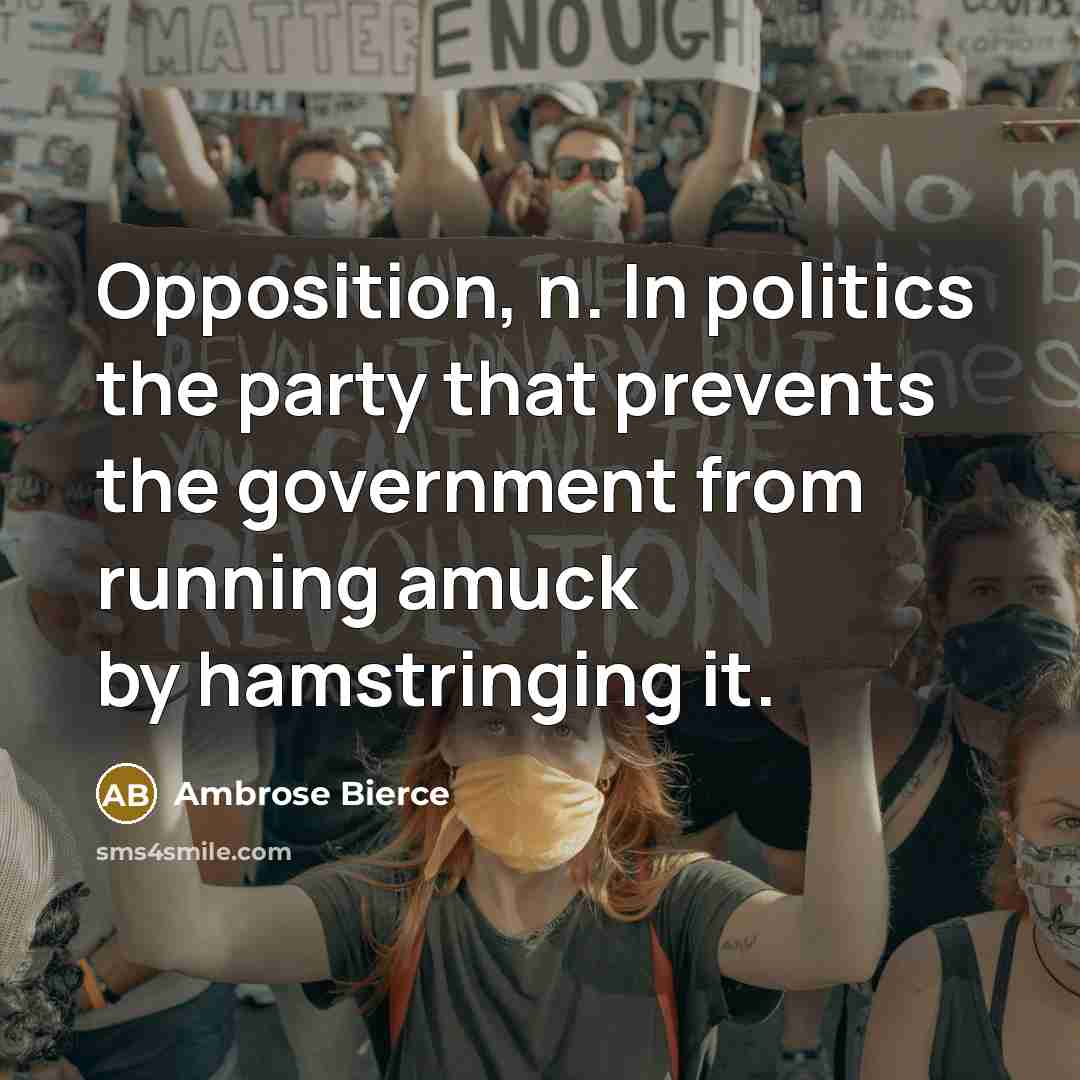
Opposition, n. In politics the party that prevents the government from running amuck by hamstringing it. — Ambrose Bierce Copy Share Image
HUSBAND, n. One who, having dined, is charged with the care of the plate. — Ambrose Bierce Copy Share Image
Knowledge is the small part of ignorance that we arrange and classify. — Ambrose Bierce Copy Share Image
Scribbler, n. A professional writer whose views are antagonistic to one's own. — Ambrose Bierce Copy Share Image
Glutton- A person who escapes the evils of moderation by committing dyspepsia. — Ambrose Bierce Copy Share Image
You don't have to be stupid to be a Christian, ... but it probably helps. — Ambrose Bierce Copy Share Image
UXORIOUSNESS, n. A perverted affection that has strayed to one's own wife. — Ambrose Bierce Copy Share Image
PRESENTABLE, adj. Hideously appareled after the manner of the time and place. — Ambrose Bierce Copy Share Image
REBEL, n. A proponent of a new misrule who has failed to establish it. — Ambrose Bierce Copy Share Image
adherent, n. A follower who has not yet obtained all that he expects to get. — Ambrose Bierce Copy Share Image
OBSESSED, p.p. Vexed by an evil spirit, like the Gadarene swine and other critics. Obsession was once more common than it is now. Arasthus… — Ambrose Bierce Copy Share Image
DECIDE, v.i. To succumb to the preponderance of one set of influences over another set. — Ambrose Bierce Copy Share Image
IMMORAL, adj. Inexpedient. Whatever in the long run and with regard to the greater number of instances men find to be generally inexpedient comes… — Ambrose Bierce Copy Share Image
REVIEW, v.t. To set your wisdom (holding not a doubt of it./ Although in truth there's neither bone nor skin to it)/ At work… — Ambrose Bierce Copy Share Image
CLOCK, n. A machine of great moral value to man, allaying his concern for the future by reminding him what a lot of time… — Ambrose Bierce Copy Share Image
RUBBISH, n. Worthless matter, such as the religions, philosophies, literatures, arts and sciences of the tribes infesting the regions lying due south from Boreaplas. — Ambrose Bierce Copy Share Image
There was never a genius who was not thought a fool until he disclosed himself; whereas he is a fool then only. — Ambrose Bierce Copy Share Image
Telephone, n. An invention of the devil which abrogates some of the advantages of making a disagreeable person keep his distance. — Ambrose Bierce Copy Share Image
WHANGDEPOOTENAWAH, n. In the Ojibwa tongue, disaster; an unexpected affliction that strikes hard. — Ambrose Bierce Copy Share Image
Jealous, adj. Unduly concerned about the preservation of that which can be lost only if not worth keeping. — Ambrose Bierce Copy Share Image
RIDICULE, n. Words designed to show that the person of whom they are uttered is devoid of the dignity of character distinguishing him who… — Ambrose Bierce Copy Share Image














![“CUI BONO? [Latin] What good would that do "me"?” quote by Ambrose Bierce](https://sms4smile.com/quotes/img-quotes/57c/ambrose-bierce-140_funny_cui-bono-latin-what-good-would-that-do-m_2275962.jpg)