Fork: An instrument used chiefly for the purpose of putting dead animals into the mouth. — Ambrose Bierce Copy Share Image
EJECTION, n. An approved remedy for the disease of garrulity. It is also much used in cases of extreme poverty. — Ambrose Bierce Copy Share Image
MISERICORDE, n. A dagger which in mediaeval warfare was used by the foot soldier to remind an unhorsed knight that he was… — Ambrose Bierce Copy Share Image
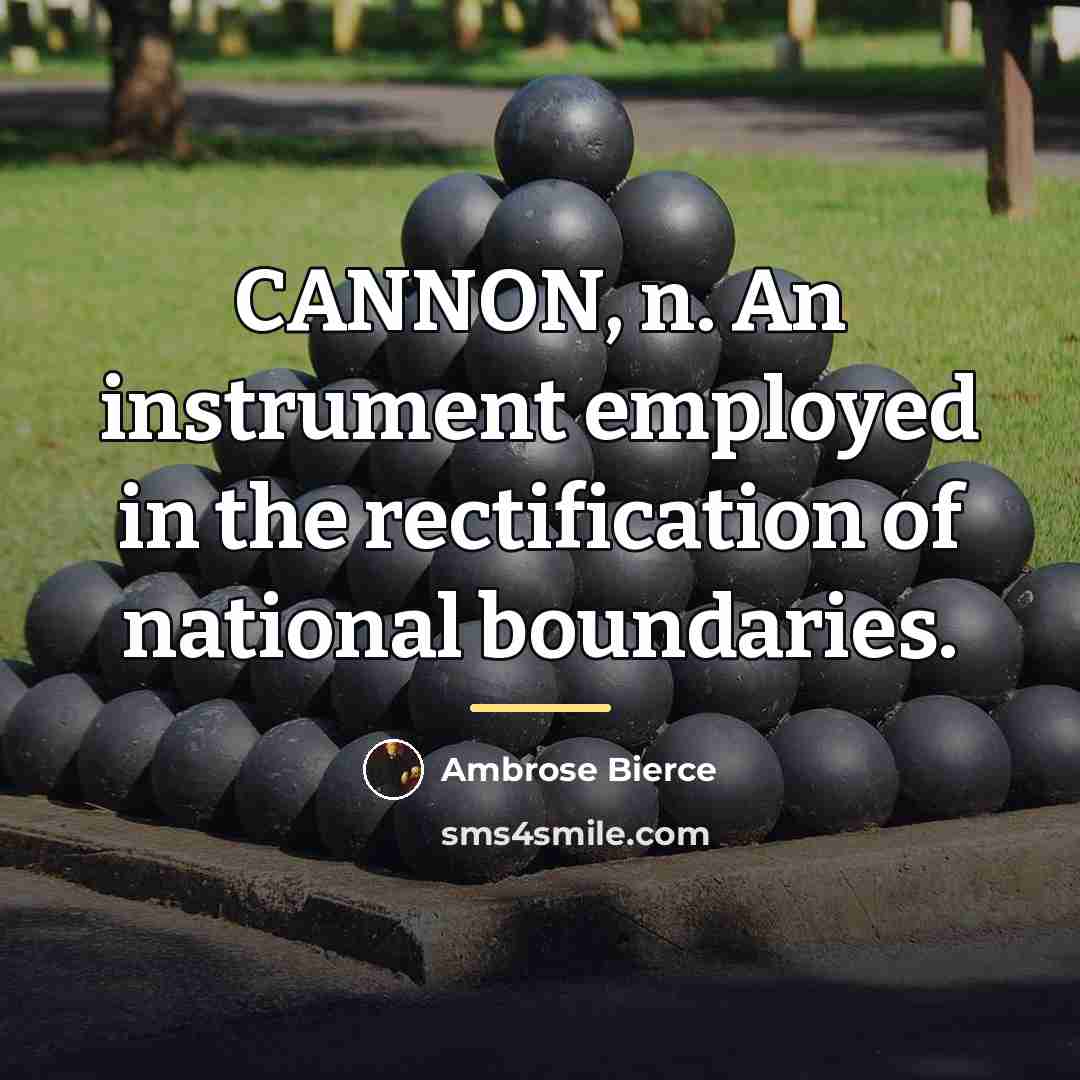
CANNON, n. An instrument employed in the rectification of national boundaries. — Ambrose Bierce Copy Share Image
Cannon: An instrument used in the rectification of national boundaries. — Ambrose Bierce Copy Share Image
OBSOLETE, adj. No longer used by the timid. Said chiefly of words. A word which some lexicographer has marked obsolete is ever… — Ambrose Bierce Copy Share Image
PERORATION, n. The explosion of an oratorical rocket. It dazzles, but to an observer having the wrong kind of nose its most… — Ambrose Bierce Copy Share Image
PANDEMONIUM, n. Literally, the Place of All the Demons. Most of them have escaped into politics and finance, and the place is… — Ambrose Bierce Copy Share Image
RICE-WATER, n. A mystic beverage secretly used by our most popular novelists and poets to regulate the imagination and narcotize the conscience. — Ambrose Bierce Copy Share Image
INK, n. A villainous compound of tannogallate of iron, gum-arabic, and water, chiefly used to facilitate the infection of idiocy and promote… — Ambrose Bierce Copy Share Image
RACK, n. An argumentative implement formerly much used in persuading devotees of a false faith to embrace the living truth. As a… — Ambrose Bierce Copy Share Image
LEAD, n. A heavy blue-gray metal much used in giving stability to light lovers - particularly to those who love not wisely… — Ambrose Bierce Copy Share Image
The place whereon the priest formerly raveled out the small intestine of the sacrificial victim for purposes of divination and cooked its… — Ambrose Bierce Copy Share Image
LEAD, n. A heavy blue-gray metal much used ... as a counterpoise to an argument of such weight that it turns the… — Ambrose Bierce Copy Share Image
The bold and discerning writer who, recognizing the truth that language must grow by innovation if it grow at all, makes new… — Ambrose Bierce Copy Share Image
FRYING-PAN, n. One part of the penal apparatus employed in that punitive institution, a woman's kitchen. The frying-pan was invented by Calvin,… — Ambrose Bierce Copy Share Image
OBSESSED, p.p. Vexed by an evil spirit, like the Gadarene swine and other critics. Obsession was once more common than it is now. Arasthus… — Ambrose Bierce Copy Share Image
DECIDE, v.i. To succumb to the preponderance of one set of influences over another set. — Ambrose Bierce Copy Share Image
IMMORAL, adj. Inexpedient. Whatever in the long run and with regard to the greater number of instances men find to be generally inexpedient comes… — Ambrose Bierce Copy Share Image
REVIEW, v.t. To set your wisdom (holding not a doubt of it./ Although in truth there's neither bone nor skin to it)/ At work… — Ambrose Bierce Copy Share Image
CLOCK, n. A machine of great moral value to man, allaying his concern for the future by reminding him what a lot of time… — Ambrose Bierce Copy Share Image
RUBBISH, n. Worthless matter, such as the religions, philosophies, literatures, arts and sciences of the tribes infesting the regions lying due south from Boreaplas. — Ambrose Bierce Copy Share Image
There was never a genius who was not thought a fool until he disclosed himself; whereas he is a fool then only. — Ambrose Bierce Copy Share Image
Telephone, n. An invention of the devil which abrogates some of the advantages of making a disagreeable person keep his distance. — Ambrose Bierce Copy Share Image
WHANGDEPOOTENAWAH, n. In the Ojibwa tongue, disaster; an unexpected affliction that strikes hard. — Ambrose Bierce Copy Share Image
Jealous, adj. Unduly concerned about the preservation of that which can be lost only if not worth keeping. — Ambrose Bierce Copy Share Image
RIDICULE, n. Words designed to show that the person of whom they are uttered is devoid of the dignity of character distinguishing him who… — Ambrose Bierce Copy Share Image