At the core of all anger is a need that is not being fulfilled. — Marshall B. Rosenberg Copy Share Image
In our culture, most of us have been trained to ignore our own wants and to discount our needs. — Marshall B. Rosenberg Copy Share Image
Regardless of our many differences, we all have the same needs. What differs is the strategy for fulfilling these needs. — Marshall B. Rosenberg Copy Share Image
Getting in touch with unmet needs is important to the healing process. — Marshall B. Rosenberg Copy Share Image
When we understand the needs that motivate our own and others behavior, we have no enemies. — Marshall B. Rosenberg Copy Share Image
Empathize with silence by listening for the feelings and needs behind it. — Marshall B. Rosenberg Copy Share Image
When we listen for their feelings and needs, we no longer see people as monsters. — Marshall B. Rosenberg Copy Share Image
Remember that whatever anyone does, it is an effort to meet a need. — Marshall B. Rosenberg Copy Share Image
Behind intimidating messages are simply people appealing to us to meet their needs. — Marshall B. Rosenberg Copy Share Image
Anger is a signal that you're distracted by judgmental or punitive thinking, and that some precious need of yours is being ignored. — Marshall B. Rosenberg Copy Share Image
We're not taught to think in terms of needs. We don't make nice dead people when we're in touch with needs. Domination… — Marshall B. Rosenberg Copy Share Image
Never connect yourself with the other person's pain. Just hear their need. Leave yourself out of the other person's feelings and needs. — Marshall B. Rosenberg Copy Share Image
Children need far more than basic skills in reading, writing, and math, as important as those might be. Children also need to… — Marshall B. Rosenberg Copy Share Image
“Anger is a result of life-alienating thinking that is disconnected from needs. It indicates that we have moved up to our head… — Marshall B. Rosenberg Copy Share Image
Not getting our needs fulfilled is painful - but it's a sweet pain, not suffering, which is what comes from life-alienated thinking… — Marshall B. Rosenberg Copy Share Image
Everything we do is in service of our needs. When this one concept is applied to our view of others, we'll see… — Marshall B. Rosenberg Copy Share Image
We can't win at somebody else's expense. We can only fully be satisfied when the other person's needs are fulfilled as well… — Marshall B. Rosenberg Copy Share Image
Every moment each human being is doing the best we know at that moment to meet our needs. We never do anything… — Marshall B. Rosenberg Copy Share Image
If I'm using Nonviolent Communication I never, never, never hear what somebody thinks about me. Never hear what somebody thinks about you,… — Marshall B. Rosenberg Copy Share Image
Conflicts, even of long standing duration, can be resolved if we can just keep the flow of communication going in which people… — Marshall B. Rosenberg Copy Share Image
Imagine connecting with the human spirit in each person in any situation at any time. Imagine interacting with others in a way… — Marshall B. Rosenberg Copy Share Image
You're going to lose it when you follow the world "feel" with the words "because I think". Any time you are thinking,… — Marshall B. Rosenberg Copy Share Image
In nonviolent communication, no matter what words others may use to express themselves, we simply listen for their observations, feelings, needs, and… — Marshall B. Rosenberg Copy Share Image
There are the two main reasons we don't get our needs met. First, we don't know how to express our needs to… — Marshall B. Rosenberg Copy Share Image
Needs are never conflicting. When we say that, we are only saying that at the moment we aren't seeing how both needs… — Marshall B. Rosenberg Copy Share Image
Peace requires something far more difficult than revenge or merely turning the other cheek; it requires empathizing with the fears and unmet… — Marshall B. Rosenberg Copy Share Image
I recommend allowing others the opportunity to fully express themselves before turning our attention to solutions or requests for relief. When we… — Marshall B. Rosenberg Copy Share Image
Violence in any form is a tragic expression of our unmet needs. — Marshall B. Rosenberg Copy Share Image
They have most likely said it because they have an unmet need. — Marshall B. Rosenberg Copy Share Image
Focusing on the unmet need (not the judgment) is more likely to get the need met. — Marshall B. Rosenberg Copy Share Image
At the root of every tantrum and power struggle are unmet needs. — Marshall B. Rosenberg Copy Share Image
Understanding the other persons' needs does not mean you have to give up on your own needs. — Marshall B. Rosenberg Copy Share Image
Plans to exact retribution are never going to make us safer. — Marshall B. Rosenberg Copy Share Image
NVC gives us tools and understanding to create a more peaceful state of mind. — Marshall B. Rosenberg Copy Share Image
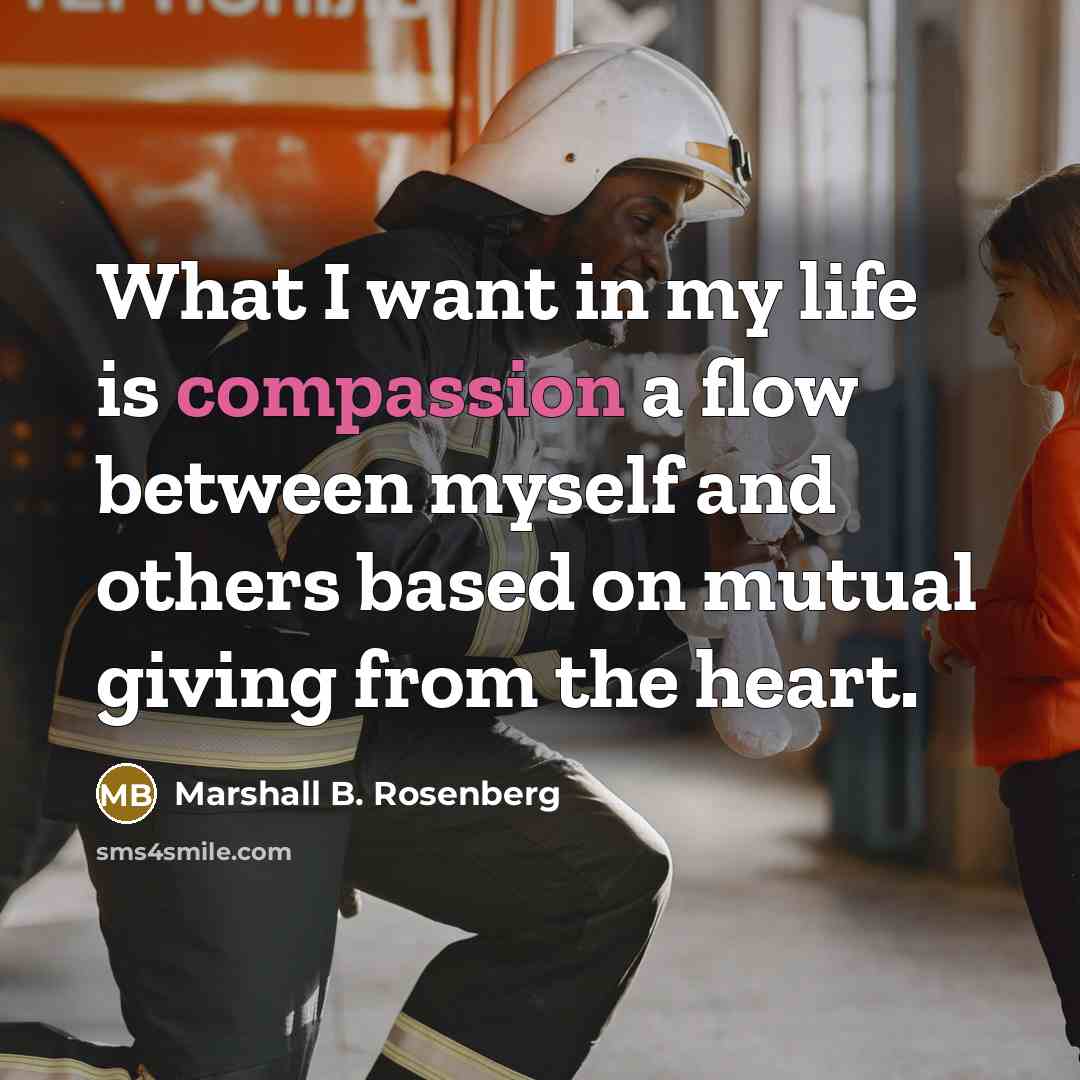
What I want in my life is compassion a flow between myself and others based on mutual giving from the heart. — Marshall B. Rosenberg Copy Share Image
Analyses of others are actually expressions of our own needs and values — Marshall B. Rosenberg Copy Share Image
Staying with empathy we allow speakers to touch deeper levels of themselves. — Marshall B. Rosenberg Copy Share Image
Often, instead of offering empathy, we have a strong urge to give advice or reassurance and to explain our own position or feeling. — Marshall B. Rosenberg Copy Share Image
NVC is founded on language and communication skills that strengthen our ability to remain human, even under trying conditions. — Marshall B. Rosenberg Copy Share Image
If you think ahead to what to say next - like how to fix it or make the person feel better - BOOM! Off… — Marshall B. Rosenberg Copy Share Image