Habit-forming products alleviate users' pain by relieving a pronounced itch. — Nir Eyal Copy Share Image
For an infrequent action to become a habit, the user must perceive a high degree of utility, either from gaining pleasure or… — Nir Eyal Copy Share Image
User habits are a competitive advantage. Products that change customer routines are less susceptible to attacks from other companies. — Nir Eyal Copy Share Image
“users also increase their dependency on habit-forming products by storing value in them — further reducing the likelihood of switching to an alternative.” — Nir Eyal Copy Share Image
“behaviors are LIFO — “last in, first out.” In other words, the habits you’ve most recently acquired are also the ones most… — Nir Eyal Copy Share Image
“Habit-forming products often start as nice-to-haves (vitamins) but once the habit is formed, they become must-haves (painkillers).” — Nir Eyal Copy Share Image
Habit-forming products often start as nice-to-haves, but once the habit is formed, they become must-haves. — Nir Eyal Copy Share Image
“Habits are one of the ways the brain learns complex behaviors. Neuroscientists believe habits give us the ability to focus our attention… — Nir Eyal Copy Share Image
“Cognitive psychologists define habits as, “automatic behaviors triggered by situational cues:” things we do with little or no conscious thought.[5] The products… — Nir Eyal Copy Share Image
“A 2010 study found that some habits can be formed in a matter of weeks while others can take more than five… — Nir Eyal Copy Share Image
The ultimate goal of a habit-forming product is to solve the user's pain by creating an association so that the user identifies… — Nir Eyal Copy Share Image
“for a behavior to become routine it must occur with significant frequency and perceived utility. Attitude change is the movement up the… — Nir Eyal Copy Share Image
“an investment in the product serves as the string that pulls the user back. To do this, the habit-forming technology increases the… — Nir Eyal Copy Share Image
“Do This Now If you are building a habit-forming product, write down the answers to these questions: - What habits does your… — Nir Eyal Copy Share Image
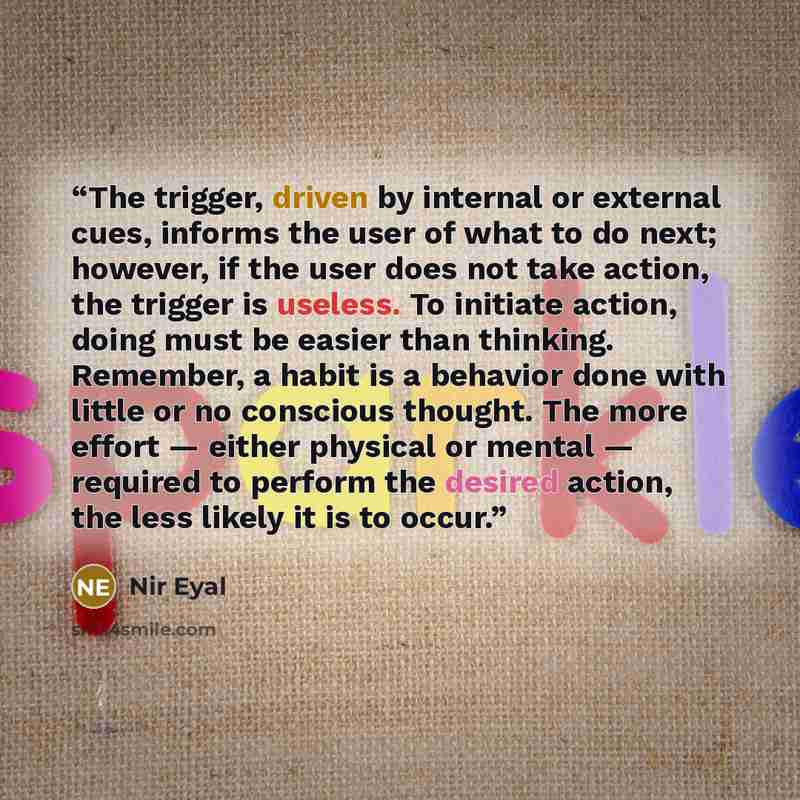
“The trigger, driven by internal or external cues, informs the user of what to do next; however, if the user does not… — Nir Eyal Copy Share Image
“Habit Testing.” It is a process inspired by the build-measure-learn methodology championed by the lean startup movement. Habit Testing offers insights and… — Nir Eyal Copy Share Image
“Imagine a time when your mobile phone rang but you didn’t answer it. Why not? Perhaps the phone was buried in a bag, making… — Nir Eyal Copy Share Image
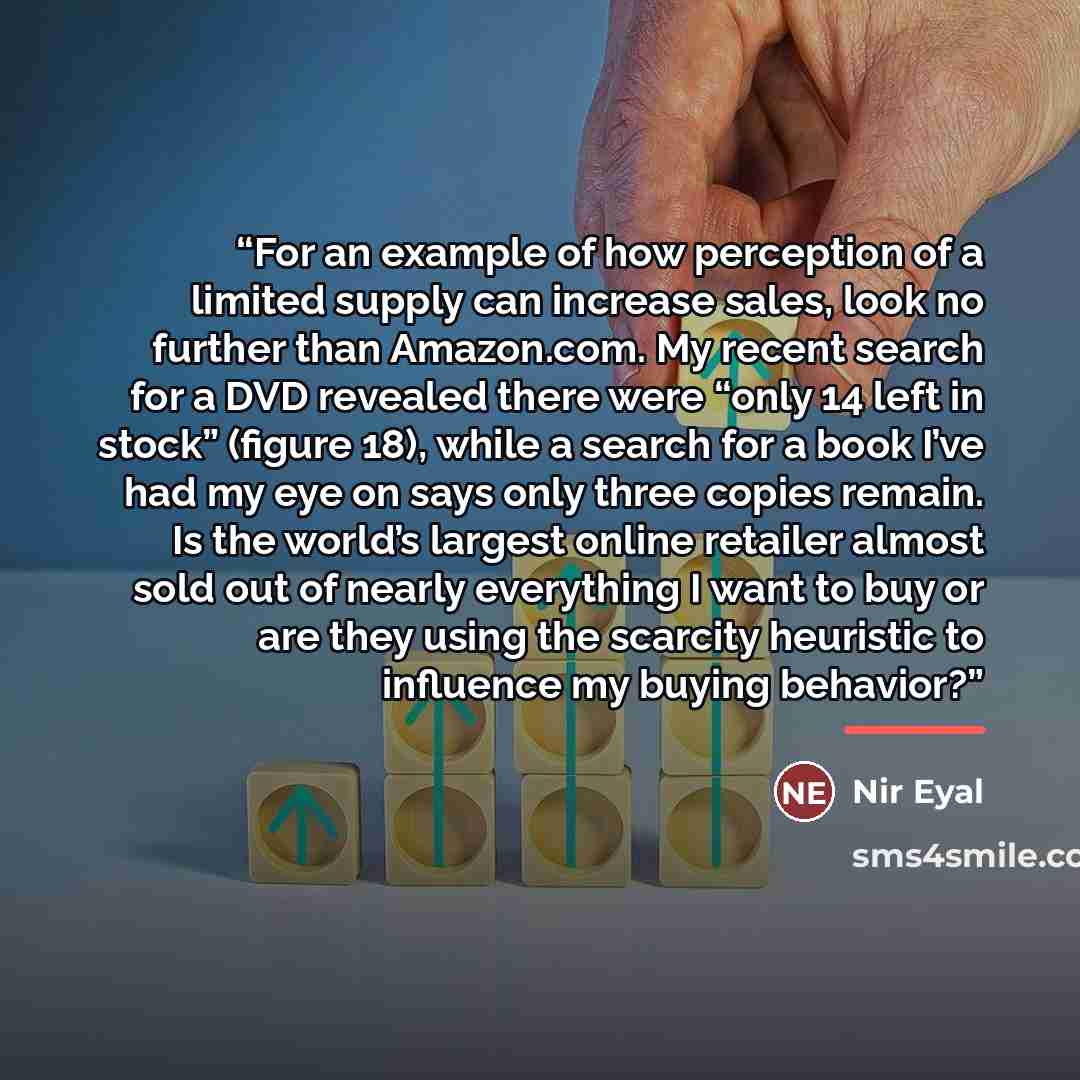
“For an example of how perception of a limited supply can increase sales, look no further than Amazon.com. My recent search for a DVD… — Nir Eyal Copy Share Image
“all humans are motivated to seek pleasure and avoid pain, to seek hope and avoid fear, and finally, to seek social acceptance and avoid… — Nir Eyal Copy Share Image
“The more users invest in a product through tiny bits of work, the more valuable the product becomes in their lives and the less… — Nir Eyal Copy Share Image
“Twitter The “feed” has become a social staple of many online products. The stream of limitless information displayed in a scrolling interface makes for… — Nir Eyal Copy Share Image
“Once a technology has created an association in users’ minds that the product is the solution of choice, they return on their own, no… — Nir Eyal Copy Share Image
“Instead of asking ‘what problem should I solve?’ ask ‘what problem do I wish someone else would solve for me?’”[cxxxi]” — Nir Eyal Copy Share Image
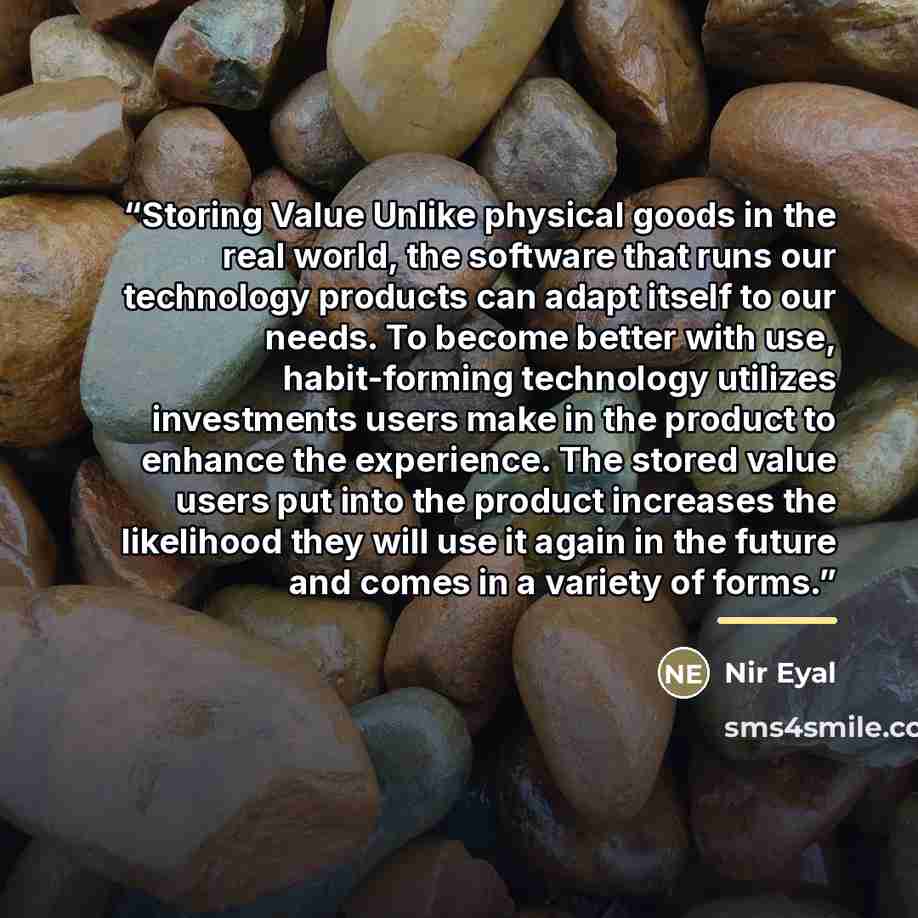
“Storing Value Unlike physical goods in the real world, the software that runs our technology products can adapt itself to our needs. To become… — Nir Eyal Copy Share Image
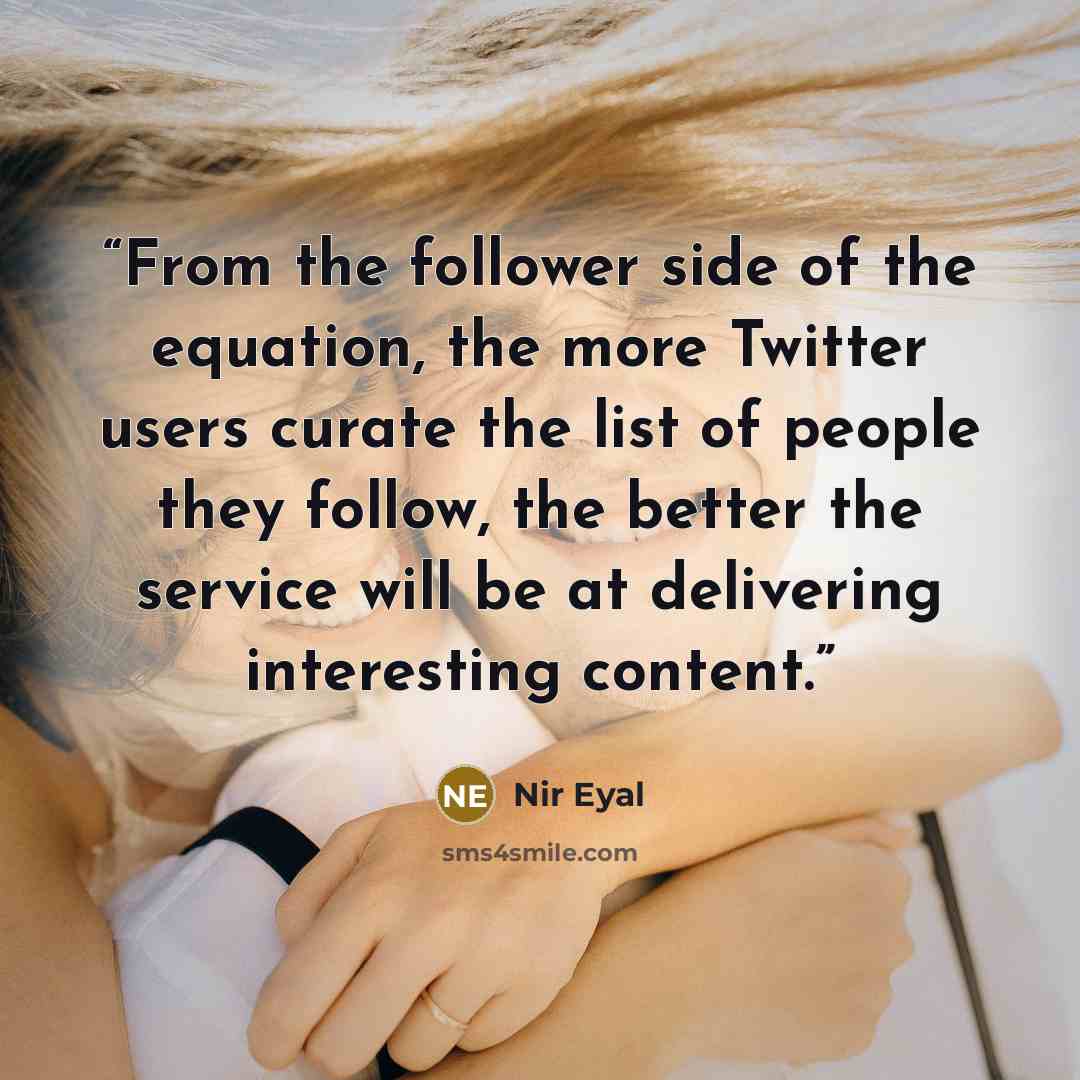
“From the follower side of the equation, the more Twitter users curate the list of people they follow, the better the service will be… — Nir Eyal Copy Share Image
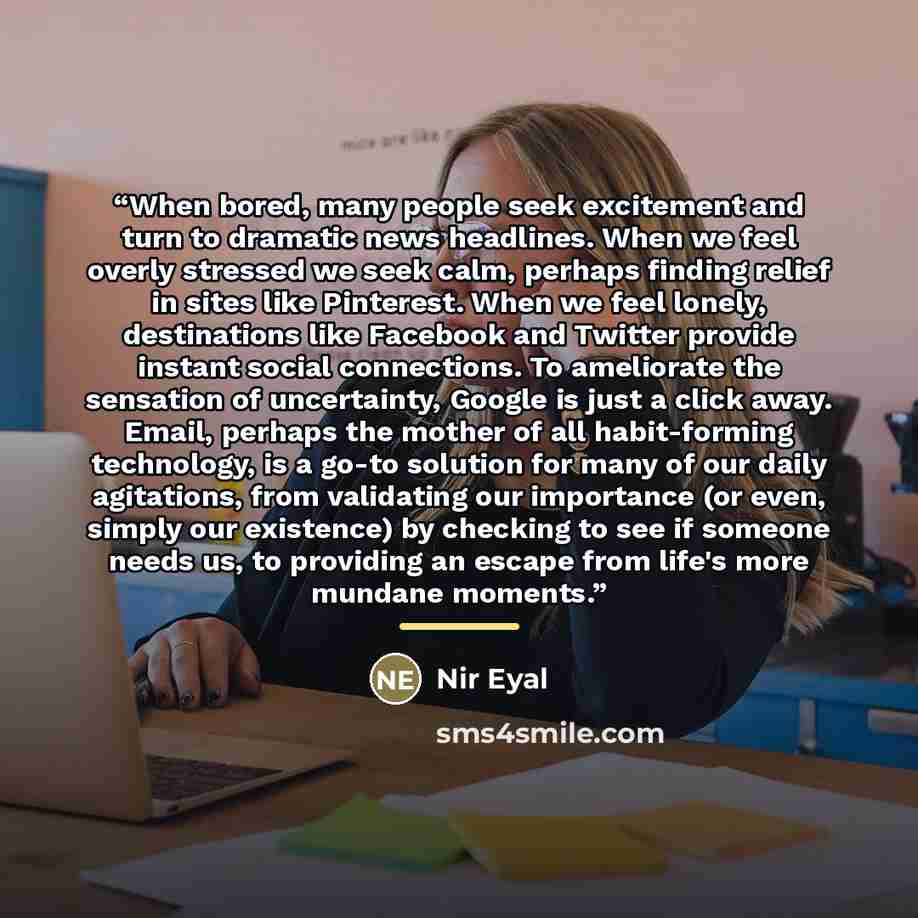
“When bored, many people seek excitement and turn to dramatic news headlines. When we feel overly stressed we seek calm, perhaps finding relief in… — Nir Eyal Copy Share Image
“Remember and Share - Action is the second step in The Hook. - The action is the simplest behavior in anticipation of reward. -… — Nir Eyal Copy Share Image
Habit-forming products often start as nice-to-haves, but once the habit is formed, they become must-haves. — Nir Eyal Copy Share Image


![“Cognitive psychologists define habits as, “automatic behaviors triggered by situational cues:” things we do with little or no conscious thought.[5] The products and services we use habitually alter our everyday behavior, just as their designers intended.[6] Our actions have been engineered.” quote by Nir Eyal](https://sms4smile.com/quotes/img-quotes/896/nir-eyal-1258_habit_cognitive-psychologists-define-habits-as_2511458.jpg)
![“A 2010 study found that some habits can be formed in a matter of weeks while others can take more than five months.[xxxix] The researchers also found that the complexity of the behavior and how important the habit was to the person greatly affected how quickly the routine was formed.” quote by Nir Eyal](https://sms4smile.com/quotes/img-quotes/f91/nir-eyal-1258_education_a-2010-study-found-that-some-habits-can_1944731.jpg)
![“Instead of asking ‘what problem should I solve?’ ask ‘what problem do I wish someone else would solve for me?’”[cxxxi]” quote by Nir Eyal](https://sms4smile.com/quotes/img-quotes/805/nir-eyal-1258_problem-solving_instead-of-asking-what-problem-should-i_78727.jpg)