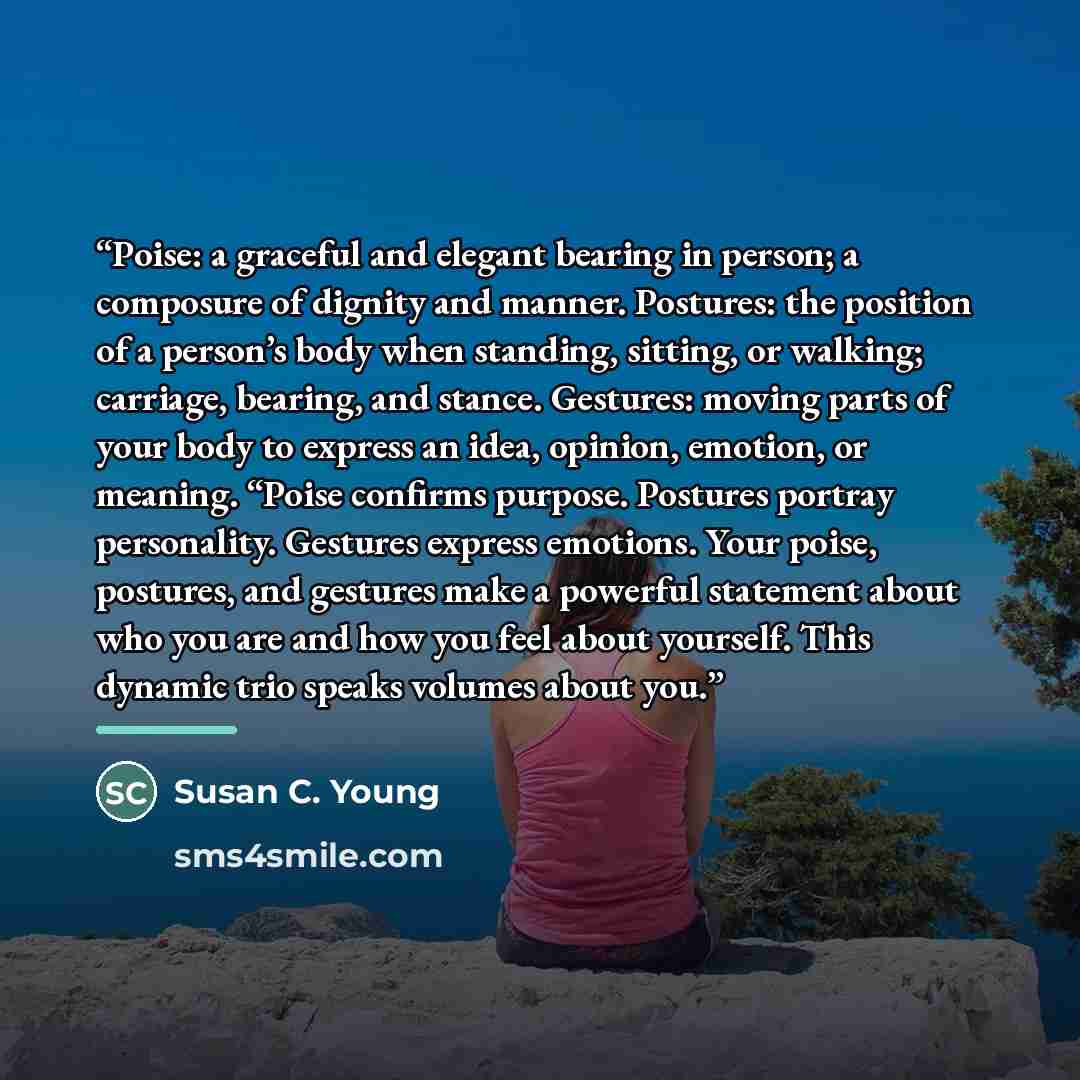
Body-language-quotes Quote by Susan C. Young
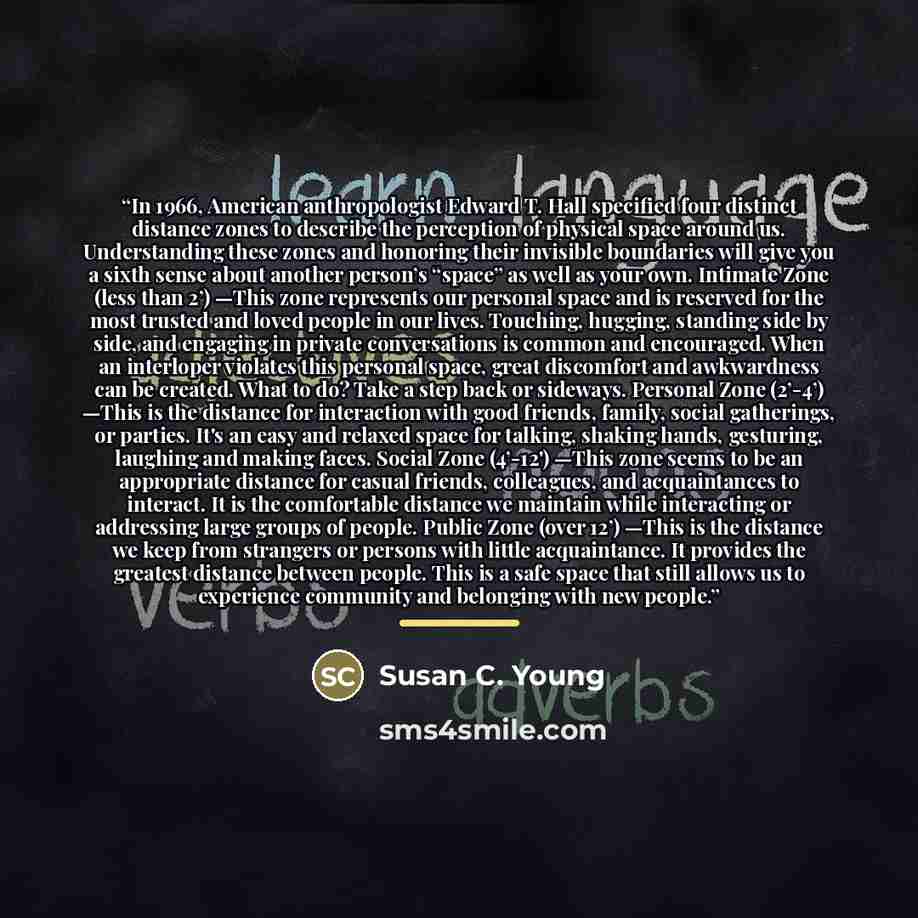
““In 1966, American anthropologist Edward T. Hall specified four distinct distance zones to describe the perception of physical space around us. Understanding these zones and honoring their invisible boundaries will give you a sixth sense about another person’s “space” as well as your own. Intimate Zone (less than 2’) —This zone represents our personal space and is reserved for the most trusted and loved people in our lives. Touching, hugging, standing side by side, and engaging in private conversations is common and encouraged. When an interloper violates this personal space, great discomfort and awkwardness can be created. What to do? Take a step back or sideways. Personal Zone (2’-4’) —This is the distance for interaction with good friends, family, social gatherings, or parties. It's an easy and relaxed space for talking, shaking hands, gesturing, laughing and making faces. Social Zone (4’-12') —This zone seems to be an appropriate distance for casual friends, colleagues, and acquaintances to interact. It is the comfortable distance we maintain while interacting or addressing large groups of people. Public Zone (over 12’) —This is the distance we keep from strangers or persons with little acquaintance. It provides the greatest distance between people. This is a safe space that still allows us to experience community and belonging with new people.””
About This Quote
Source Article: Understanding Proxemics, 2020
The text outlines four spatial zones that define personal comfort levels, advising respect for these invisible boundaries to improve social interactions.
In simple terms: Respect personal space zones.
Key Takeaway
Observe and honor distance.
Themes
social interaction
personal space
boundaries
Mood
informative
analytical
Type
educational
practical
When to use this quote
- meeting new people
- conflict resolution
- team collaboration
Key Concepts
proxemics
nonverbal communication
Questions to Reflect On
- How do you adjust your distance in diverse settings?
- What signals indicate a boundary breach?
A Different Perspective
Cultural differences may shift zone expectations.