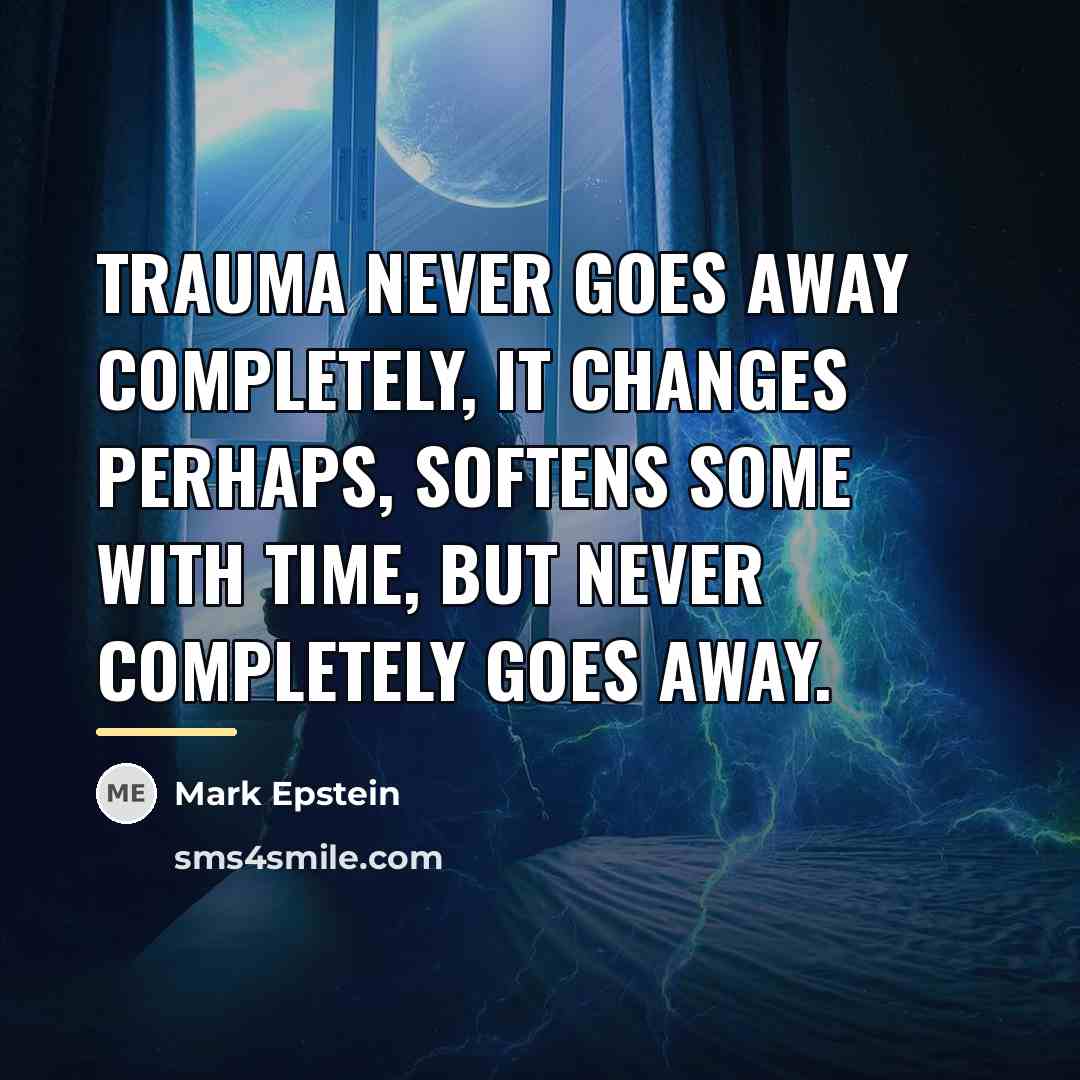
Trauma never goes away completely, it changes perhaps, softens some with time, but never completely goes away. — Mark Epstein Grief Copy Share Image
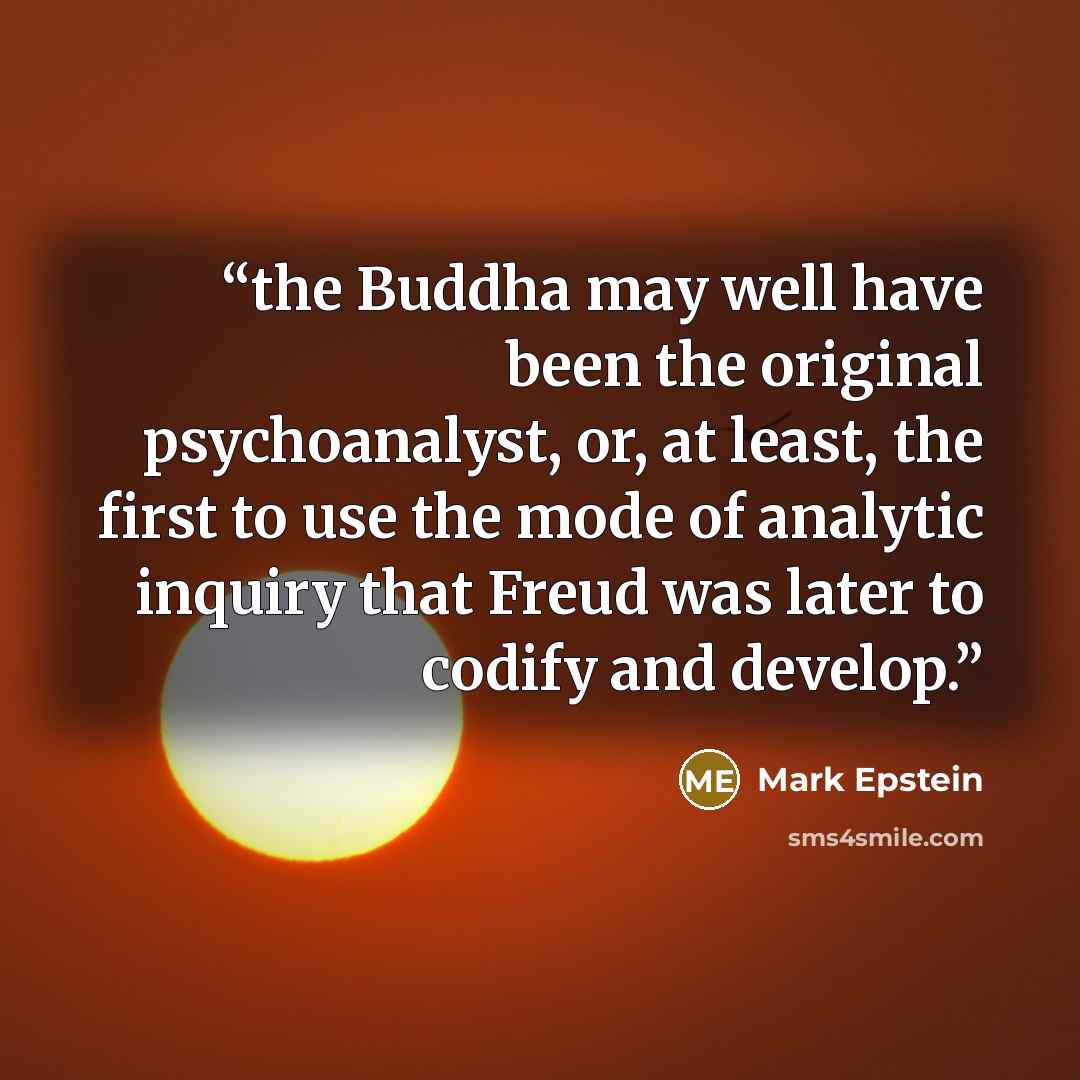
“the Buddha may well have been the original psychoanalyst, or, at least, the first to use the mode of analytic inquiry that… — Mark Epstein Psychoanalyst Copy Share Image
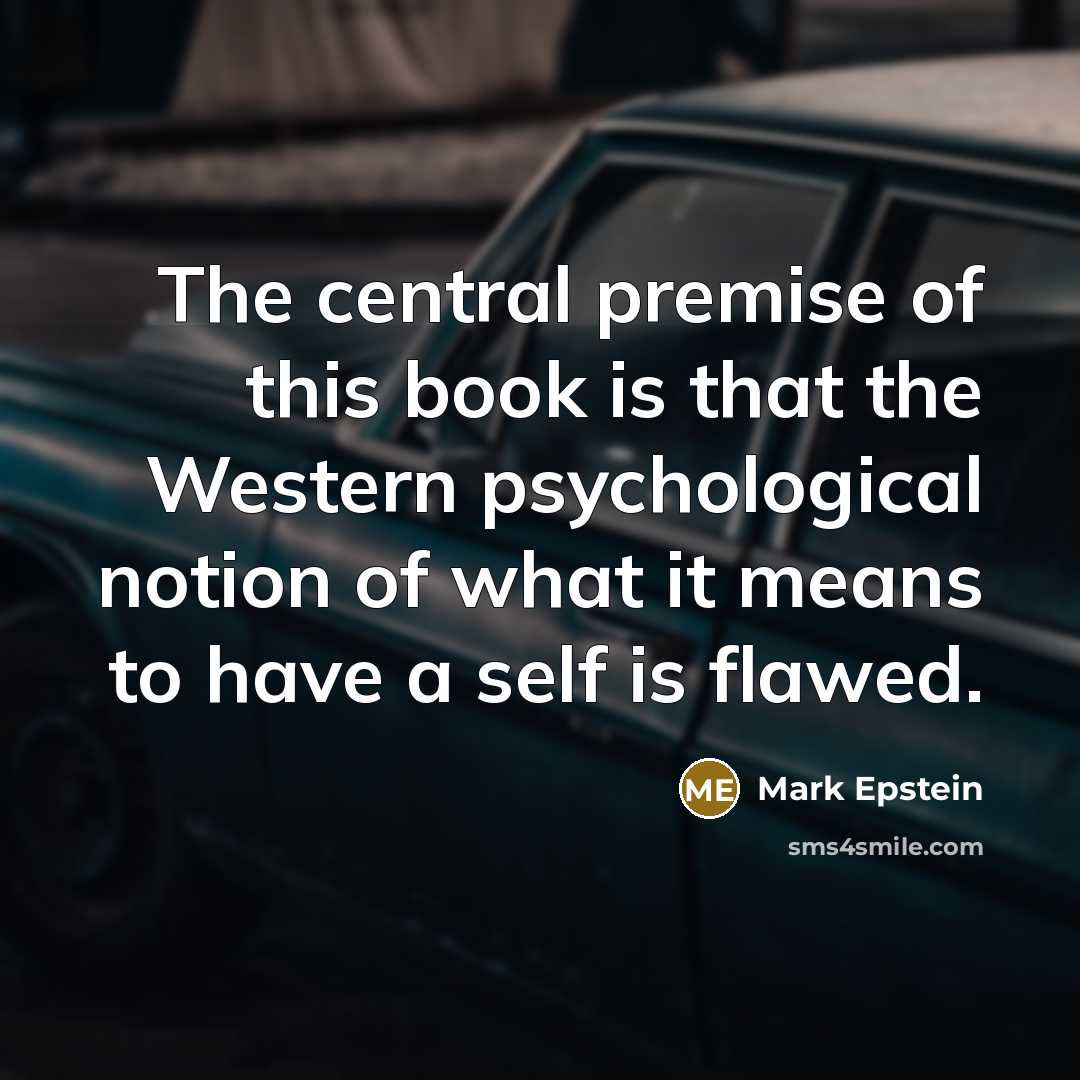
The central premise of this book is that the Western psychological notion of what it means to have a self is flawed. — Mark Epstein Book Copy Share Image
Desire is a teacher: When we immerse ourselves in it without guilt, shame, or clinging, it can show us something special about… — Mark Epstein Clinging Copy Share Image
“Form is emptiness", the Buddhists teach, but form is also form. I would never be able to approach the emptiness of form… — Mark Epstein Buddhism Copy Share Image
The picture we present to ourselves of who we think we ought to be obscures who we really are. — Mark Epstein Thinking Copy Share Image
To be free, to come to terms with our lives, we have to have a direct experience of ourselves as we really… — Mark Epstein Direct Copy Share Image
One of the age-old truths about love is that while it offers unparalleled opportunities for union and the lifting of ego boundaries,… — Mark Epstein Age Copy Share Image
“[The Buddha] is not dividing himself into worthy and unworthy pieces; he is one being, indivisible, immune from the tendency to double… — Mark Epstein Buddha Copy Share Image
The willingness to face traumas - be they large, small, primitive or fresh - is the key to healing from them. They… — Mark Epstein Aspect Copy Share Image
“With some gratitude, I realized that my awareness was now stronger than my neurosis. This did not mean that things would never… — Mark Epstein Awareness Copy Share Image
If aspects of the person remain undigested-cut off, denied, projected, rejected, indulged, or otherwise unassimilated-they become the points around which the core… — Mark Epstein Aspect Copy Share Image
In building a path through the self to the far shore of awareness, we have to carefully pick our way through our… — Mark Epstein Awareness Copy Share Image
There is a yearning that is as spiritual as it is sensual. Even when it degenerates into addiction, there is something salvageable… — Mark Epstein Addiction Copy Share Image
Anxiety and desire are two, often conflicting, orientations to the unknown. Both are tilted toward the future. Desire implies a willingness, or… — Mark Epstein Anxiety Copy Share Image
If things do not exist as fixed, independent entities, then how can they die? Our notion of death as the sudden expiration… — Mark Epstein Absurd Copy Share Image
“In making a path like the Buddha, we discover our own capacities for relationship. Doing this is like feeling our way in… — Mark Epstein Buddha Copy Share Image
When we seek happiness through accumulation, either outside of ourselves-from other people, relationships, or material goods-or from our own self-development, we are… — Mark Epstein Accumulation Copy Share Image
While the primary function of formal Buddhist meditation is to create the possibility of the experience of "being," my work as a… — Mark Epstein Buddhism Copy Share Image
“The teaching of the sexual tantras all come down to one point. Although desire, of whatever shape or form, seeks completion, there… — Mark Epstein Buddhism Copy Share Image
Uncovering your real desires can be terrifying. It can also set you spectacularly free. — Mark Epstein Consciousness Copy Share Image
Depressed people think they know themselves, but maybe they only know depression. — Mark Epstein Abnormal psychology Copy Share Image
To free desire from the tendency to cling, we have to be willing to stumble over ourselves. — Mark Epstein Desire Copy Share Image
It is exceedingly difficult to maintain a sense of absence without turning that absence into some kind of presence — Mark Epstein Absence Copy Share Image
“In coping with the world, we come to identify only with our compensatory selves and our reactive minds. We build up our… — Mark Epstein Defenses Copy Share Image
“Like meditation, psychotherapy has the potential to reveal how much of our thinking is an artificial construaction designed to help us cope… — Mark Epstein Artificial Copy Share Image
We are looking for a way to feel more real, but we do not realize that to feel more real we have… — Mark Epstein Feel Copy Share Image
Meditation is not a means of forgetting the ego; it is a method of using the ego to observe and tame its… — Mark Epstein Ego Copy Share Image
As my Buddhist teachers have shown me, wisdom emerges in the space around words as much as from language itself. — Mark Epstein Buddhism Copy Share Image
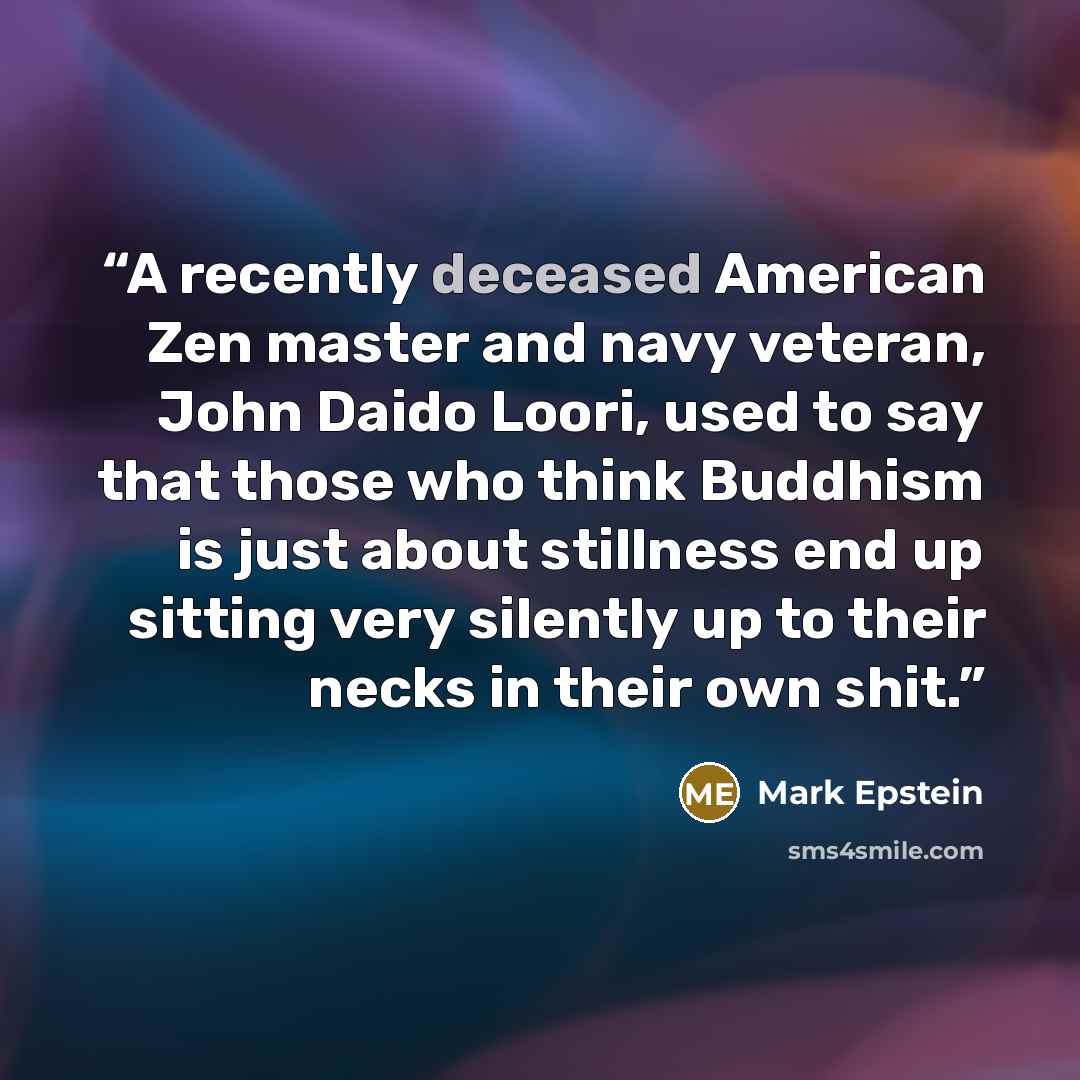
“A recently deceased American Zen master and navy veteran, John Daido Loori, used to say that those who think Buddhism is just… — Mark Epstein Buddhism Copy Share Image
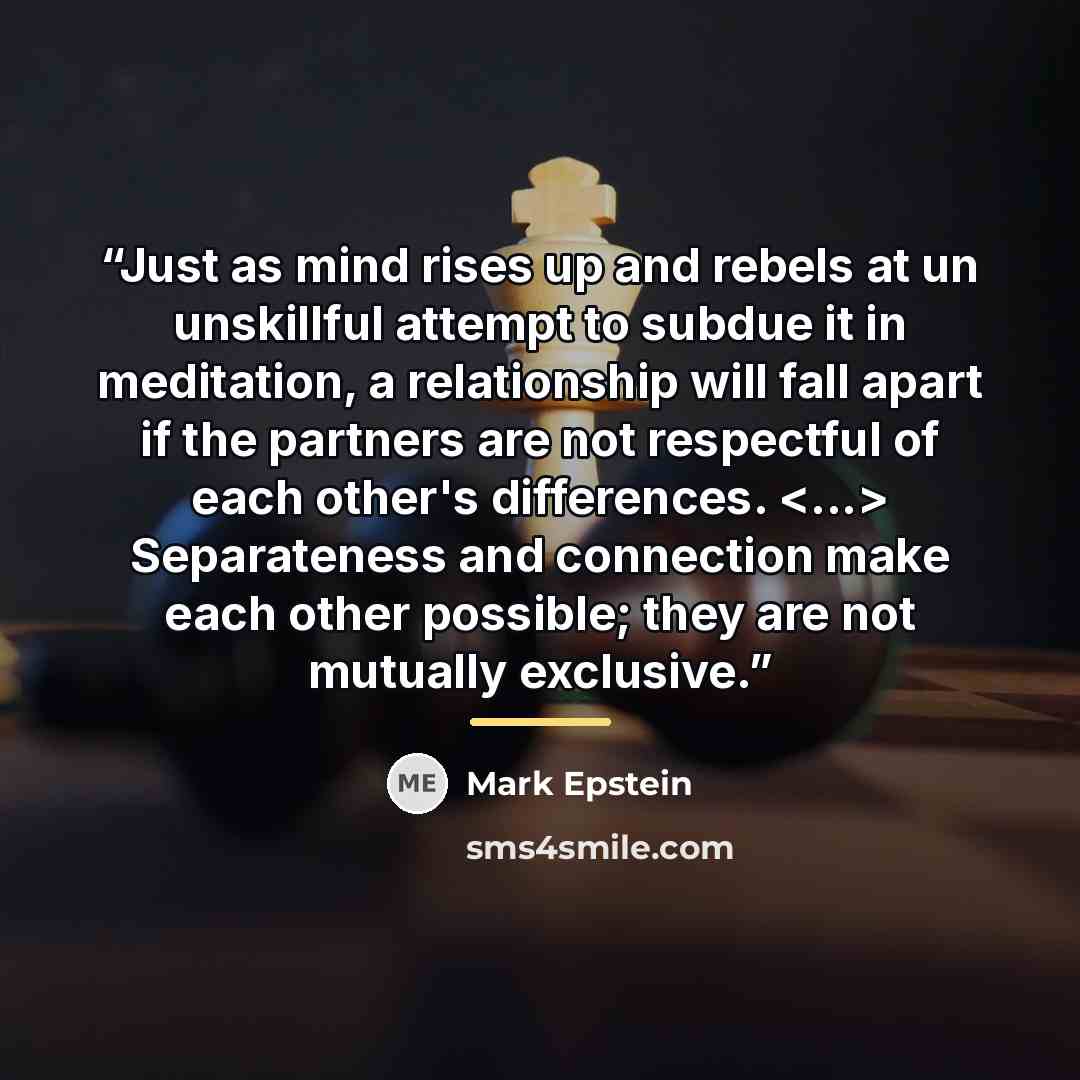
“Just as mind rises up and rebels at un unskillful attempt to subdue it in meditation, a relationship will fall apart if… — Mark Epstein Buddhism Copy Share Image
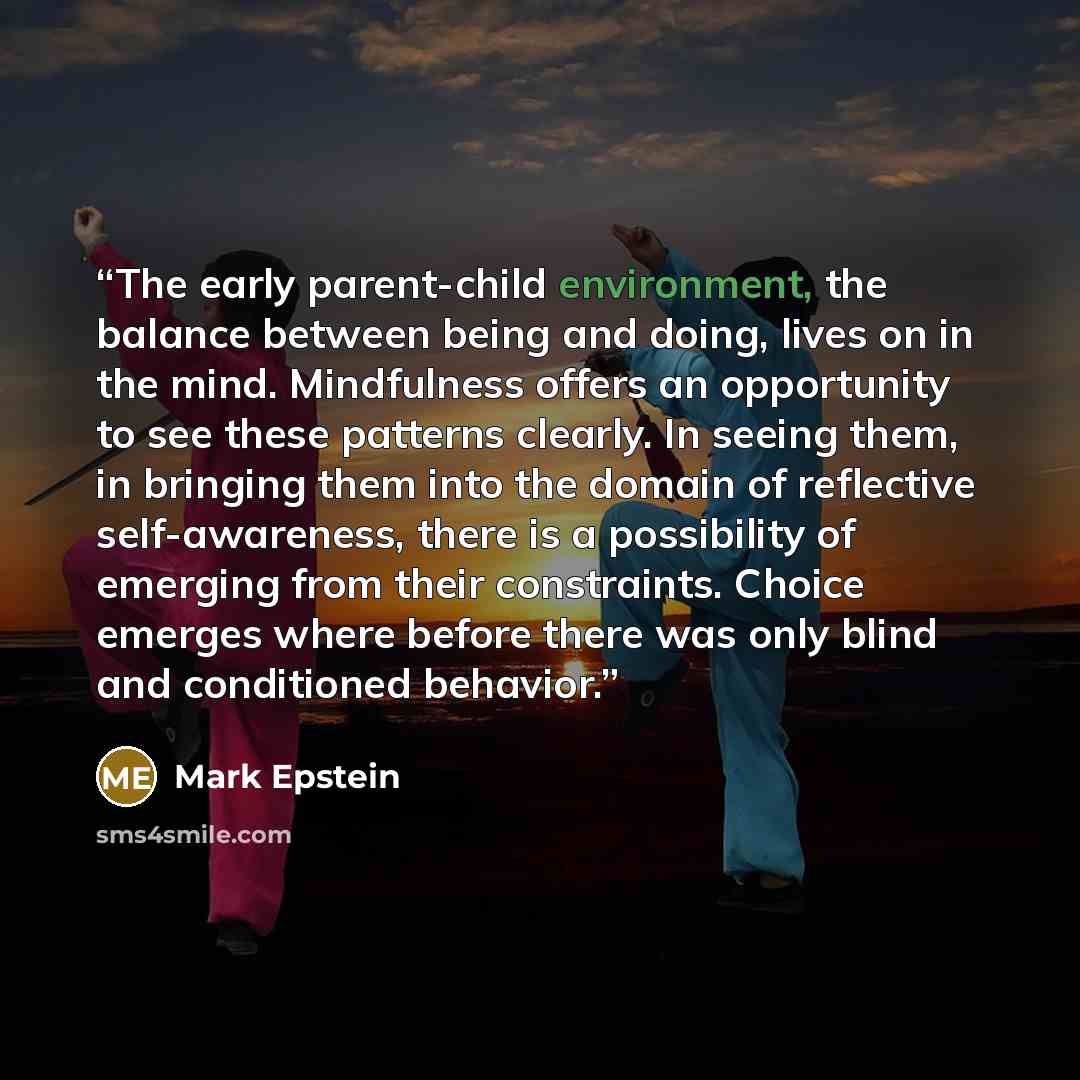
“The early parent-child environment, the balance between being and doing, lives on in the mind. Mindfulness offers an opportunity to see these… — Mark Epstein Child Copy Share Image
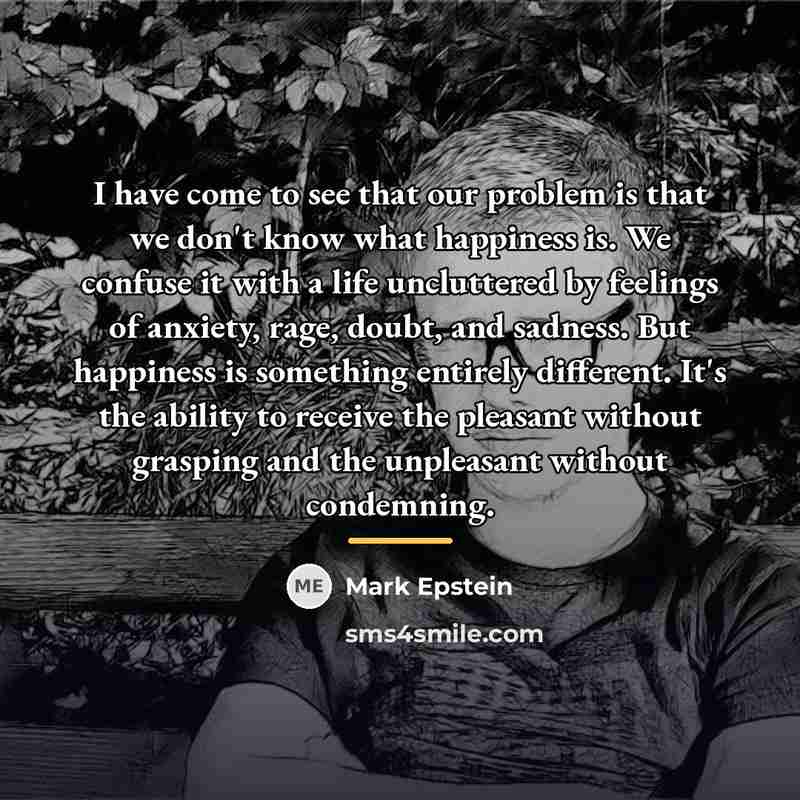
I have come to see that our problem is that we don't know what happiness is. We confuse it with a life… — Mark Epstein Ability Copy Share Image
Meditation did not relieve me of my anxiety so much as flesh it out. It took my anxious response to the world,… — Mark Epstein Anxiety Copy Share Image
“I began to think that there was something awesome about my timing. How was it that, at the exact moment of my… — Mark Epstein Awe Copy Share Image
Buddhism teaches us that happiness does not come from any kind of acquisitiveness, be it material or psychological. Happiness comes from letting… — Mark Epstein Buddhism Copy Share Image
“We all want to be normal. Life, even normal life, is arduous, demanding, and ultimately threatening. We all have to deal with… — Mark Epstein Common Copy Share Image


![“[The Buddha] is not dividing himself into worthy and unworthy pieces; he is one being, indivisible, immune from the tendency to double back and beat up on himself. He has seen the worst in himself and not been taken down.” quote by Mark Epstein](https://sms4smile.com/quotes/img-quotes/e84/mark-epstein-15760_buddhism_the-buddha-is-not-dividing-himself-into_1233367.jpg)