Alcohol Quote by Thich Nhat Hanh
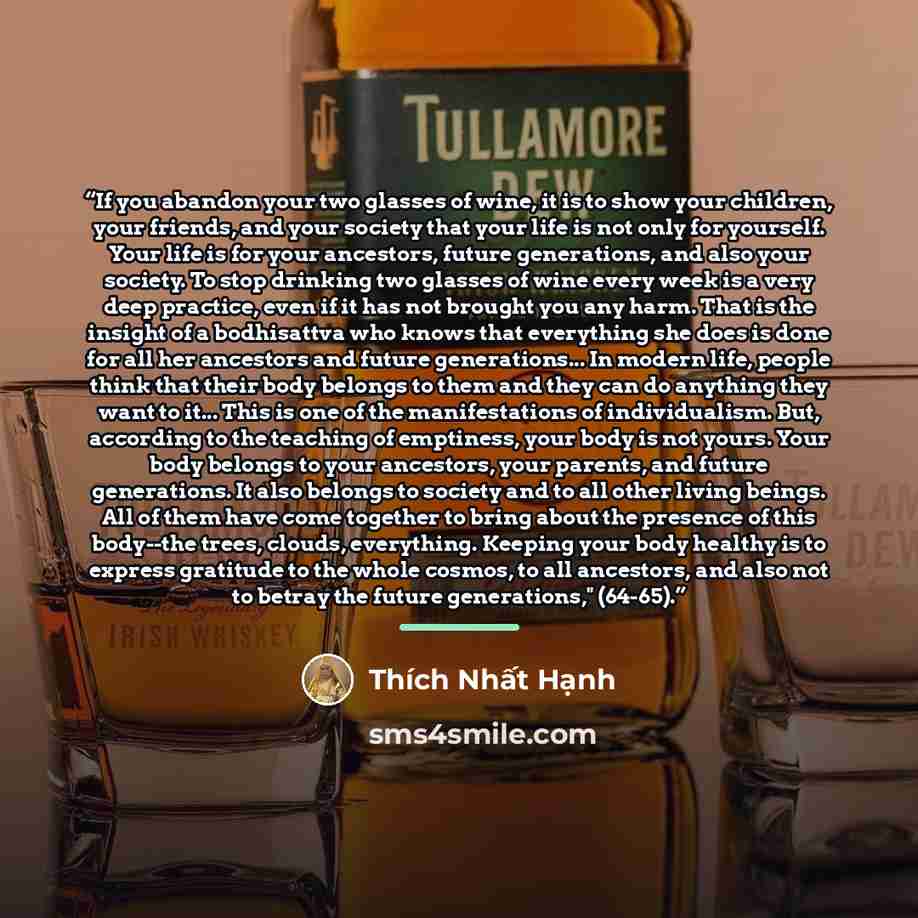
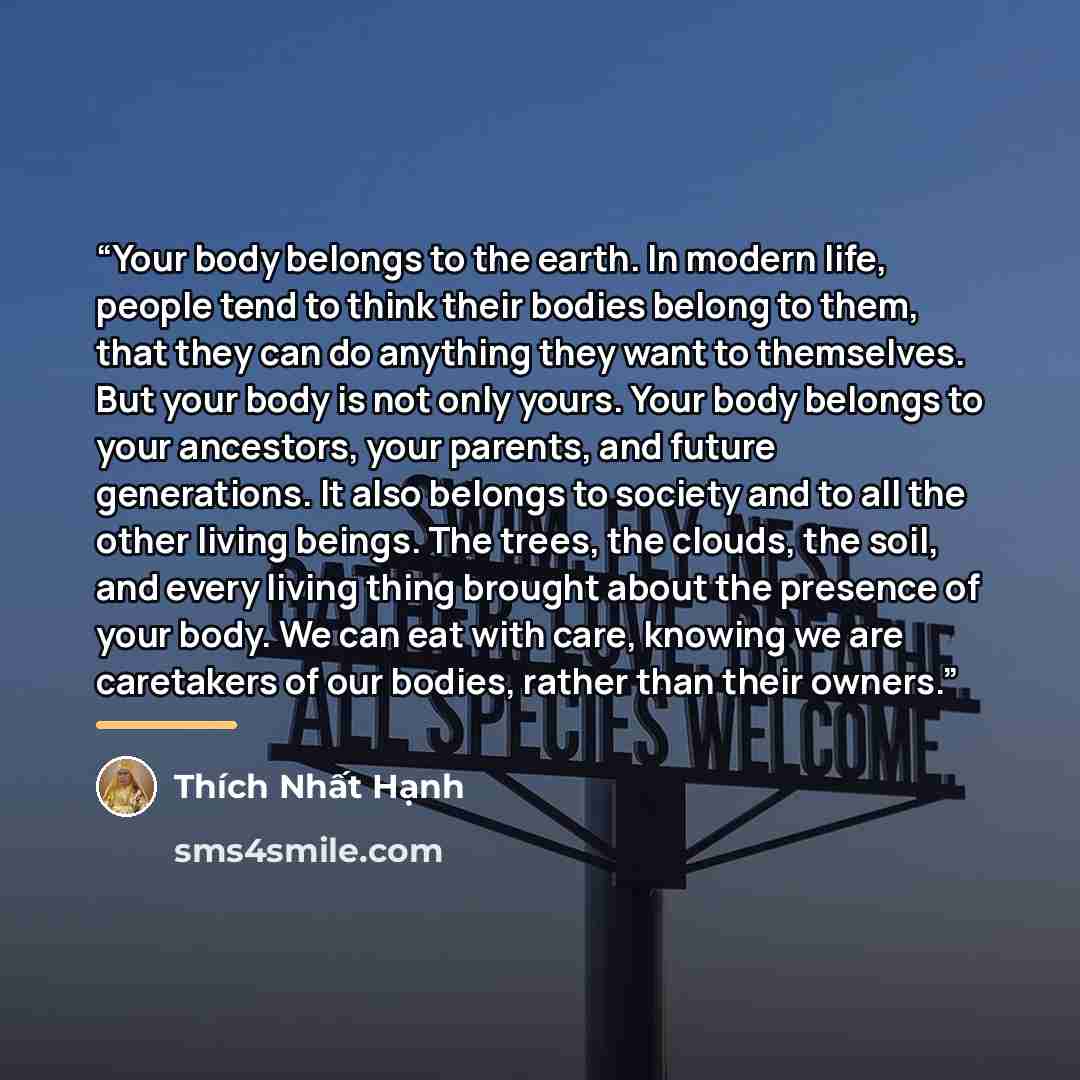
““If you abandon your two glasses of wine, it is to show your children, your friends, and your society that your life is not only for yourself. Your life is for your ancestors, future generations, and also your society. To stop drinking two glasses of wine every week is a very deep practice, even if it has not brought you any harm. That is the insight of a bodhisattva who knows that everything she does is done for all her ancestors and future generations... In modern life, people think that their body belongs to them and they can do anything they want to it... This is one of the manifestations of individualism. But, according to the teaching of emptiness, your body is not yours. Your body belongs to your ancestors, your parents, and future generations. It also belongs to society and to all other living beings. All of them have come together to bring about the presence of this body--the trees, clouds, everything. Keeping your body healthy is to express gratitude to the whole cosmos, to all ancestors, and also not to betray the future generations," (64-65).””
About This Quote
Source Book: The Heart of the Buddha’s Teaching, 1998
Living responsibly means seeing your body as a shared inheritance, not personal property, and acting for ancestors, society, and future generations.
In simple terms: Your body belongs to all, so care for it as gratitude.
Key Takeaway
Treat health as a communal gratitude practice.
Themes
interdependence
gratitude
responsibility
mindfulness
Mood
reflective
serene
inspirational
Type
philosophical
ethical
When to use this quote
- personal health decisions
- environmental activism
- family caregiving
- community health initiatives
Key Concepts
emptiness
bodhisattva ideal
collective well‑being
Questions to Reflect On
- How does seeing your body as shared change daily habits?
- What responsibilities arise from this view?
A Different Perspective
May personal freedom conflict with collective duty, making change hard.


















![“[As in the case of] alcohol prohibition, illegality has driven organized crime, sent countless people to jail, and killed many thousands. Repression does not work.” quote by Sam Branson](https://sms4smile.com/quotes/img-quotes/212/sam-branson-36458_alcohol_as-in-the-case-of-alcohol-prohibition-il_8703.jpg)