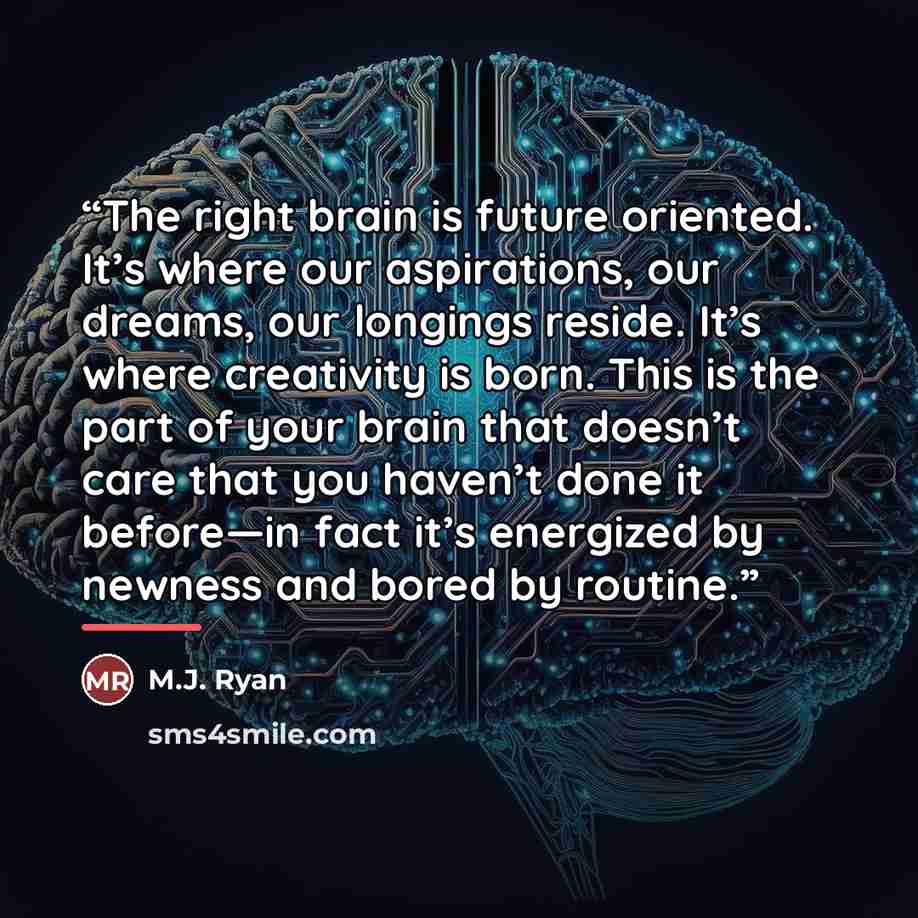
Faith Quote by M.J. Ryan

““when young, people develop beliefs that organize their world and give meaning to their experiences. These mental models determine the goals we pursue and the ways we go about achieving those goals. She has found that the key mental models of successful individuals are: they love learning; they seek challenges and value effort; and they persist in the face of reasonable obstacles. She calls this having a growth, as opposed to a fixed, orientation to life. When people with a fixed orientation fail at something, they believe the situation is out of their control and nothing can be done. They lose faith in their ability to perform. They shrink previous successes and in-flate failures. Anxious about failure, they abandon the effective strategies they have in their repertoire. They give up. Those with a growth orientation do not see failure as an indictment of their capacities. For those folks, a problem is just an opportunity to learn new things. Their attention is on finding strategies for learning. When they blow it, they realize that they just haven’t found the right strategy yet. They wonder how they can improve their performance the next time. They dig in and make optimistic predictions: “The harder it gets, the harder I need to try. I need to remember what I already know about this. I’ll get this soon.””
About This Quote
Source Book: Unknown, possibly article on mindset
Growth mindset emphasizes learning, challenges, effort, and persistence, viewing failure as a chance to improve rather than a defeat.
In simple terms: Believe you can improve through effort and learning.
Key Takeaway
Adopt a growth mindset.
Themes
mindset
learning
resilience
effort
challenge
Mood
hopeful
determined
reflective
Type
motivational
educational
psychological
When to use this quote
- education
- career development
- personal coaching
- team leadership
- skill acquisition
Key Concepts
psychology
growth mindset
self‑efficacy
Questions to Reflect On
- How can you reframe setbacks as learning opportunities?
- What strategies help maintain effort when progress stalls?
A Different Perspective
May overlook structural barriers that limit success despite effort.