America Quote by Kurt Vonnegut
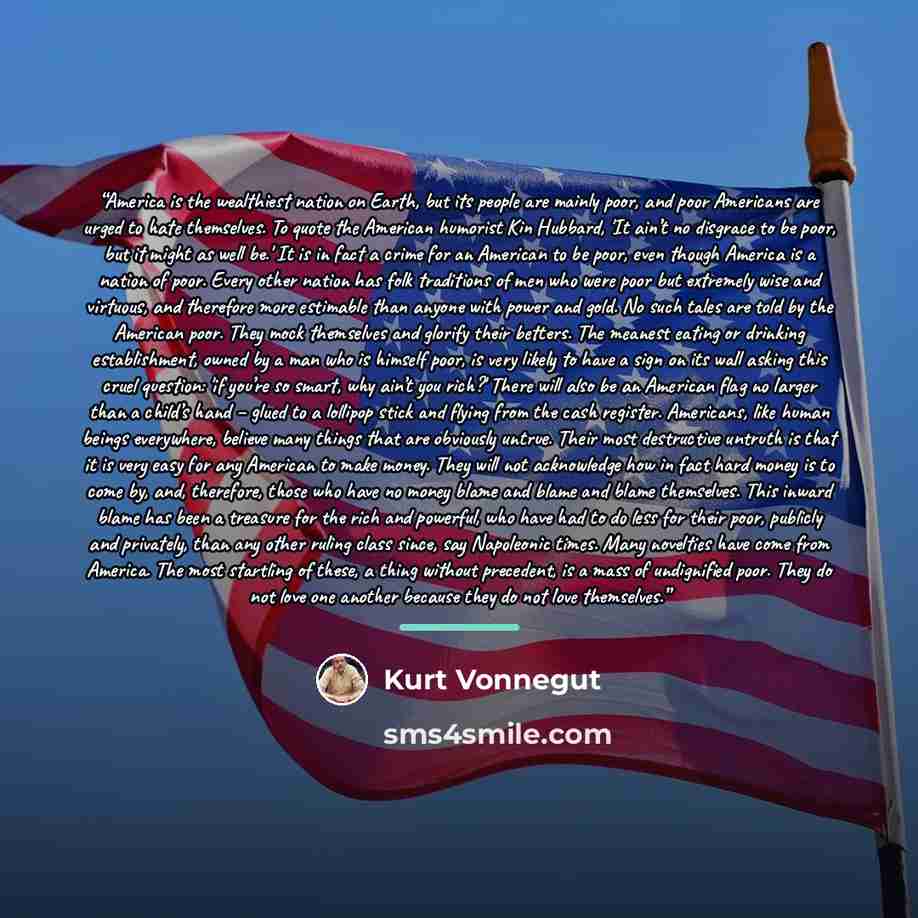
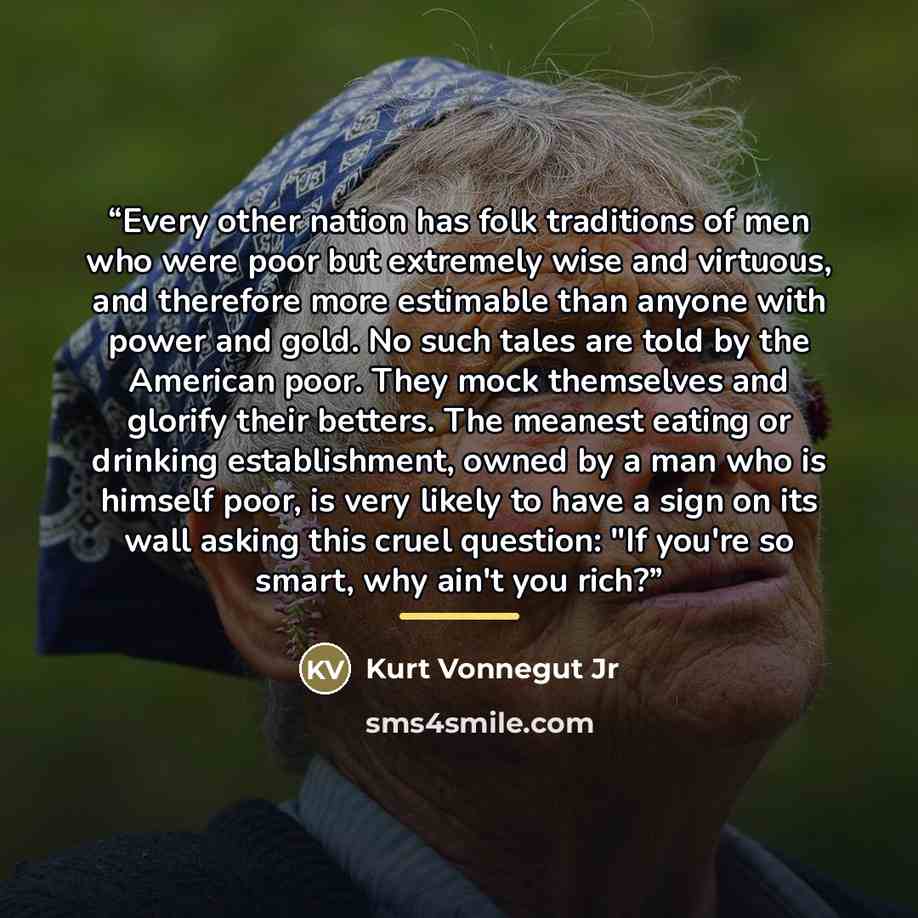
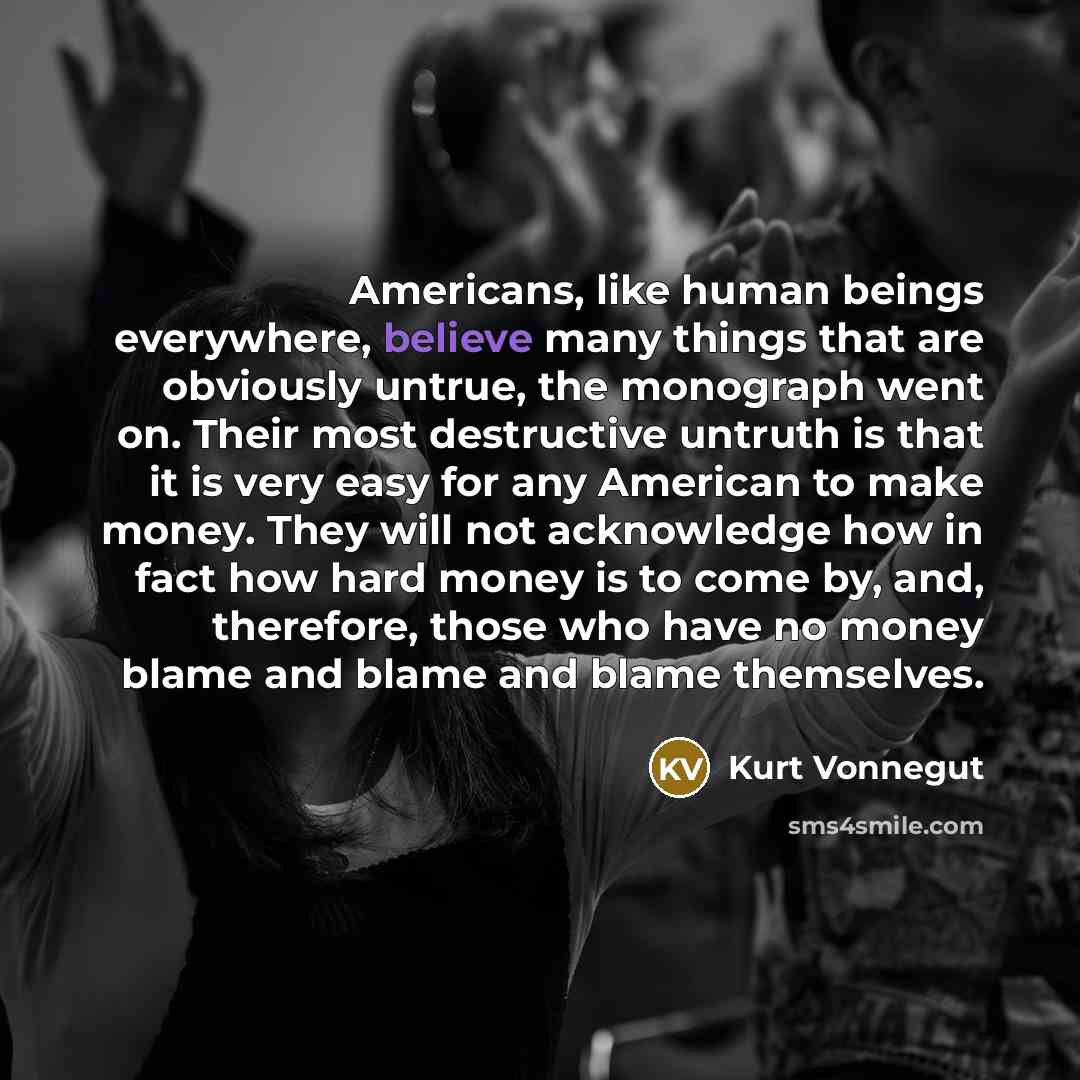
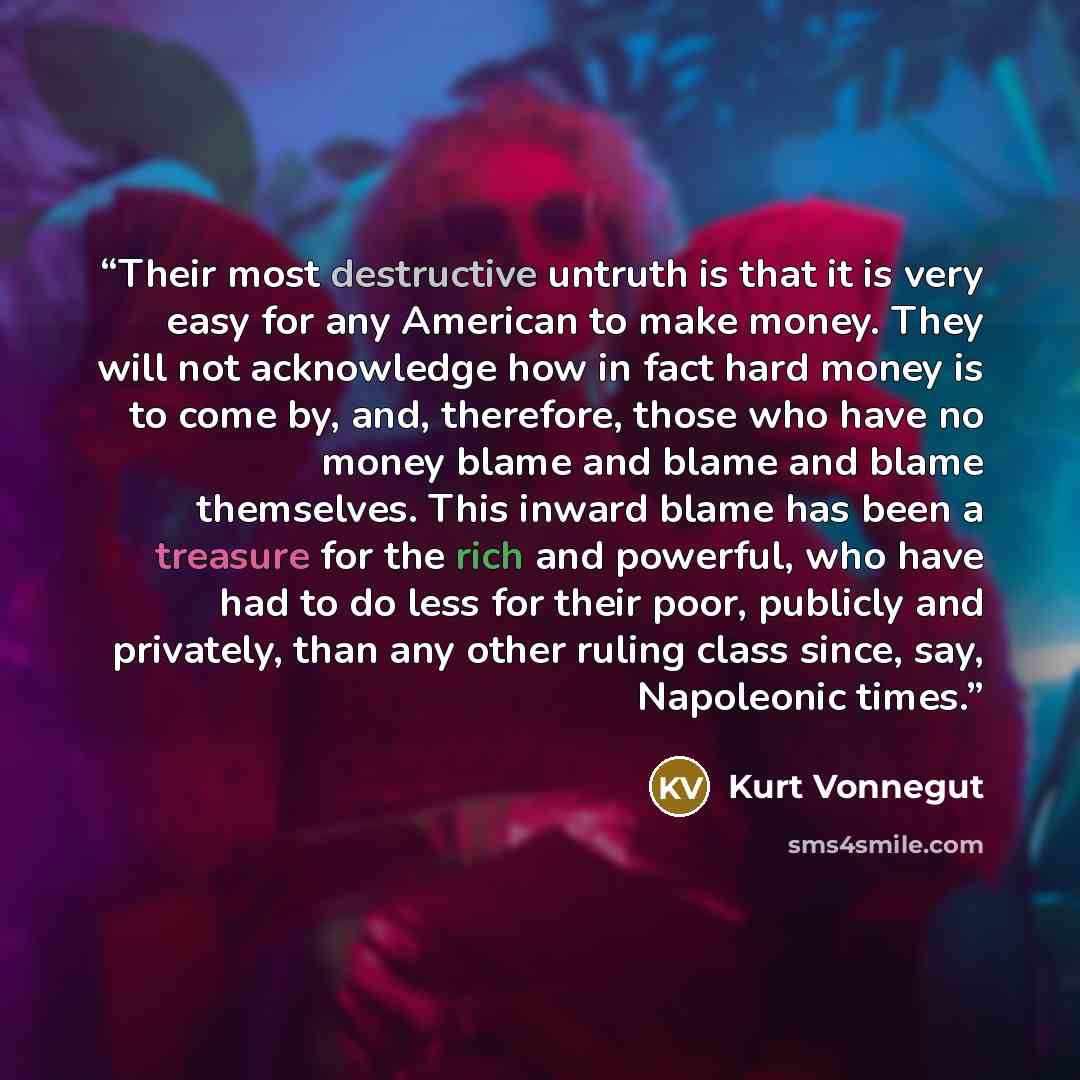
““America is the wealthiest nation on Earth, but its people are mainly poor, and poor Americans are urged to hate themselves. To quote the American humorist Kin Hubbard, 'It ain’t no disgrace to be poor, but it might as well be.' It is in fact a crime for an American to be poor, even though America is a nation of poor. Every other nation has folk traditions of men who were poor but extremely wise and virtuous, and therefore more estimable than anyone with power and gold. No such tales are told by the American poor. They mock themselves and glorify their betters. The meanest eating or drinking establishment, owned by a man who is himself poor, is very likely to have a sign on its wall asking this cruel question: 'if you’re so smart, why ain’t you rich?' There will also be an American flag no larger than a child’s hand – glued to a lollipop stick and flying from the cash register. Americans, like human beings everywhere, believe many things that are obviously untrue. Their most destructive untruth is that it is very easy for any American to make money. They will not acknowledge how in fact hard money is to come by, and, therefore, those who have no money blame and blame and blame themselves. This inward blame has been a treasure for the rich and powerful, who have had to do less for their poor, publicly and privately, than any other ruling class since, say Napoleonic times. Many novelties have come from America. The most startling of these, a thing without precedent, is a mass of undignified poor. They do not love one another because they do not love themselves.””
About This Quote
The quote critiques the paradox of American wealth and pervasive poverty, arguing that cultural narratives blame the poor for their condition, reinforcing inequality.
In simple terms: American wealth masks systemic poverty and self‑blame.
Key Takeaway
Self‑blame sustains inequality.
Themes
Economic inequality
Cultural self‑perception
Class oppression
American myth of meritocracy
Mood
Critical
Reflective
Type
Social critique
Philosophical observation
When to use this quote
- Policy debates on poverty
- Community outreach programs
- Media analysis of class narratives
Key Concepts
Wealth disparity
Social stigma
Narrative control
Practical Applications
- Designing anti‑stigma campaigns
- Informing equitable economic reforms
Questions to Reflect On
- How does self‑blame affect social mobility?
- What narratives could replace the current self‑deprecating view?
A Different Perspective
Some argue that personal responsibility, not systemic bias, primarily drives economic outcomes.

![“Thomas Jefferson High School [..] His high school was named after a slave owner who was also one of the world’s greatest theoreticians on the subject of human liberty.” quote by Kurt Vonnegut](https://sms4smile.com/quotes/img-quotes/73a/kurt-vonnegut-41_freedom_thomas-jefferson-high-school-his-high-sc_9727.jpg)








![“I'll smoke, I'll cough, I'll get the tumors, I'll die, deal? Thank you America. [salutes]” quote by Bill Hicks](https://sms4smile.com/quotes/img-quotes/3d2/bill-hicks-970_america_i-ll-smoke-i-ll-cough-i-ll-get-the-tumor_655.jpg)