Habits Quote by Chris Voss
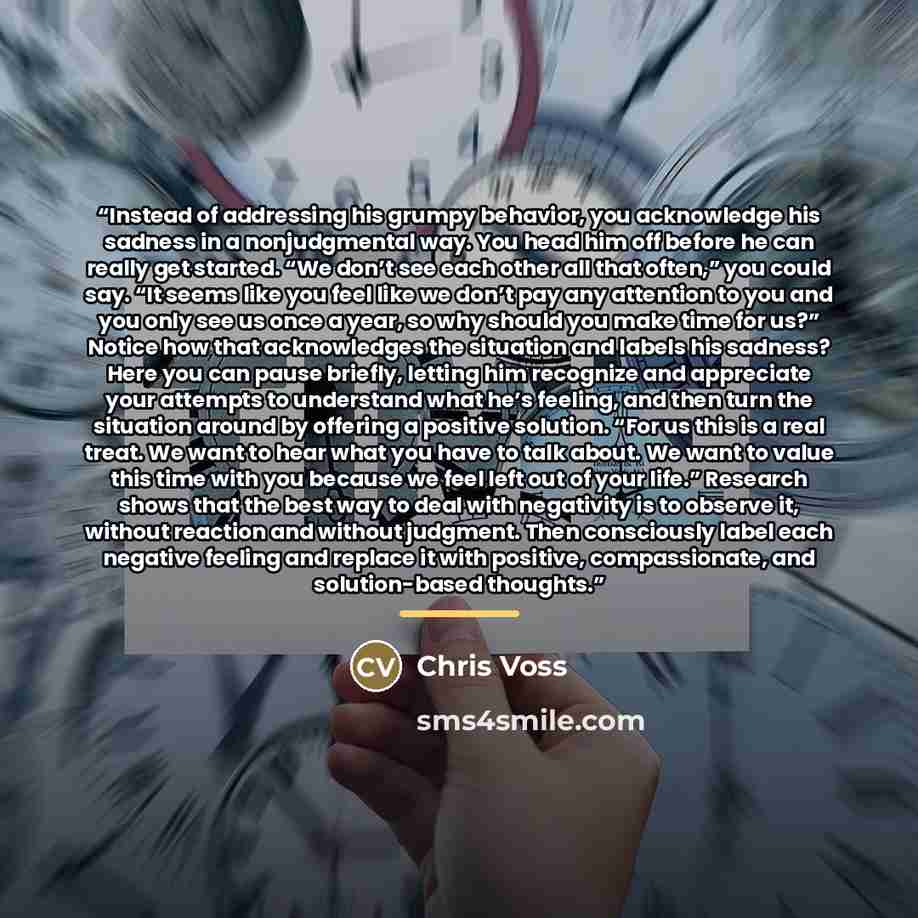
““Instead of addressing his grumpy behavior, you acknowledge his sadness in a nonjudgmental way. You head him off before he can really get started. “We don’t see each other all that often,” you could say. “It seems like you feel like we don’t pay any attention to you and you only see us once a year, so why should you make time for us?” Notice how that acknowledges the situation and labels his sadness? Here you can pause briefly, letting him recognize and appreciate your attempts to understand what he’s feeling, and then turn the situation around by offering a positive solution. “For us this is a real treat. We want to hear what you have to talk about. We want to value this time with you because we feel left out of your life.” Research shows that the best way to deal with negativity is to observe it, without reaction and without judgment. Then consciously label each negative feeling and replace it with positive, compassionate, and solution-based thoughts.””
About This Quote
Source Book: Never Split the Difference by Chris Voss, 2016
Recognize and label another's sadness before reacting, then shift to a compassionate, solution‑focused response.
In simple terms: Acknowledge feelings, then guide toward positivity.
Key Takeaway
Label emotions, then offer constructive empathy.
Themes
communication
empathy
conflict resolution
Mood
calm
empathetic
constructive
Type
advice
psychology
relationship.
When to use this quote
- family gatherings
- customer service
- team meetings
- therapy sessions
- coaching
Key Concepts
active listening
emotional labeling
reframing
Questions to Reflect On
- How can you practice non‑judgmental listening in tense moments?
- What positive solutions can you propose after labeling emotions?
A Different Perspective
May overlook the other person's need for direct problem‑solving.