The habits we form from childhood make no small difference, but rather they make all the difference. — Aristotle Copy Share Image
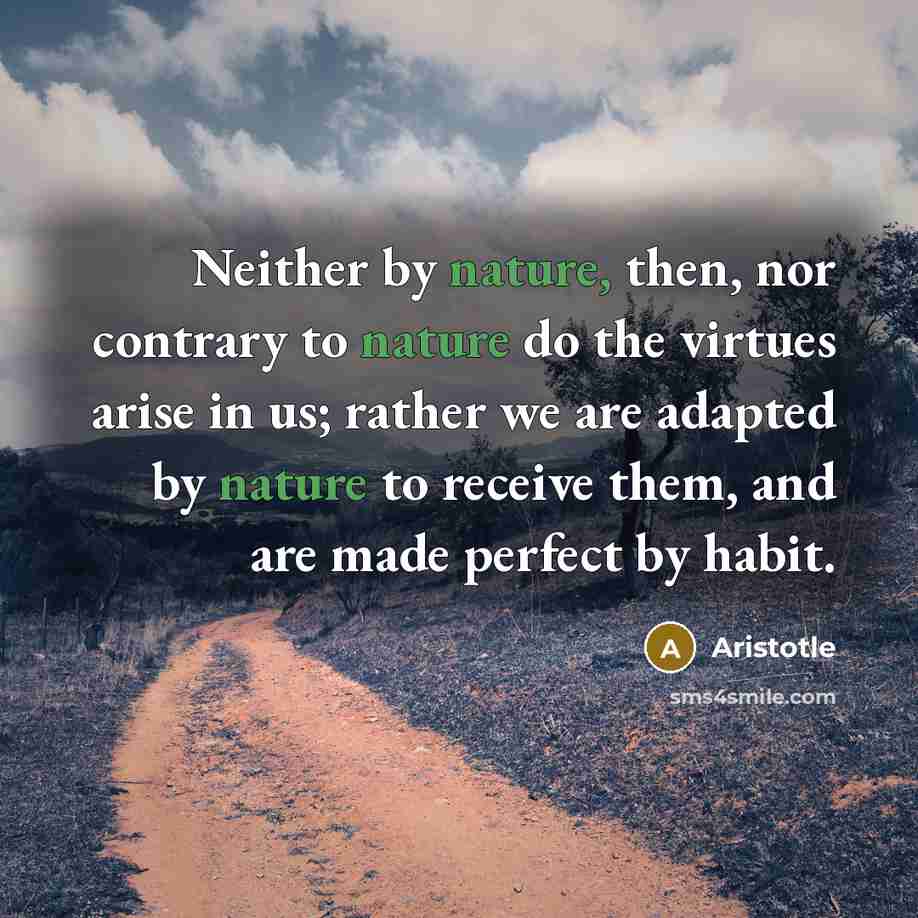
Neither by nature, then, nor contrary to nature do the virtues arise in us; rather we are adapted by nature to receive… — Aristotle Copy Share Image
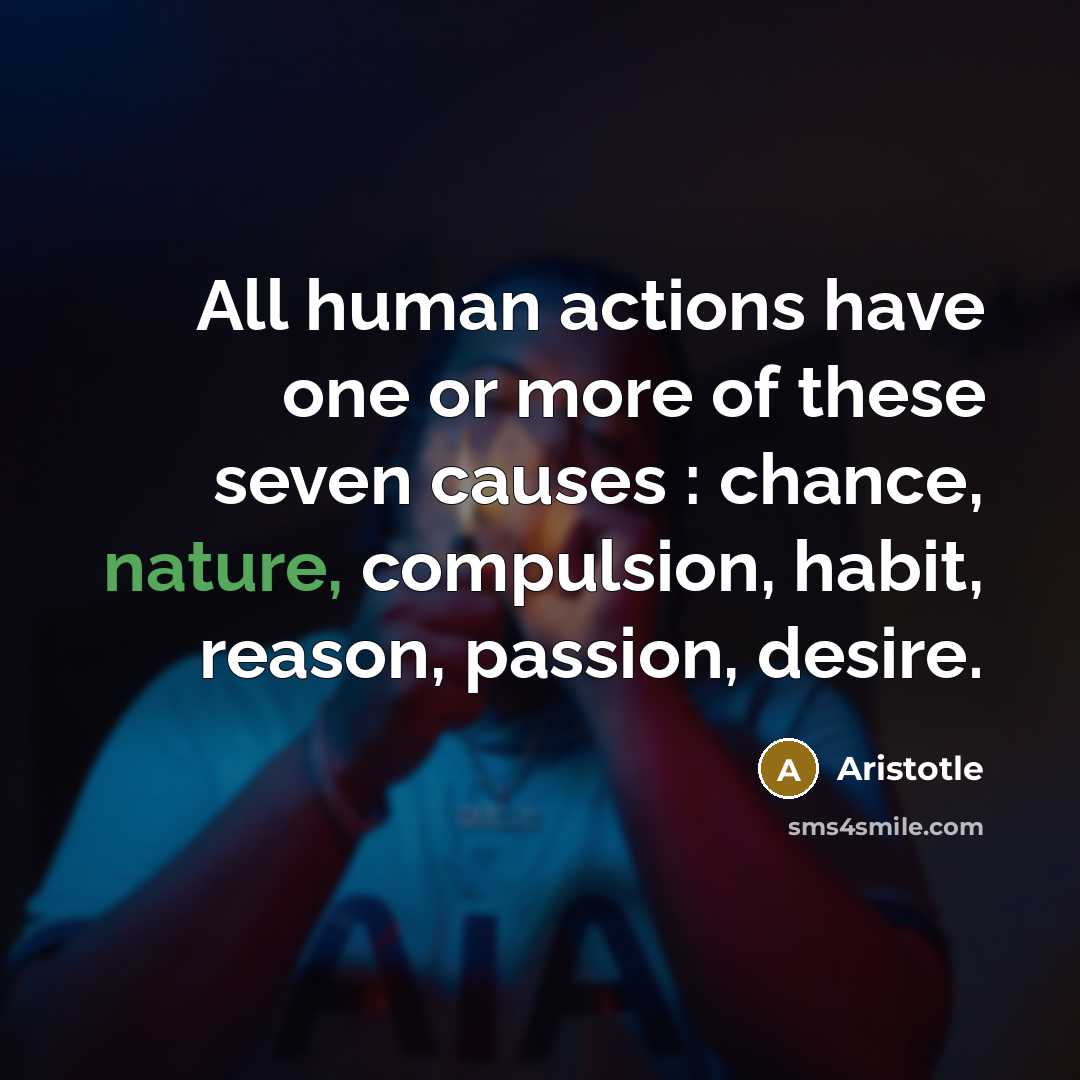
All human actions have one or more of these seven causes : chance, nature, compulsion, habit, reason, passion, desire. — Aristotle Copy Share Image
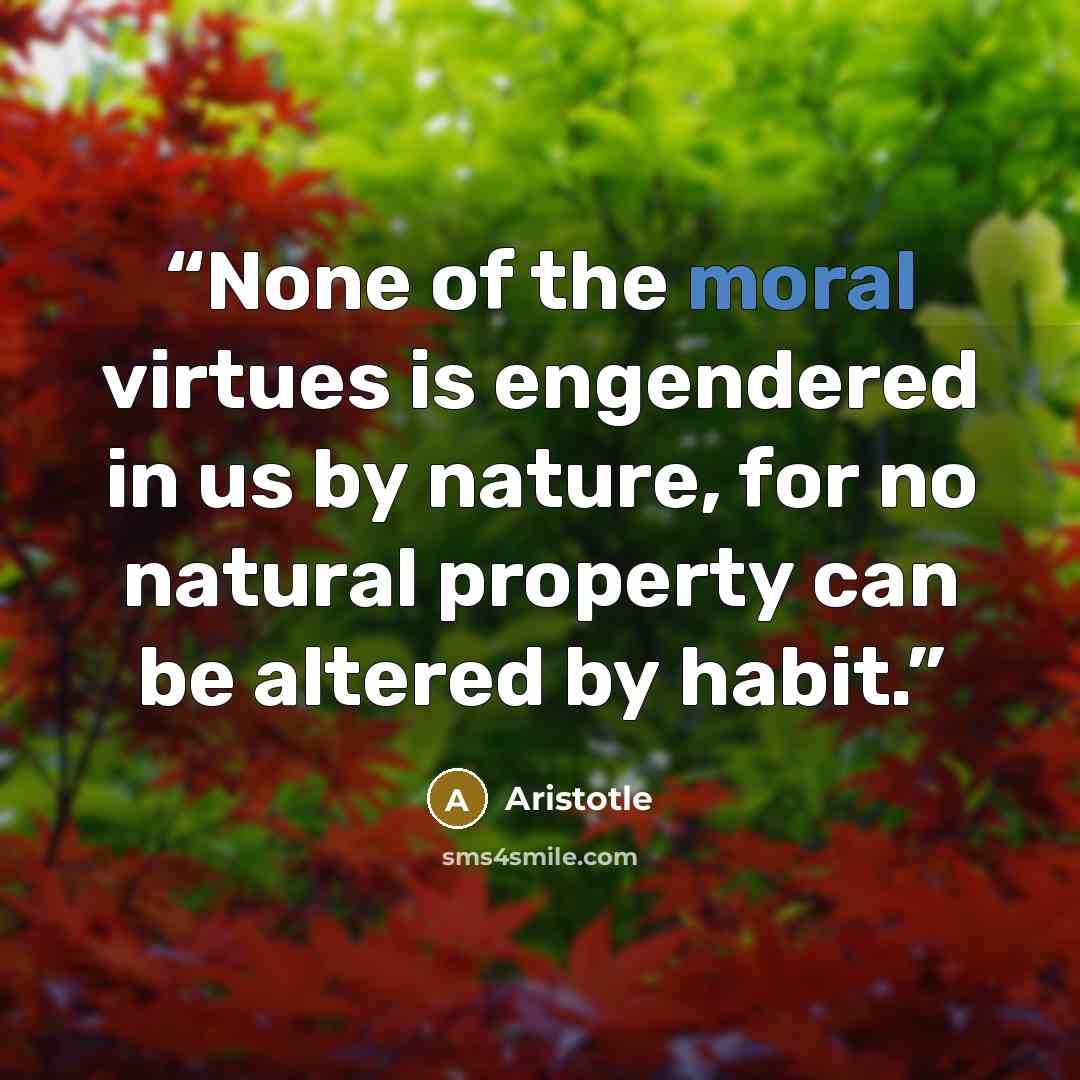
“None of the moral virtues is engendered in us by nature, for no natural property can be altered by habit.” — Aristotle Copy Share Image
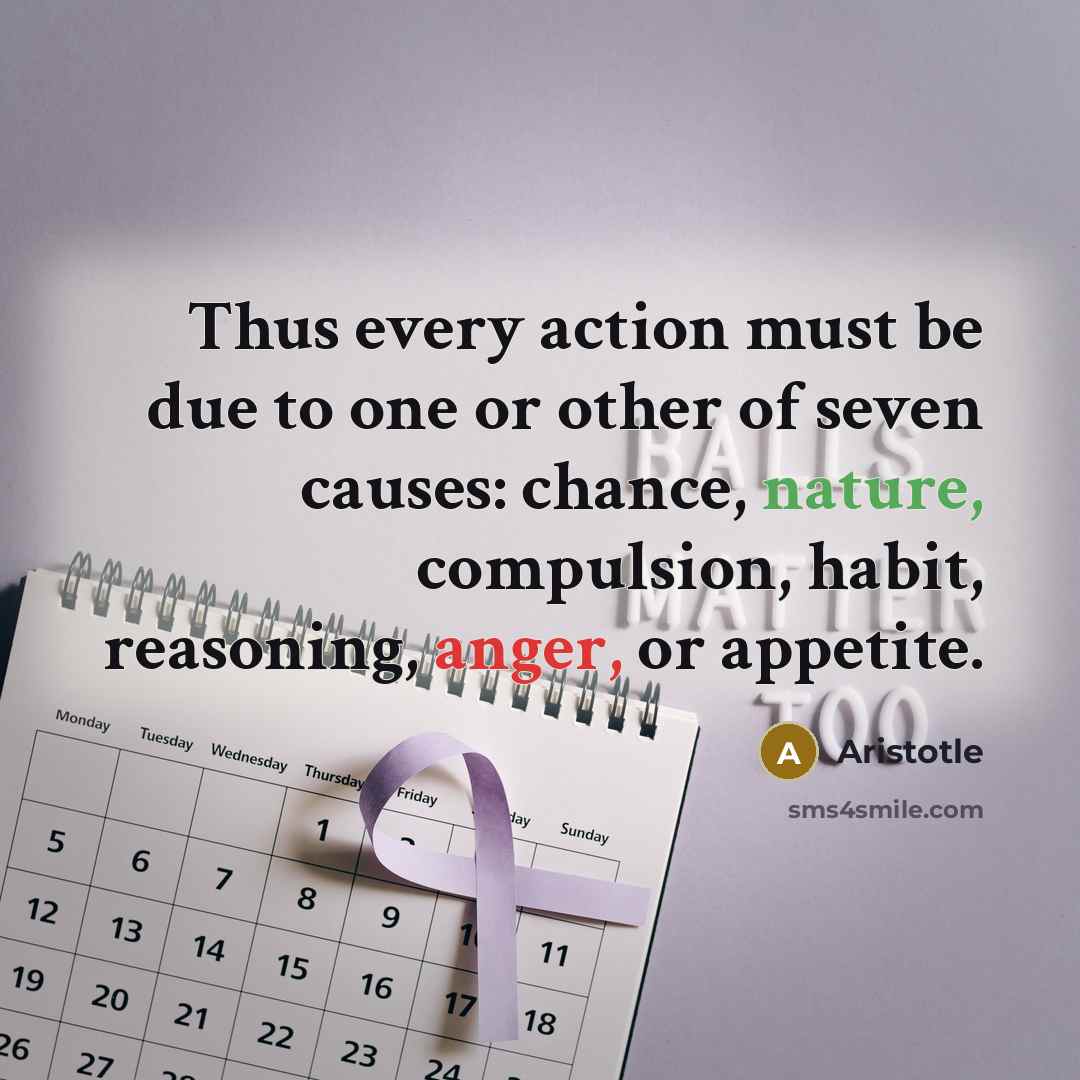
Thus every action must be due to one or other of seven causes: chance, nature, compulsion, habit, reasoning, anger, or appetite. — Aristotle Copy Share Image
“Hence anyone who is to listen intelligently to lectures about what is noble and just and, generally, about the subjects of political… — Aristotle Copy Share Image
“It is therefore not of small moment whether we are trained from adulthood in one set of habits or another; on the… — Aristotle Copy Share Image
In a word, acts of any kind produce habits or characters of the same kind. Hence we ought to make sure that… — Aristotle Copy Share Image
Nature does nothing without a purpose. In children may be observed the traces and seeds of what will one day be settled… — Aristotle Copy Share Image
The virtues [moral excellence] therefore are engendered in us neither by nature nor yet in violation of nature; nature gives us the… — Aristotle Copy Share Image
It is impossible, or not easy, to alter by argument what has long been absorbed by habit — Aristotle Copy Share Image
I say that habit's but a long practice, friend, and this becomes men's nature in the end. — Aristotle Copy Share Image
It is well to be up before daybreak, for such habits contribute to health, wealth, and wisdom. — Aristotle Copy Share Image
We are the sum of our actions, and therefore our habits make all the difference. — Aristotle Copy Share Image
Today you can start forming habits for overcoming all obstacles in life... even nicotine cravings — Aristotle Copy Share Image
Moral excellence comes about as a result of habit. We become just by doing just acts, temperate by doing temperate acts, brave… — Aristotle Copy Share Image
It is easy to perform a good action, but not easy to acquire a settled habit of performing such actions. — Aristotle Copy Share Image
We are what we repeatedly do... excellence, therefore, isn't just an act, but a habit and life isn't just a series of… — Aristotle Copy Share Image
For legislators make the citizens good by forming habits in them, and this is the wish of every legislator, and those who… — Aristotle Copy Share Image
The moral virtues, then, are produced in us neither by nature nor against nature. Nature, indeed, prepares in us the ground for… — Aristotle Copy Share Image
“The virtues therefore are engendered in us neither by nature nor yet in violation of nature; nature gives us the capacity to… — Aristotle Copy Share Image
That which most contributes to the permanence of constitutions is the adaptation of education to the form of government, and yet in… — Aristotle Copy Share Image
Excellence is an art won by training and habituation. We do not act rightly because we have virtue or excellence, but we… — Aristotle Copy Share Image
We are masters of our actions from the beginning up to the very end. But, in the case of our habits, we… — Aristotle Copy Share Image
When we look at the matter from another point of view, great caution would seem to be required. For the habit of… — Aristotle Copy Share Image
The knowledge of the soul admittedly contributes greatly to the advance of truth in general, and, above all, to our understanding of Nature, for… — Aristotle Copy Share Image
Young men have strong passions and tend to gratify them indiscriminately. Of the bodily desires, it is the sexual by which they are most… — Aristotle Copy Share Image
The body is at its best between the ages of thirty and thirty-five; the mind is at its best about the age of forty-nine. — Aristotle Copy Share Image
The ensouled is distinguished from the unsouled by its being alive. Now since being alive is spoken of in many ways, even if only… — Aristotle Copy Share Image
Although it may be difficult in theory to know what is just and equal, the practical difficulty of inducing those to forbear who can,… — Aristotle Copy Share Image
The true forms of government, therefore, are those in which the one, or the few, or the many, govern with a view to the… — Aristotle Copy Share Image
All persons ought to endeavor to follow what is right, and not what is established. — Aristotle Copy Share Image
Give a man a fish, you feed him for a day. Give a man a poisoned fish, you feed him for the rest of… — Aristotle Copy Share Image
The man who confers a favour would rather not be repaid in the same coin. — Aristotle Copy Share Image
Obstinate people can be divided into the opinionated, the ignorant, and the boorish. — Aristotle Copy Share Image


![“The virtues [moral excellence] therefore are engendered in us neither by nature nor yet in violation of nature; nature gives us the capacity to receive them, and this capacity is brought to maturity by habit.” quote by Aristotle](https://sms4smile.com/quotes/img-quotes/653/aristotle-78_capacity_the-virtues-moral-excellence-therefore-a_1076391.jpg)