Hence both women and children must be educated with an eye to the constitution, if indeed it makes any difference to the… — Aristotle Copy Share Image
If then, as we say, good craftsmen look to the mean as they work, and if virtue, like nature, is more accurate… — Aristotle Copy Share Image
We maintain, and have said in the Ethics, if the arguments there adduced are of any value, that happiness is the realization… — Aristotle Copy Share Image
There are, then, three states of mind ... two vices--that of excess, and that of defect; and one virtue--the mean; and all… — Aristotle Copy Share Image
Whereas happiness is the highest good, being a realization and perfect practice of virtue, which some can attain, while others have little… — Aristotle Copy Share Image
For both excessive and insufficient exercise destroy one's strength, and both eating and drinking too much or too little destroy health, whereas… — Aristotle Copy Share Image
Just as a royal rule, if not a mere name, must exist by virtue of some great personal superiority in the king,… — Aristotle Copy Share Image
“To feel these feelings at the right time, on the right occasion, towards the right people, for the right purpose and in… — Aristotle Copy Share Image
So virtue is a purposive disposition, lying in a mean that is relative to us and determined by a rational principle, and… — Aristotle Copy Share Image
Happiness, whether consisting in pleasure or virtue, or both, is more often found with those who are highly cultivated in their minds… — Aristotle Copy Share Image
Phronimos, possessing practical wisdom . But the only virtue special to a ruler is practical wisdom; all the others must be possessed,… — Aristotle Copy Share Image
Virtue also depends on ourselves. And so also does vice. For where we are free to act we are also free to… — Aristotle Copy Share Image
If what was said in the Ethics is true, that the happy life is the life according to virtue lived without impediment,… — Aristotle Copy Share Image
Prudence as well as Moral Virtue determines the complete performance of a man's proper function: Virtue ensures the rightness of the end… — Aristotle Copy Share Image
Now the soul of man is divided into two parts, one of which has a rational principle in itself, and the other,… — Aristotle Copy Share Image
In practical matters the end is not mere speculative knowledge of what is to be done, but rather the doing of it.… — Aristotle Copy Share Image
It [Justice] is complete virtue in the fullest sense, because it is the active exercise of complete virtue; and it is complete… — Aristotle Copy Share Image
Again, it is possible to fail in many ways (for evil belongs to the class of the unlimited and good to that… — Aristotle Copy Share Image
[the virtues] cannot exist without Prudence. A proof of this is that everyone, even at the present day, in defining Virtue, after… — Aristotle Copy Share Image
In [the soul] one part naturally rules, and the other is subject, and the virtue of the ruler we maintain to be… — Aristotle Copy Share Image
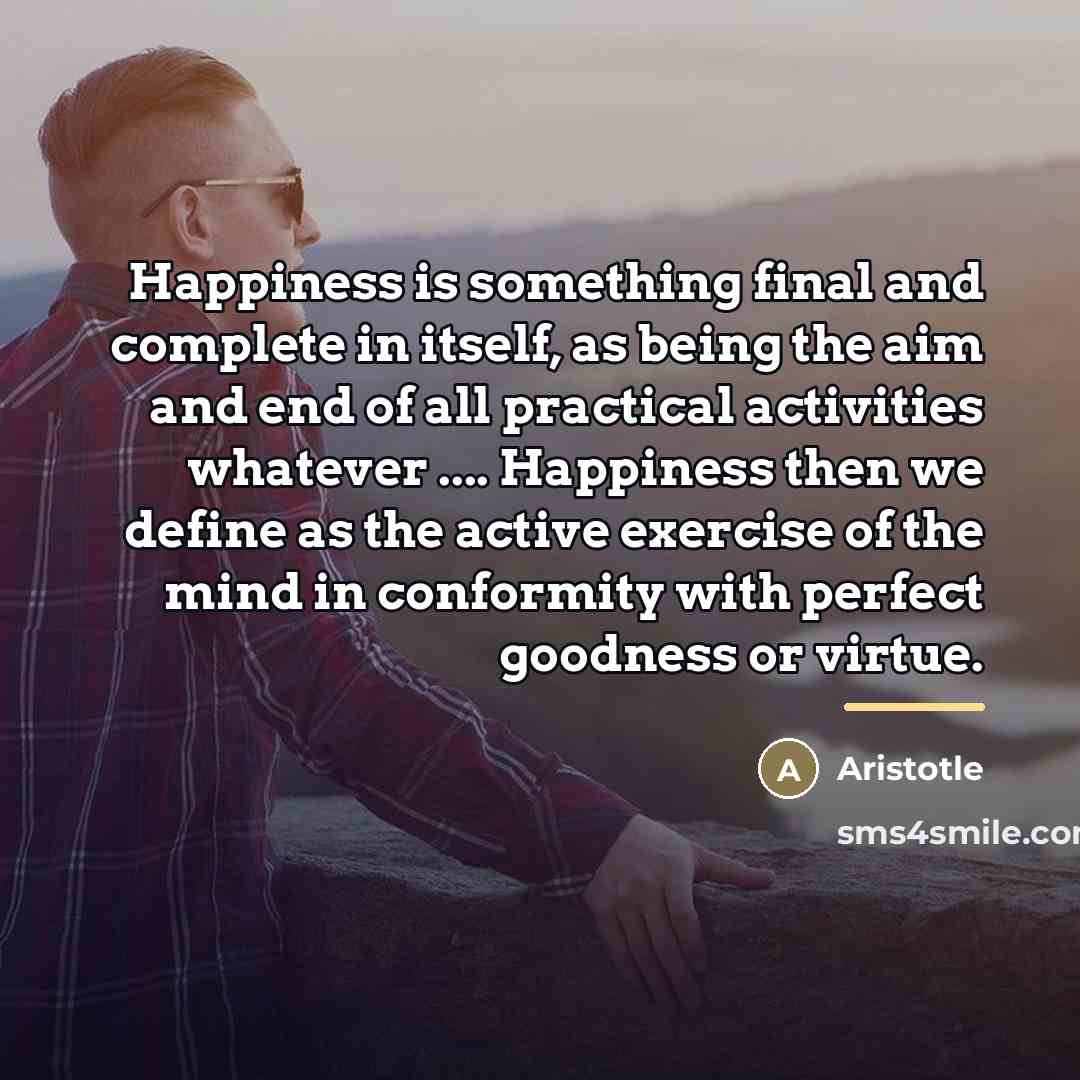
Happiness is something final and complete in itself, as being the aim and end of all practical activities whatever … Happiness then… — Aristotle Copy Share Image
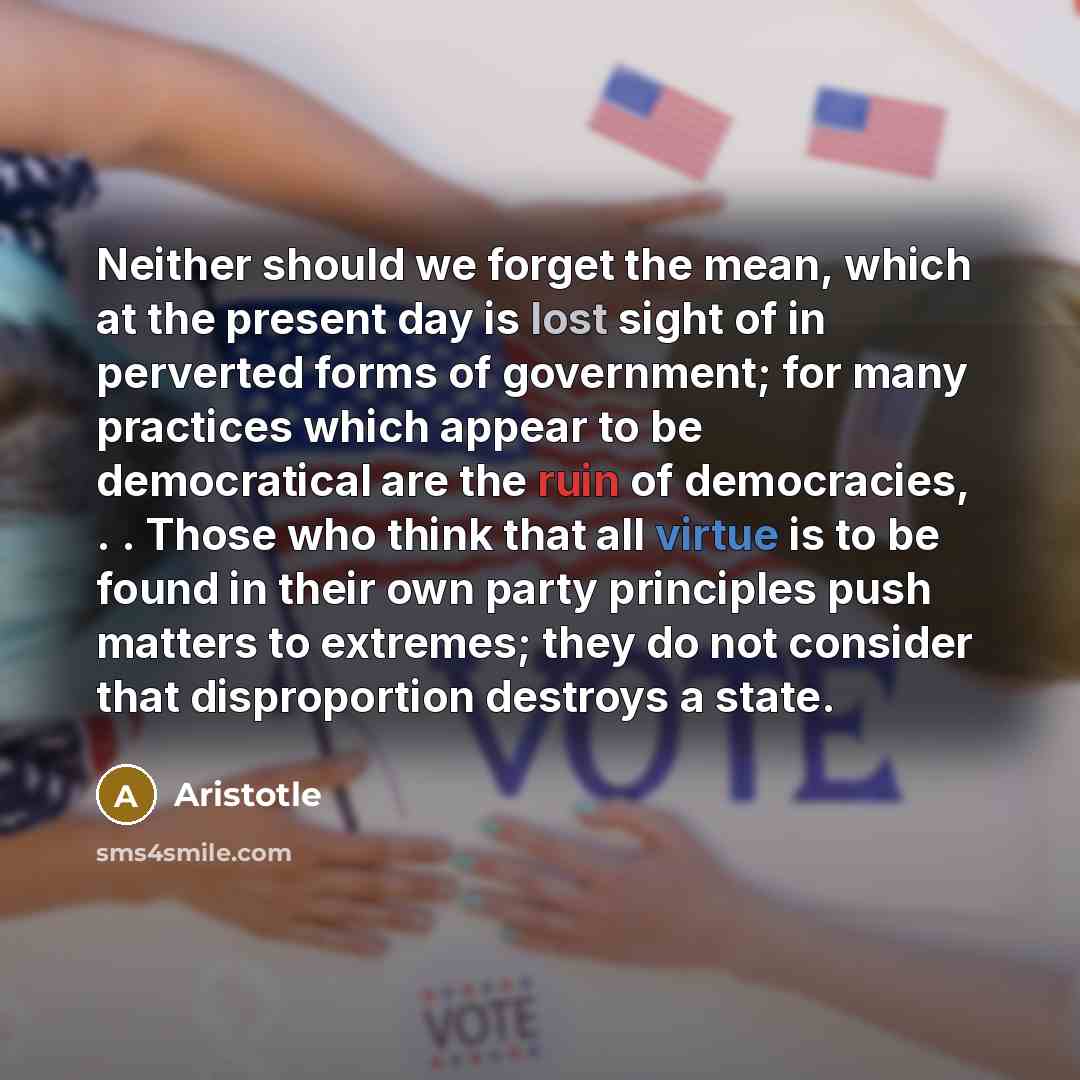
Neither should we forget the mean, which at the present day is lost sight of in perverted forms of government; for many… — Aristotle Copy Share Image
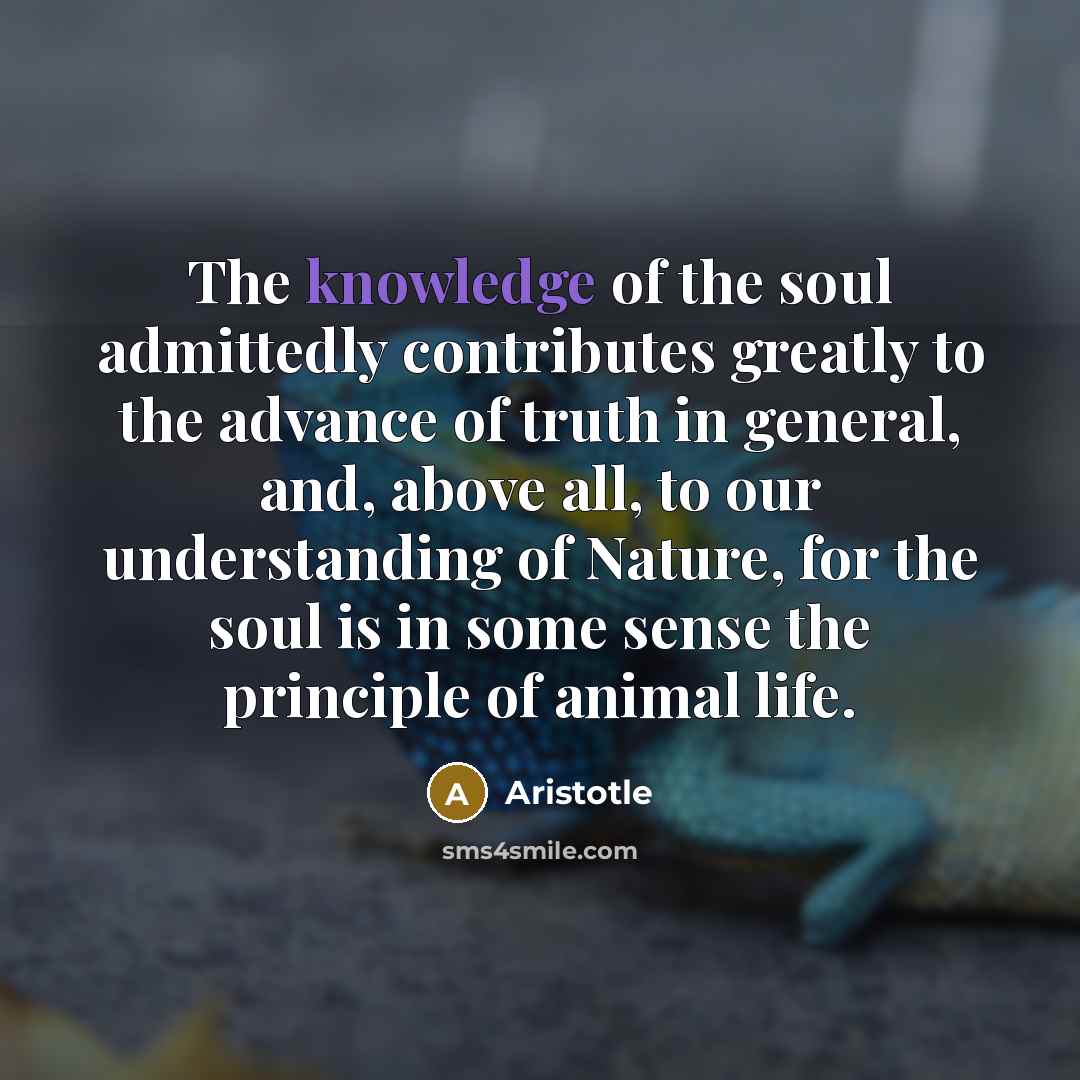
The knowledge of the soul admittedly contributes greatly to the advance of truth in general, and, above all, to our understanding of Nature, for… — Aristotle Copy Share Image
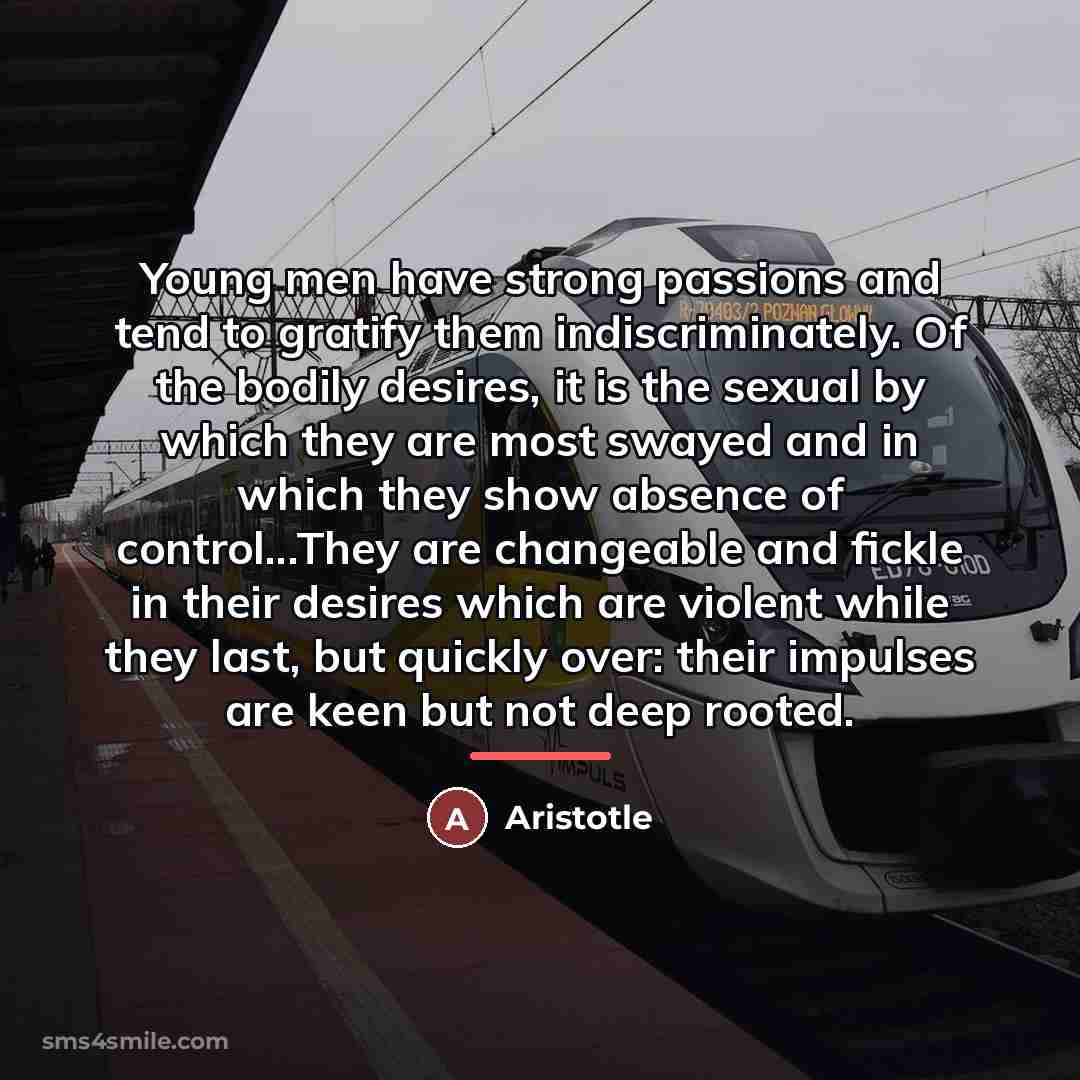
Young men have strong passions and tend to gratify them indiscriminately. Of the bodily desires, it is the sexual by which they are most… — Aristotle Copy Share Image
The body is at its best between the ages of thirty and thirty-five; the mind is at its best about the age of forty-nine. — Aristotle Copy Share Image
The ensouled is distinguished from the unsouled by its being alive. Now since being alive is spoken of in many ways, even if only… — Aristotle Copy Share Image
Although it may be difficult in theory to know what is just and equal, the practical difficulty of inducing those to forbear who can,… — Aristotle Copy Share Image
The true forms of government, therefore, are those in which the one, or the few, or the many, govern with a view to the… — Aristotle Copy Share Image
All persons ought to endeavor to follow what is right, and not what is established. — Aristotle Copy Share Image
Give a man a fish, you feed him for a day. Give a man a poisoned fish, you feed him for the rest of… — Aristotle Copy Share Image
The man who confers a favour would rather not be repaid in the same coin. — Aristotle Copy Share Image
Obstinate people can be divided into the opinionated, the ignorant, and the boorish. — Aristotle Copy Share Image
Happiness does not consist in pastimes and amusements but in virtuous activities. — Aristotle Copy Share Image
To learn is a natural pleasure, not confined to philosophers, but common to all men. — Aristotle Copy Share Image
![“If then, as we say, good craftsmen look to the mean as they work, and if virtue, like nature, is more accurate and better than any form of art, it will follow that virtue has the quality of hitting the mean. I refer to moral virtue [not intellectual], for this is concerned with emotions and…” quote by Aristotle](https://sms4smile.com/quotes/img-quotes/796/aristotle-78_accurate_if-then-as-we-say-good-craftsmen-look-to_695282.jpg)
![“It [Justice] is complete virtue in the fullest sense, because it is the active exercise of complete virtue; and it is complete because its possessor can exercise it in relation to another person, and not only by himself.” quote by Aristotle](https://sms4smile.com/quotes/img-quotes/d25/aristotle-78_active_it-justice-is-complete-virtue-in-the-ful_1025186.jpg)
![“[the virtues] cannot exist without Prudence. A proof of this is that everyone, even at the present day, in defining Virtue, after saying what disposition it is [i.e. moral virtue] and specifying the things with which it is concerned, adds that it is a disposition determined by the right principle…” quote by Aristotle](https://sms4smile.com/quotes/img-quotes/134/aristotle-78_add_the-virtues-cannot-exist-without-prudenc_3029435.jpg)
![“In [the soul] one part naturally rules, and the other is subject, and the virtue of the ruler we maintain to be different from that of the subject; the one being the virtue of the rational, and the other of the irrational part. Now, it is obvious that the same principle applies generally, and…” quote by Aristotle](https://sms4smile.com/quotes/img-quotes/3df/aristotle-78_all-things_in-the-soul-one-part-naturally-rules-and_54509.jpg)