As Nicholas Kristof put it in The New York Times: “Cues of…
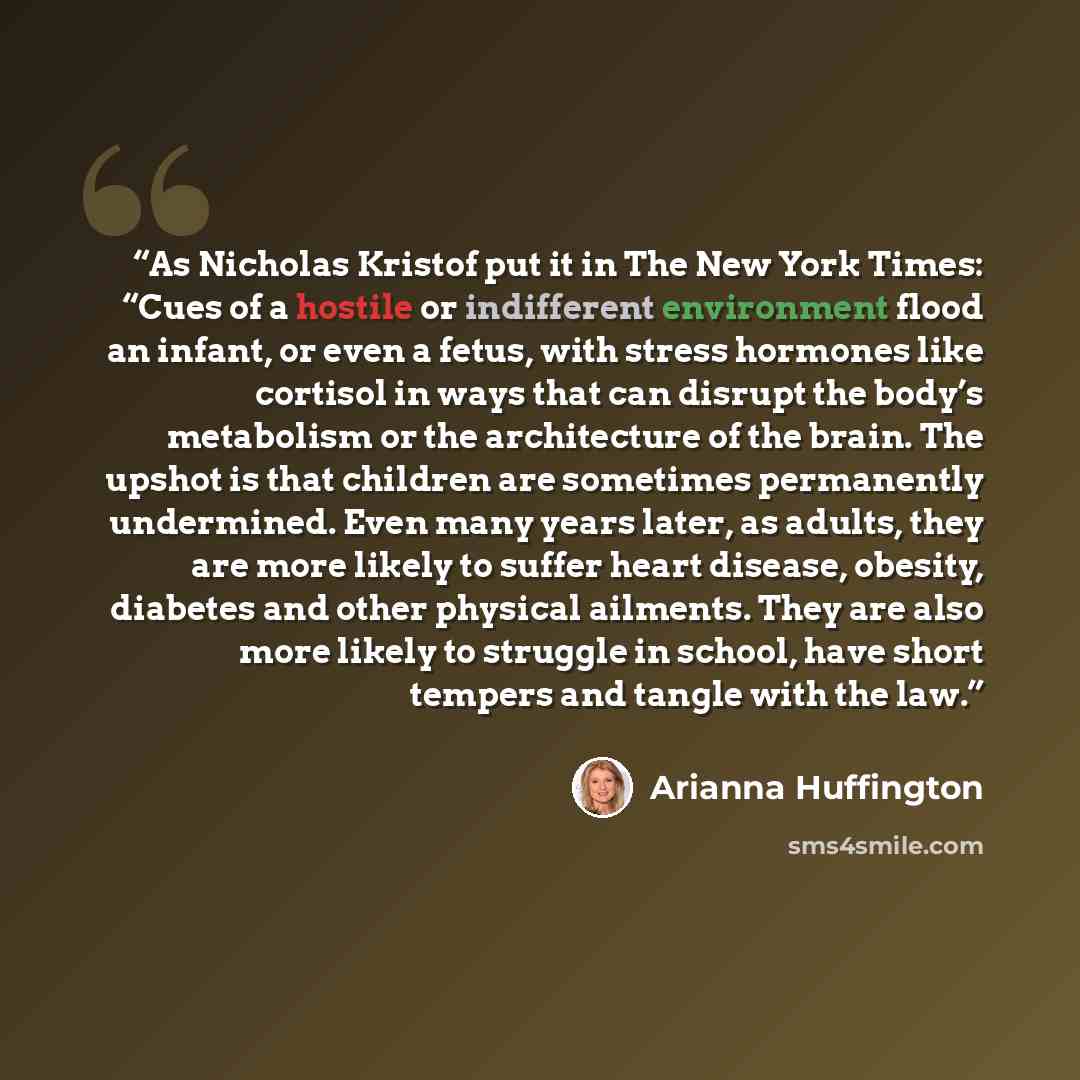
““As Nicholas Kristof put it in The New York Times: “Cues of a hostile or indifferent environment flood an infant, or even a fetus, with stress hormones like cortisol in ways that can disrupt the body’s metabolism or the architecture of the brain. The upshot is that children are sometimes permanently undermined. Even many years later, as adults, they are more likely to suffer heart disease, obesity, diabetes and other physical ailments. They are also more likely to struggle in school, have short tempers and tangle with the law.””
About This Quote
This interpretation was drafted with AI assistance. It is one reading of the quote, not the author's own explanation.
Early adverse environments trigger stress hormones that can alter brain development and metabolism, leading to long‑term health and behavioral problems.
In simple terms: Harsh early conditions can cause lasting physical and mental issues.
Key Takeaway
Address early stress to prevent lifelong harm.
Themes
health
development
stress
inequality
Mood
concerned
hopeful
serious
Type
informational
advocacy
When to use this quote
- parenting
- public health policy
- education
- criminal justice reform
- clinical intervention
Key Concepts
neurobiology
epigenetics
social determinants of health
Questions to Reflect On
- How can societies reduce early stress exposure?
- What interventions best support affected children?
A Different Perspective
Not all children exposed to stress develop these outcomes; resilience and support can mitigate effects.