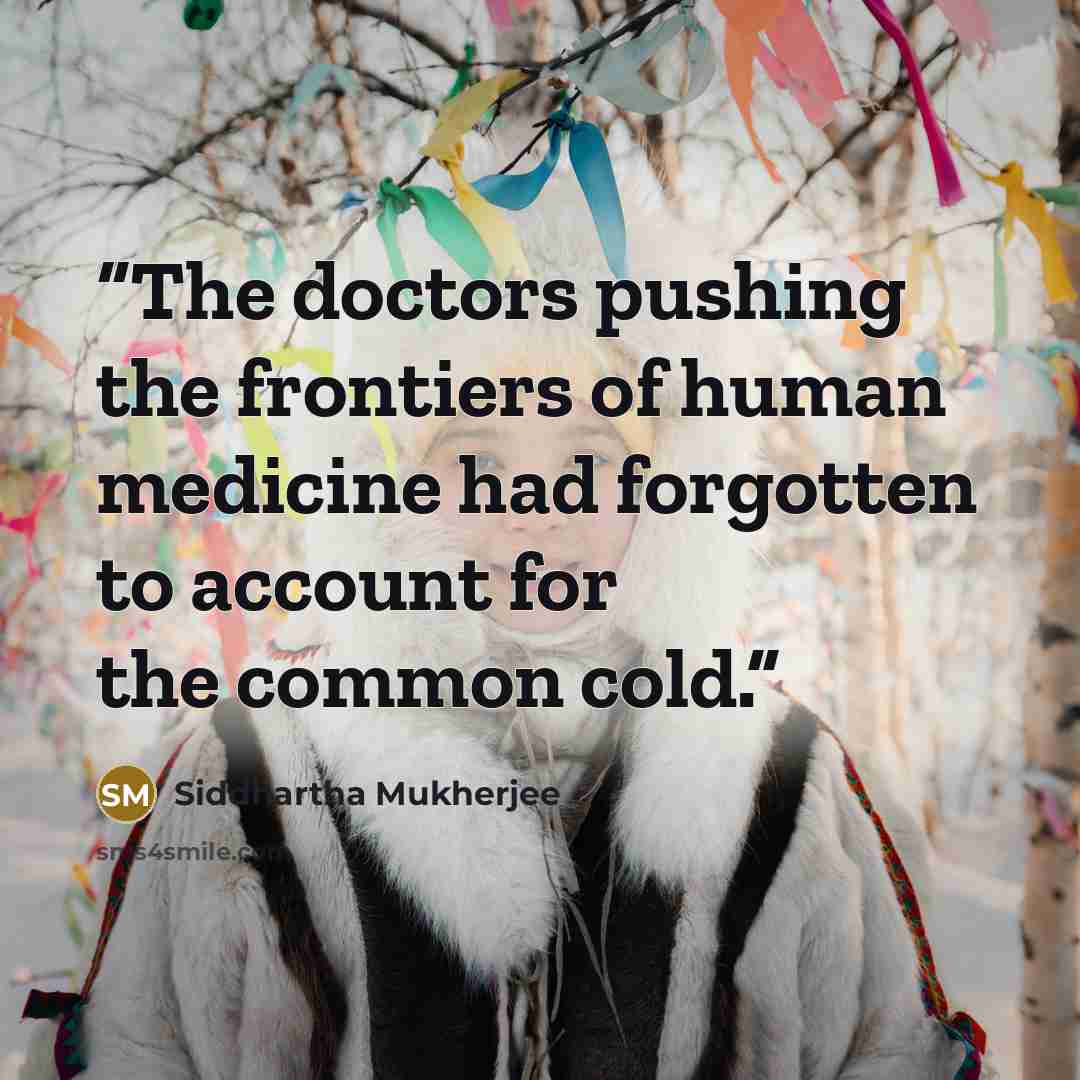
Common cold Quote by Siddhartha Mukherjee
““Why had the introduction of a supposedly harmless virus carrying a gene into the liver caused such a devastating, fatal reaction? As physicians, scientists, and regulators sifted through the trial, the reasons for the failed experiment became evident. The vectors used to infect Gelsinger's cells had never been properly vetted in humans. But most important, Gelsinger's immune response to the virus should have been anticipated. Gelsinger had likely been naturally exposed to the strain of adenovirus that had been used in the gene-therapy experiment. His brisk immune response was not an aberration; it was the perfectly habitual response of a body fighting a pathogen that it had previously encountered, possibly during infection by a cold. In choosing a common human virus as their vehicle for gene delivery, gene therapists had made a crucial error of judgment: they had neglected to consider that genes were being delivered into a human body with a history, with scars, memories, and prior exposures. "How could such a beautiful thing go so, so wrong?" Paul Gelsinger had asked. We now know how: because-seeking only beauty-scientists were unprepared for catastrophe. The doctors pushing the frontiers of human medicine had forgotten to account for the common cold.””
About This Quote
Source Book: The Gene: An Intimate History by Siddhartha Mukherjee, 2016
The passage warns that using common viruses for gene therapy without accounting for prior human exposure can cause fatal immune reactions, highlighting the need for thorough safety testing.
In simple terms: Using familiar viruses in gene therapy can trigger dangerous immune responses.
Key Takeaway
Prioritize comprehensive safety testing.
Themes
medical ethics
gene therapy
immune response
clinical trials
risk management
Mood
cautious
reflective
concerned
Type
educational
warning
When to use this quote
- clinical trial design
- patient screening
- gene therapy development
- regulatory review
- risk assessment
Key Concepts
viral vectors
immune memory
patient history
clinical oversight
Questions to Reflect On
- How can trials better account for patient immune history?
- What safeguards can prevent similar failures?
A Different Perspective
The example focuses on a single case and may not represent all gene therapy risks.