Being true Quote by Samuel Johnson
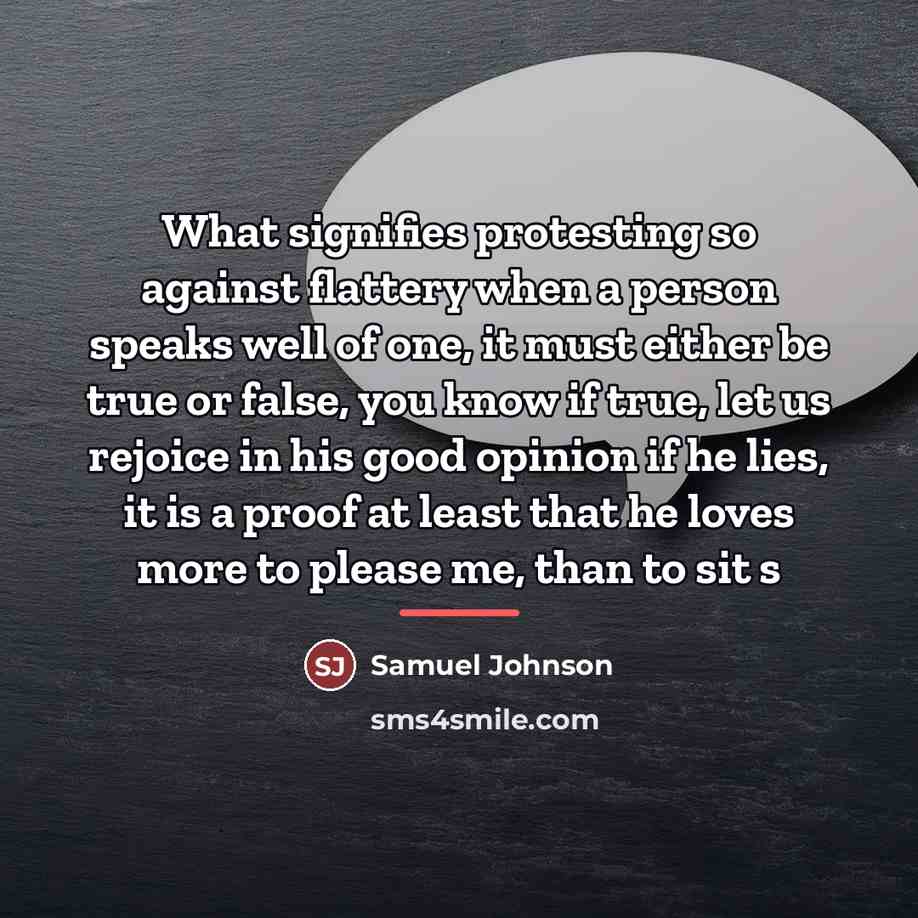
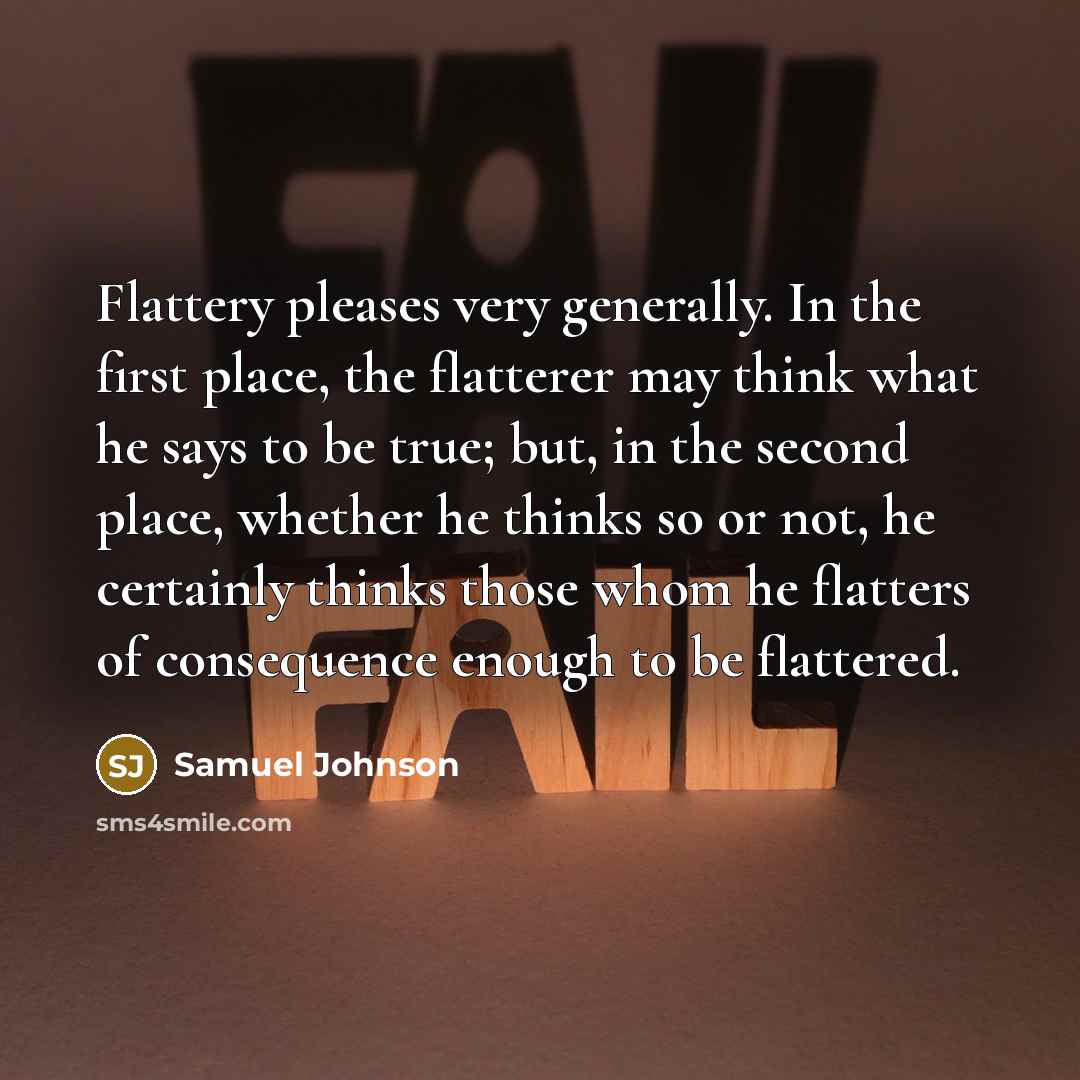
“What signifies protesting so against flattery when a person speaks well of one, it must either be true or false, you know if true, let us rejoice in his good opinion if he lies, it is a proof at least that he loves more to please me, than to sit s”
About This Quote
When someone praises another, the statement must be true or false; truth invites celebration, falsehood reveals a desire to please, albeit insincerely.
In simple terms: Praise is either genuine or a false attempt to please.
Key Takeaway
Flattery can be sincere or a self‑serving lie, each with distinct social signals.
Themes
truth
praise
flattery
social dynamics
Mood
inquisitive
skeptical
Type
philosophical
social observation
When to use this quote
- workplace feedback
- political speeches
- personal relationships
Key Concepts
honesty vs. manipulation
motivation for approval
Practical Applications
- seek evidence for claims
- respond to praise with probing questions
Questions to Reflect On
- How can you discern sincere praise from strategic flattery?
- What role does intent play in evaluating compliments?
A Different Perspective
Not all false praise is malicious; sometimes it stems from cultural politeness.