Asking questions Quote by Iris Murdoch
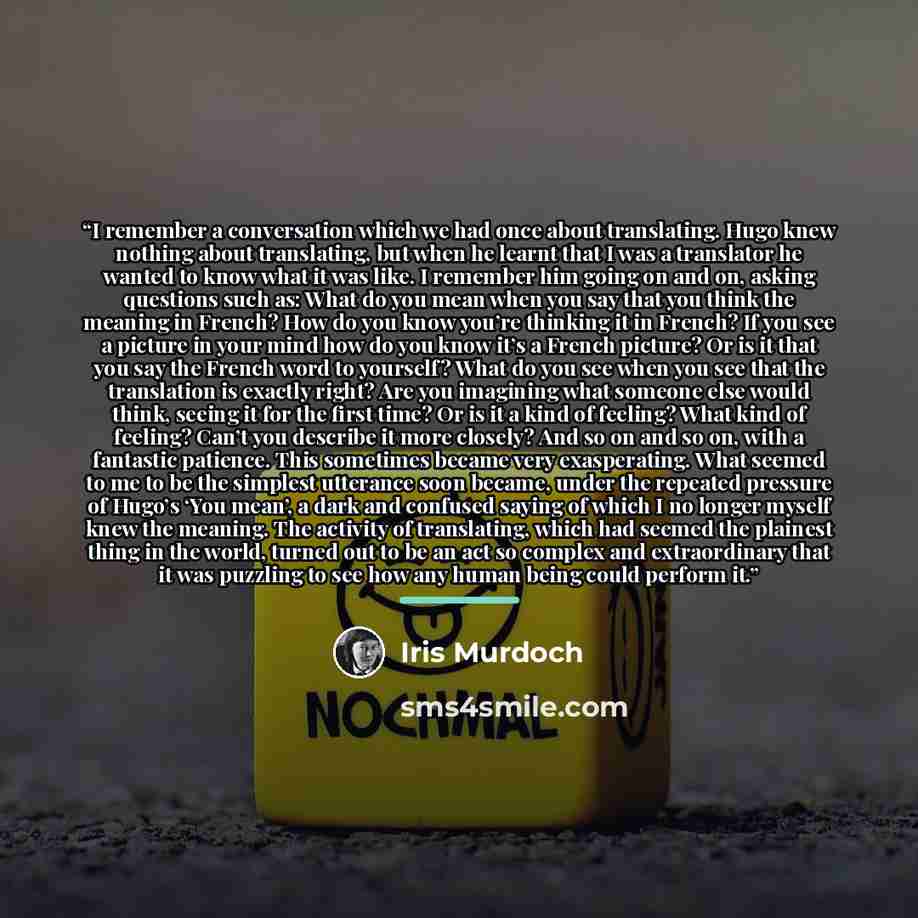
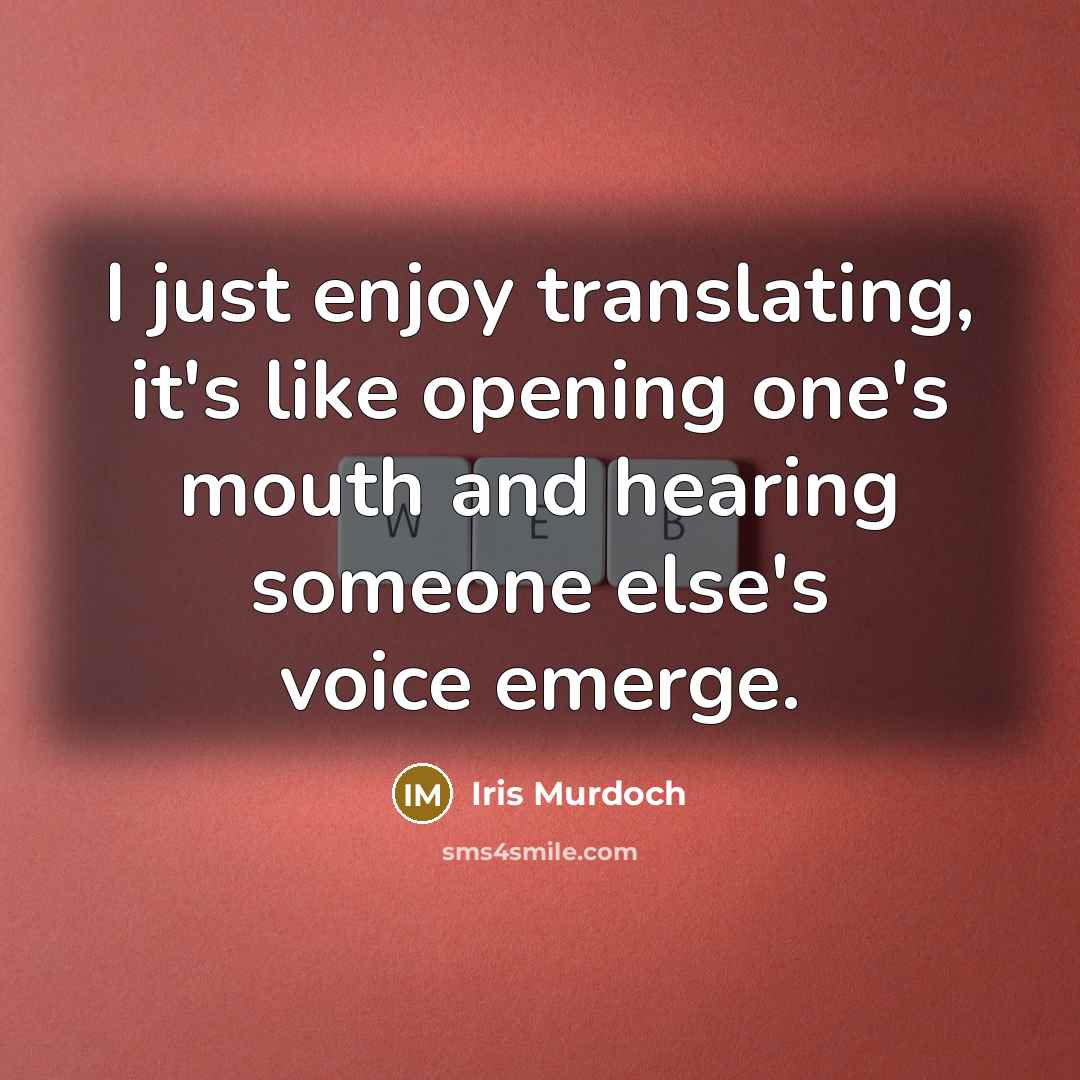
““I remember a conversation which we had once about translating. Hugo knew nothing about translating, but when he learnt that I was a translator he wanted to know what it was like. I remember him going on and on, asking questions such as: What do you mean when you say that you think the meaning in French? How do you know you’re thinking it in French? If you see a picture in your mind how do you know it’s a French picture? Or is it that you say the French word to yourself? What do you see when you see that the translation is exactly right? Are you imagining what someone else would think, seeing it for the first time? Or is it a kind of feeling? What kind of feeling? Can’t you describe it more closely? And so on and so on, with a fantastic patience. This sometimes became very exasperating. What seemed to me to be the simplest utterance soon became, under the repeated pressure of Hugo’s ‘You mean’, a dark and confused saying of which I no longer myself knew the meaning. The activity of translating, which had seemed the plainest thing in the world, turned out to be an act so complex and extraordinary that it was puzzling to see how any human being could perform it.””
About This Quote
Source Interview: Conversation with Hugo (date unknown)
The act of translation is deeply complex, involving mental imagery, language, and feeling, far beyond simple word substitution.
In simple terms: Translation is more than swapping words; it’s an intricate mental process.
Key Takeaway
Recognize translation as a nuanced, creative act.
Themes
language
perception
creativity
interpretation
Mood
thoughtful
curious
introspective
Type
philosophical
reflective
inspirational
When to use this quote
- literary translation
- language learning
- cross‑cultural communication
- writing
- teaching
Key Concepts
cognitive linguistics
mental imagery
semantic nuance
Questions to Reflect On
- How does mental imagery affect your translation choices?
- Can you separate feeling from literal meaning?
A Different Perspective
The complexity can overwhelm, leading to confusion about meaning.