Cognitive Quote by Dan Buettner Download Open image “Walking is the only way proven to stave off cognitive decline - it works.” — Dan Buettner ★ ★ ★ ★ ★ 2.9 out of 5 (3 ratings) Copy quoteShare Cognitive Decline Only Proven Walking Way
“There is no medicine or other intervention that appears to be nearly as effective as exercise in maintaining or even bumping up a person's… — Gretchen Reynolds Copy Share Image
I try to do everything I can to protect myself from cognitive decline as I play tennis, I walk and I cycle. I keep… — Angela Rippon Copy Share Image
I think walking is very useful, like sleeping and dreaming, as something that's important to my ability to write. — Mohsin Hamid Copy Share Image
“Walking had an added benefit: it helped me to think. Nietzsche wrote, “All truly great thoughts are conceived while walking,” and his observation is… — Gretchen Rubin Copy Share Image
There have been a lot of exercises and I've had to force myself to go out for walks even when I didn't feel like… — Magnus Magnusson Copy Share Image
Work helps. So does exercise. Stuff that numbs you, keeps you from thinking too much. — Olivia Copy Share Image
Above all, do not lose your desire to walk. Everyday, I walk myself into a state of well-being & walk away from every illness. I have walked myself into my best thoughts, and I know of no thought so burdensome that one cannot walk away from it. But by sitting still, & the more one sits still, the closer one… — Anonymous Copy Share
I wake up in the morning and I see that flower, with the dew on its petals, and at the way it's folding out, and it makes me happy, she said. It's important to focus on the things in the here and now, I think. In a month, the flower will be shriveled and you will miss its beauty if… — Dan Buettner Copy Share
Eat your vegetables, have a positive outlook, be kind to people, and smile. — Dan Buettner Copy Share Image
Of course, Minneapolis, we think, 'Oh well, it's cold there, lethally cold.' But the reality is you adapt to weather... Humans are consummately adaptable… — Dan Buettner Copy Share Image
A long healthy life is no accident. It begins with good genes, but it also depends on good habits. — Dan Buettner Copy Share Image
The newness effect of a new thing wears off in nine months to a year, but financial security can last a lifetime. — Dan Buettner Copy Share Image
“If you’re an older man, you should not have a supplement with iron because iron accumulates in the heart and can lead to a… — Dan Buettner Copy Share Image
The name of the game is to keep from pushing the accelerator pedal so hard that we speed up the aging process. The average… — Dan Buettner Copy Share Image
Diet and supplements and exercise programs aren't what is achieving longevity. Having a faith-based community can add four to 14 years. — Dan Buettner Copy Share Image
I know exactly what my values are and what I love to do. That's worth additional years right there. I say no to a… — Dan Buettner Copy Share Image
Gratitude always comes into play; research shows that people are happier if they are grateful for the positive things in their lives, rather than… — Dan Buettner Copy Share Image
True happiness involves the pursuit of worth goals; without dreams, without risks, only a trivial semblance of living can be achieved. — Dan Buettner Copy Share Image
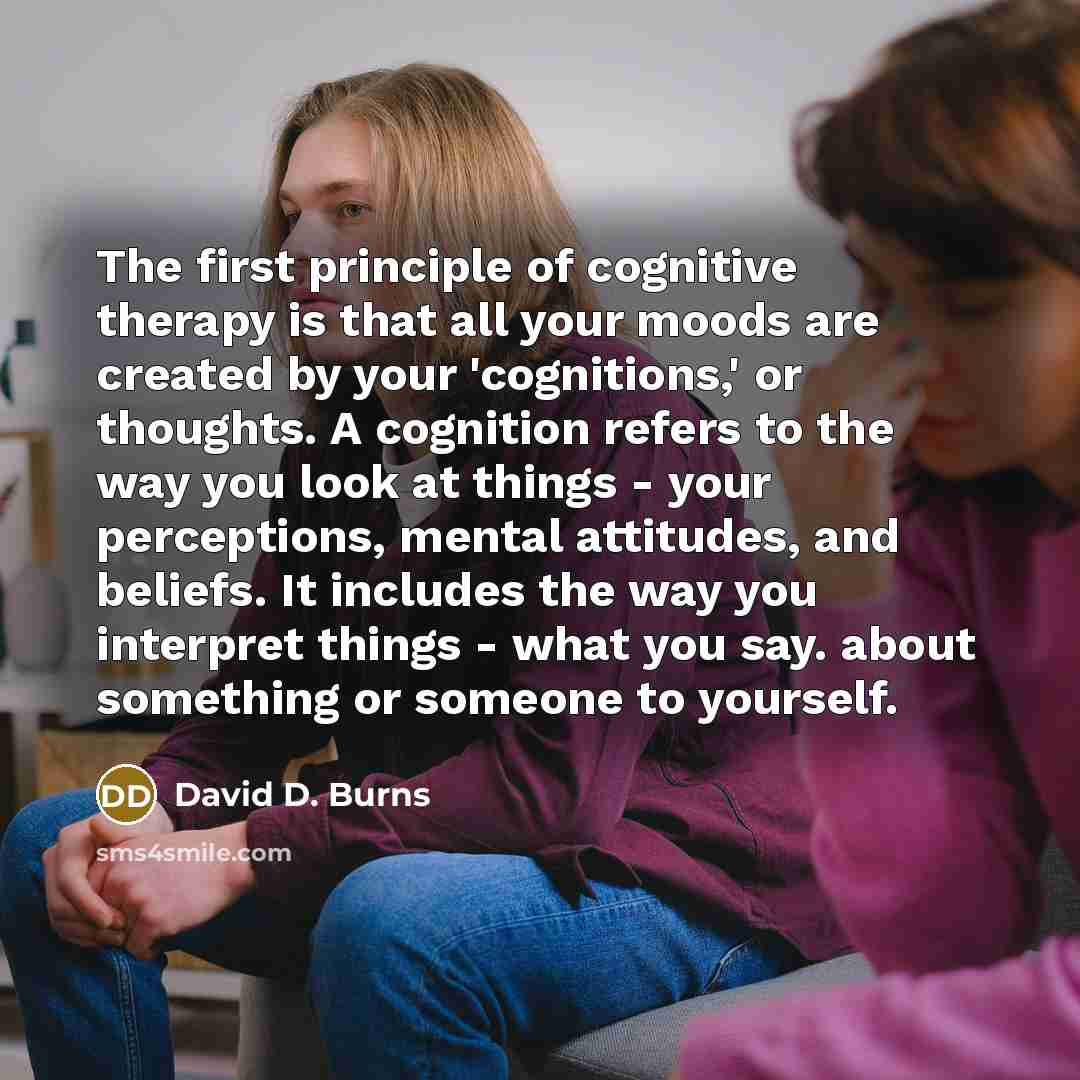
The first principle of cognitive therapy is that all your moods are created by your 'cognitions,' or thoughts. A cognition refers to the way… — David D. Burns Copy Share Image
Cognitive and character skills work together as dynamic complements; they are inseparable. Skills beget skills. More motivated children learn more. Those who are more… — James Heckman Copy Share Image
“The neurological/cognitive symptoms are more characteristically variable than constant and often have a distinct fatiguing component to them. Especially common are cognitive ‘fog’ or confusion, slowed information processing speed, trouble with word retrieval and speaking or intermittent dyslexia, trouble with writing, reading, and mathematics, and short-term memory consolidation.” — Bruce M. Carruthers Copy Share
In studying language we can discover many basic properties of this cognitive structure, its organization, and also the genetic predispositions that provide the foundation for its development. So in this respect, linguistics, first of all, tries to characterize a major feature of human cognitive organization. And second, I think it may provide a suggestive model for the study of other… — Noam Chomsky Copy Share
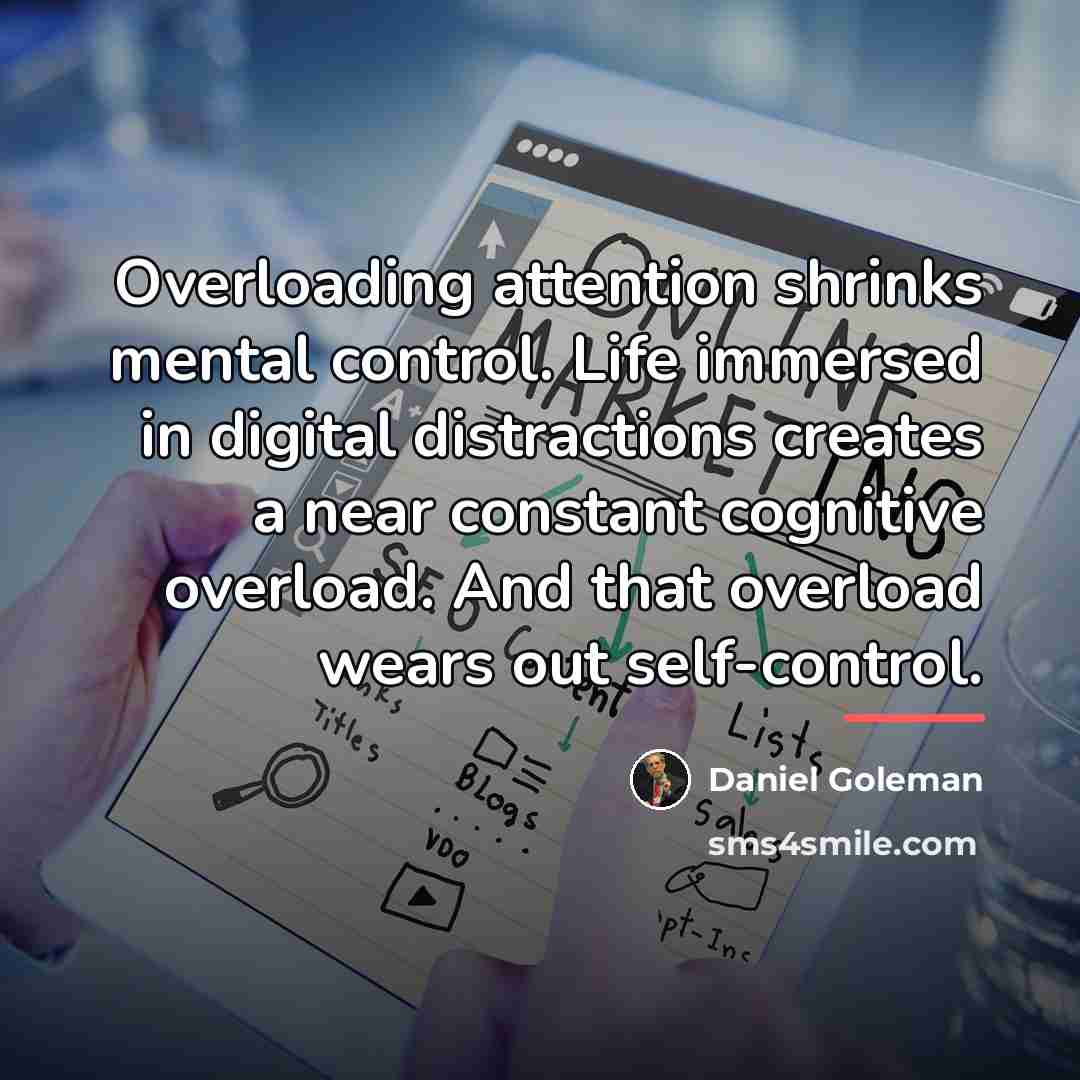
Overloading attention shrinks mental control. Life immersed in digital distractions creates a near constant cognitive overload. And that overload wears out self-control. — Daniel Goleman Copy Share Image
Ultimately, of course, you must decide for yourself whether the subjective psychological effects created by your evolved cognitive biases reflect an objective reality, perhaps as evidence that God designed your mind to be so receptive to Him. Or, just maybe, you will come to acknowledge that, like the rest of us, you are a hopeless pawn in one of natural… — Jesse Bering Copy Share
Increased physical activity during the school day can help children's attention, classroom behavior, and achievement test scores. Meanwhile, the decline of play is closely… — Darell Hammond Copy Share Image
“The thingy? You want me, the most intelligent cognitive processor in the known worlds, to say thingy?” “Yes,” I reaffirmed. “That is correct." Do… — John Zakour Copy Share Image
It is a vast, and pervasive, cognitive mistake to assume that people who agree with you (or disagree) do so on the same criteria… — Megan McArdle Copy Share Image
Research shows that for jobs of all kinds, emotional intelligence is twice as important an ingredient of outstanding performance as cognitive ability and technical… — Daniel Goleman Copy Share Image
Beauty adds to goodness a relation to the cognitive faculty: so that "good" means that which simply pleases the appetite; while the "beautiful" is… — Thomas Aquinas Copy Share Image
The emergence of a unified cognitive moment relies on the coordination of scattered mosaics of functionally specialized brain regions. Here we review the mechanisms of large-scale integration that counterbalance the distributed anatomical and functional organization of brain activity to enable the emergence of coherent behaviour and cognition. Although the mechanisms involved in large-scale integration are still largely unknown, we argue… — Francisco Varela Copy Share