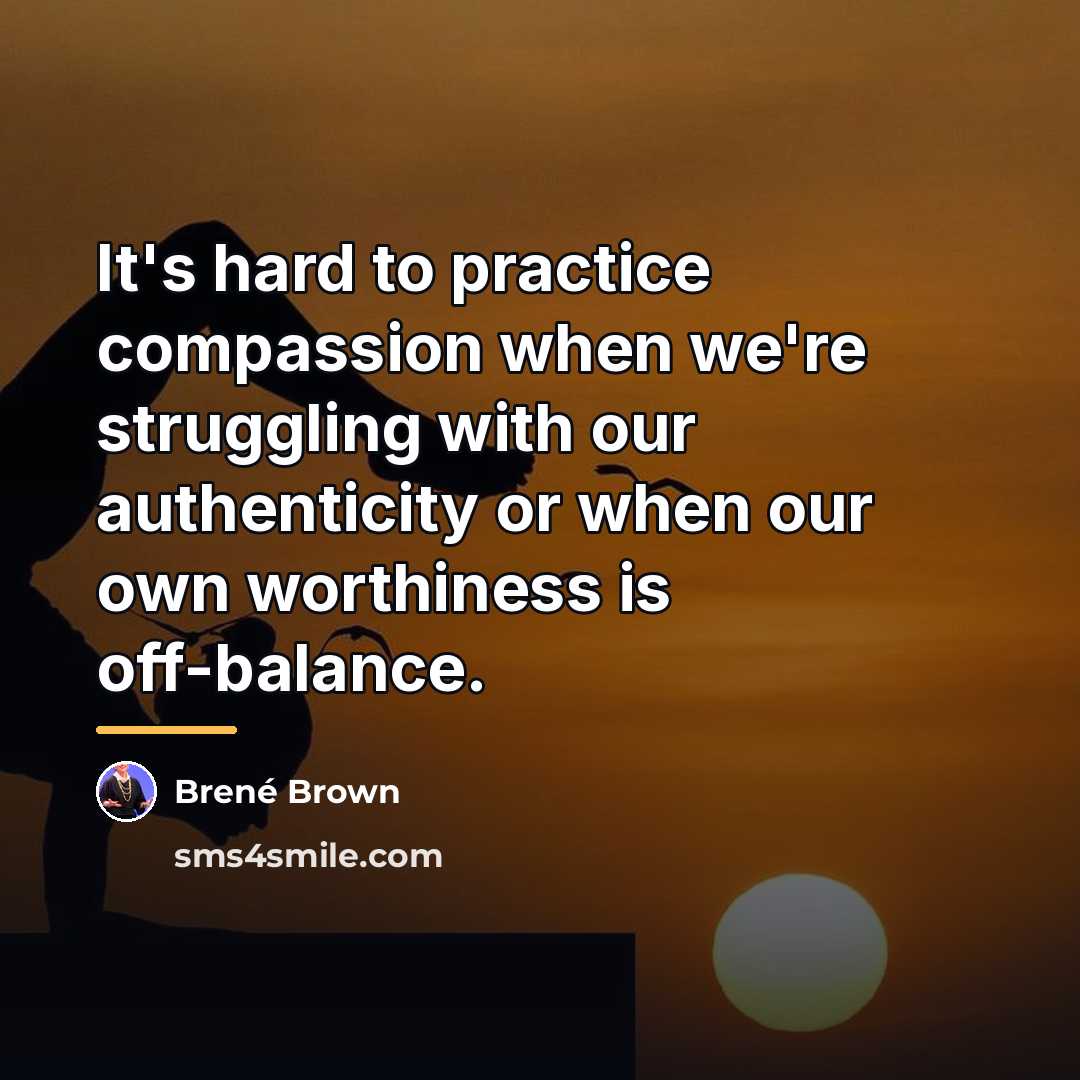
Compassion Quote by Brené Brown

““But here’s the tricky part about compassion and connecting: We can’t call just anyone. It’s not that simple. I have a lot of good friends, but there are only a handful of people whom I can count on to practice compassion when I’m in the dark shame place. If we share our shame story with the wrong person, they can easily become one more piece of flying debris in an already dangerous storm. We want solid connection in a situation like this—something akin to a sturdy tree firmly planted in the ground. We definitely want to avoid the following: The friend who hears the story and actually feels shame for you. She gasps and confirms how horrified you should be. Then there is awkward silence. Then you have to make her feel better. The friend who responds with sympathy (I feel so sorry for you) rather than empathy (I get it, I feel with you, and I’ve been there). If you want to see a shame cyclone turn deadly, throw one of these at it: “Oh, you poor thing.” Or, the incredibly passive-aggressive southern version of sympathy: “Bless your heart.” The friend who needs you to be the pillar of worthiness and authenticity. She can’t help because she’s too disappointed in your imperfections. You’ve let her down. The friend who is so uncomfortable with vulnerability that she scolds you: “How did you let this happen? What were you thinking?” Or she looks for someone to blame: “Who was that guy? We’ll kick his ass.” The friend who is all about making it better and, out of her own discomfort, refuses to acknowledge that you can actually be crazy and make terrible choices: “You’re exaggerating. It wasn’t that bad. You rock. You’re perfect. Everyone loves you.” The friend who confuses “connection” with the opportunity to one-up you: “That’s nothing. Listen to what happened to me one time!””
About This Quote
Compassionate connection requires choosing listeners who respond with empathy, not just sympathy or judgment, especially when sharing shame.
In simple terms: Select empathetic allies for vulnerable sharing.
Key Takeaway
Empathy protects against shame escalation.
Themes
vulnerability
empathy
trust
social support
shame
communication
Mood
reflective
cautious
hopeful
Type
advice
observation
reflection
When to use this quote
- confiding in a close friend
- seeking support after a failure
- discussing personal shame in therapy
- navigating a crisis with peers
Key Concepts
compassion
authenticity
boundaries
emotional safety
Practical Applications
- building resilient support networks
- training in empathetic listening
Questions to Reflect On
- How can you identify truly empathetic listeners?
- What boundaries help maintain safe sharing?
A Different Perspective
Some argue that any honest listener can help, but without empathy the interaction may reinforce shame rather than alleviate it.