Children Quote by Aristotle
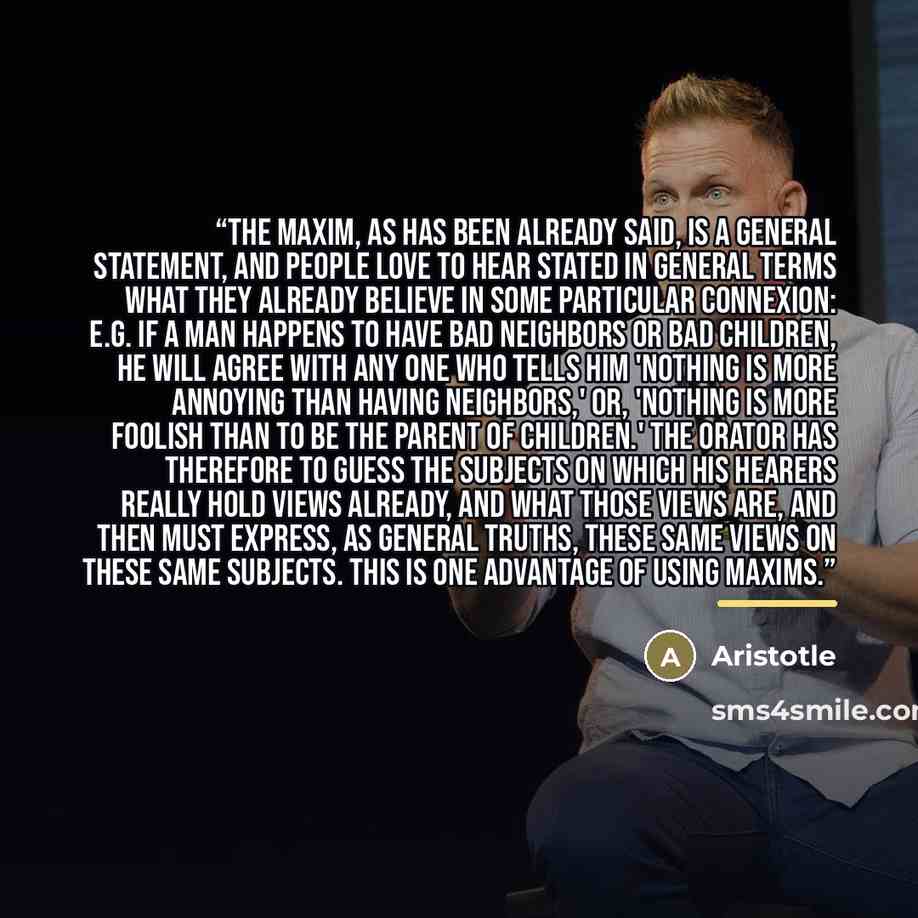
““The maxim, as has been already said, is a general statement, and people love to hear stated in general terms what they already believe in some particular connexion: e.g. if a man happens to have bad neighbors or bad children, he will agree with any one who tells him 'Nothing is more annoying than having neighbors,' or, 'Nothing is more foolish than to be the parent of children.' The orator has therefore to guess the subjects on which his hearers really hold views already, and what those views are, and then must express, as general truths, these same views on these same subjects. This is one advantage of using maxims.””
About This Quote
Source Treat: Rhetoric, Book 2, 4th century BC
A speaker must frame arguments as universal truths that match the audience’s existing beliefs to persuade effectively.
In simple terms: Speak in generalities that echo what listeners already think.
Key Takeaway
Align messages with audience’s pre‑held views.
Themes
persuasion
communication
audience
truths
Mood
analytical
strategic
thoughtful
Type
philosophical
inspirational
When to use this quote
- political speeches
- marketing pitches
- public debates
- teaching
- leadership
Key Concepts
rhetoric
generalizations
psychology
Questions to Reflect On
- What assumptions do you make about your audience?
- How can you test whether a maxim truly resonates?
A Different Perspective
If audience beliefs are diverse, a single maxim may alienate some listeners.