I am very, very sorry to leave you hanging like that, but…
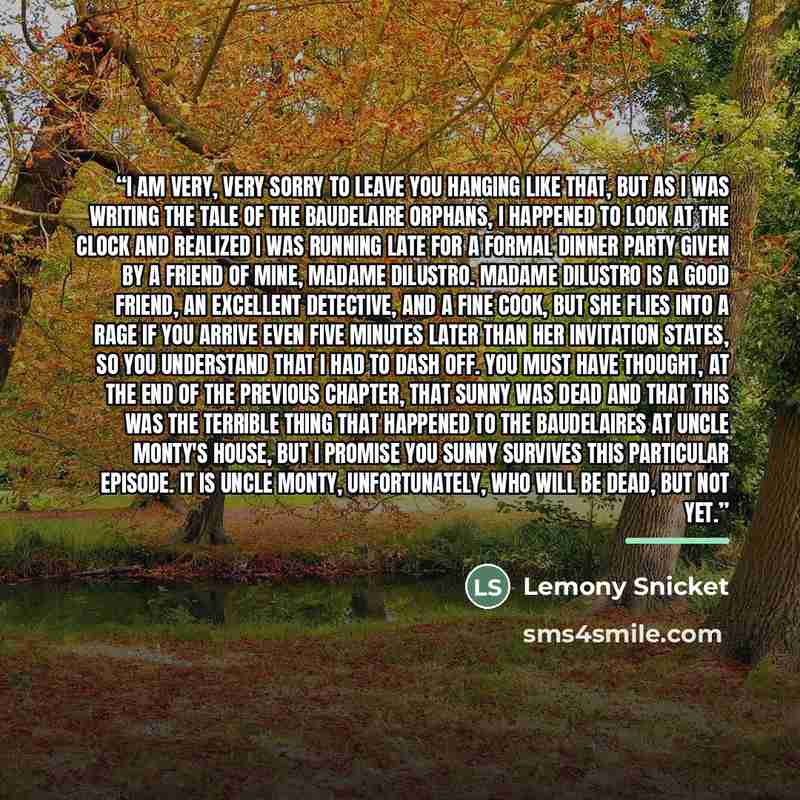
““I am very, very sorry to leave you hanging like that, but as I was writing the tale of the Baudelaire orphans, I happened to look at the clock and realized I was running late for a formal dinner party given by a friend of mine, Madame diLustro. Madame diLustro is a good friend, an excellent detective, and a fine cook, but she flies into a rage if you arrive even five minutes later than her invitation states, so you understand that I had to dash off. You must have thought, at the end of the previous chapter, that Sunny was dead and that this was the terrible thing that happened to the Baudelaires at Uncle Monty's house, but I promise you Sunny survives this particular episode. It is Uncle Monty, unfortunately, who will be dead, but not yet.””
About This Quote
This interpretation was drafted with AI assistance. It is one reading of the quote, not the author's own explanation.
The narrator apologetically delays the story, revealing a plot twist where a character presumed dead survives, while another will die later, highlighting suspense and narrative control.
In simple terms: Narrative delay reveals unexpected survival and future death.
Key Takeaway
Deliberate pacing fuels intrigue.
Themes
suspense
plot twist
narrative voice
character fate
humor
Mood
playful
mysterious
wry
Type
narrative
humorous
suspense
When to use this quote
- reading a serial novel
- watching a TV series cliffhanger
- following a podcast storyline
Key Concepts
storytelling
timing
dramatic irony
Practical Applications
- building tension in serialized fiction
- creating surprise endings
Questions to Reflect On
- How does delaying resolution affect audience engagement?
- What impact does a narrator’s personal excuse have on story immersion?