Apology Quote by Pumla Gobodo-Madikizela
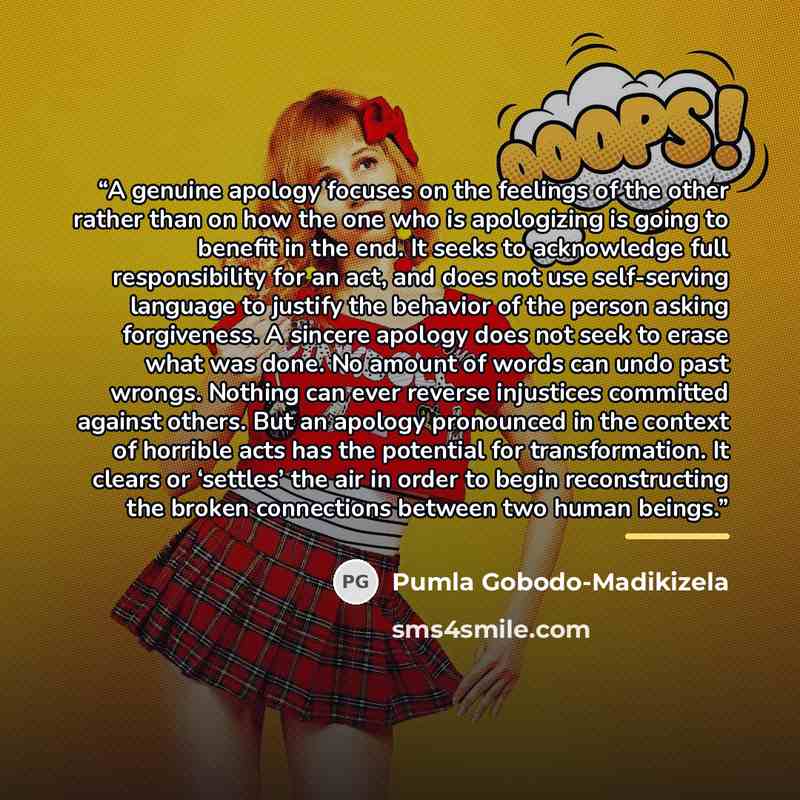
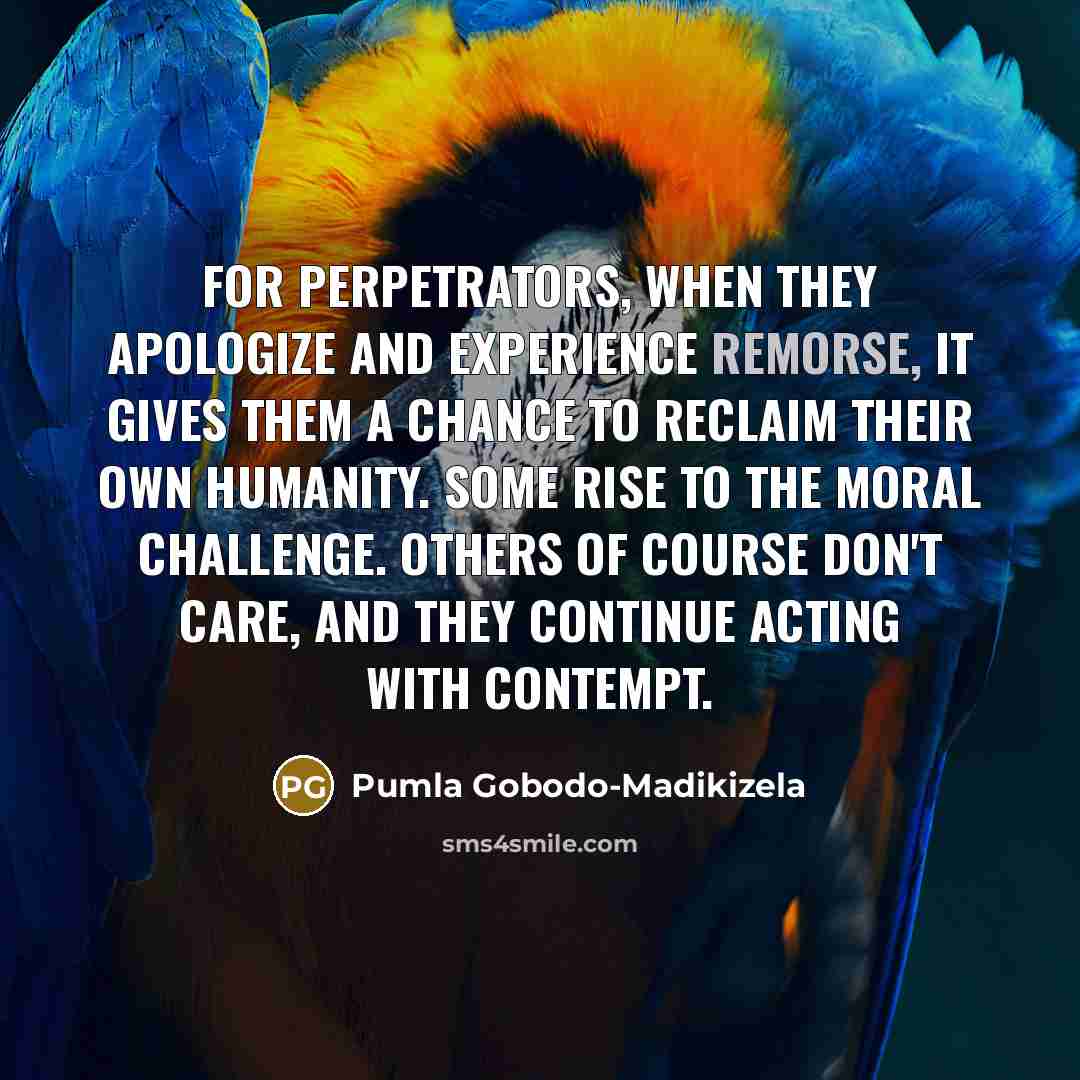
““A genuine apology focuses on the feelings of the other rather than on how the one who is apologizing is going to benefit in the end. It seeks to acknowledge full responsibility for an act, and does not use self-serving language to justify the behavior of the person asking forgiveness. A sincere apology does not seek to erase what was done. No amount of words can undo past wrongs. Nothing can ever reverse injustices committed against others. But an apology pronounced in the context of horrible acts has the potential for transformation. It clears or ‘settles’ the air in order to begin reconstructing the broken connections between two human beings.””
About This Quote
Source Book: A Human Being: The Book of Love, Pumla Gobodo‑Madikizela, 2019
An apology should prioritize the hurt party’s feelings, accept full responsibility, and avoid self‑justifying language; it cannot erase past harms but can open space for healing and rebuilding relationships.
In simple terms: Apologies focus on the victim, own responsibility, and healing.
Key Takeaway
Own responsibility, avoid self‑just
Themes
.
Mood
reflective
empathetic
Type
advice
ethical
psychological
When to use this quote
- Ethics
- psychology
- conflict resolution
Key Concepts
responsibility
healing
communication
Practical Applications
- personal conflict
- workplace dispute
- family disagreement
- community reconciliation
Questions to Reflect On
- How can you ensure your apology is truly other‑focused?
- What steps follow an apology to rebuild trust?
A Different Perspective
Apologies may be rejected or seen as insufficient without genuine change.

![“People in the world ask for forgiveness, but [true] ‘pratikraman’ does not happen by doing that. That is like when people casually say ‘sorry’ or ‘thank you’. There is no significance in that; the significance is of ‘alochana-pratikraman-pratyakhyan’ (acknowledgement of the mistake, repentance and…” quote by Dada Bhagwan](https://sms4smile.com/quotes/img-quotes/4f7/dada-bhagwan-31_acknowledment_people-in-the-world-ask-for-forgiveness_245419.jpg)