Last night Quote by Paul Ekman
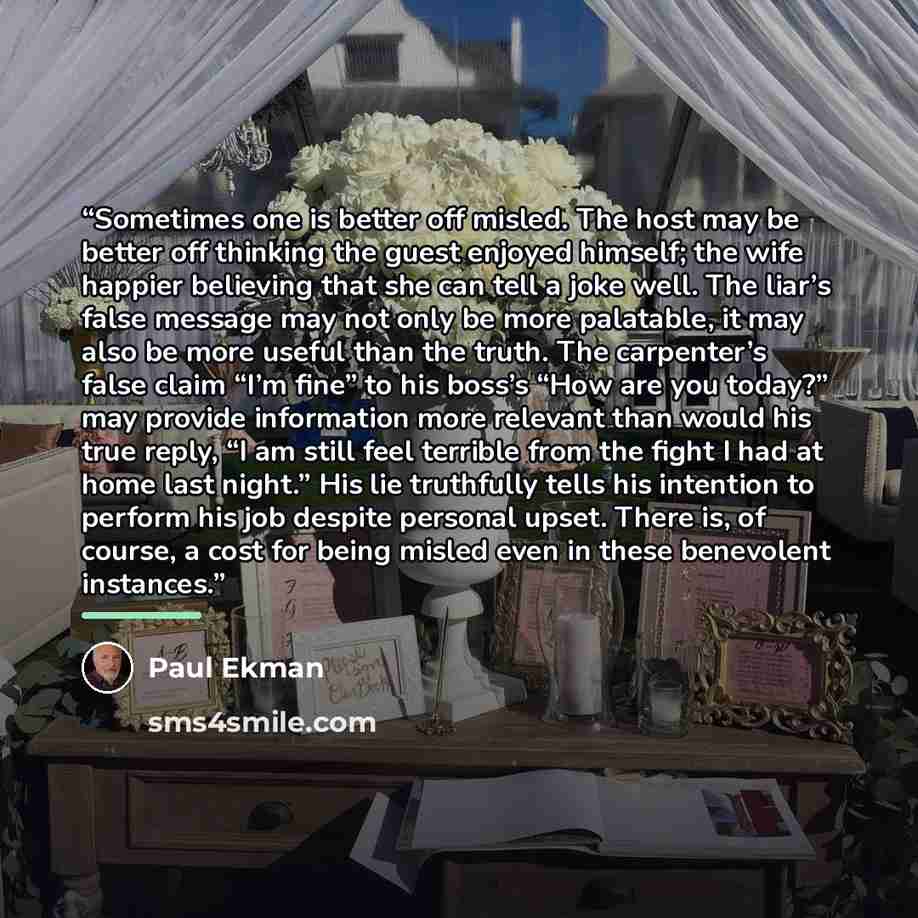
““Sometimes one is better off misled. The host may be better off thinking the guest enjoyed himself; the wife happier believing that she can tell a joke well. The liar’s false message may not only be more palatable, it may also be more useful than the truth. The carpenter’s false claim “I’m fine” to his boss’s “How are you today?” may provide information more relevant than would his true reply, “I am still feel terrible from the fight I had at home last night.” His lie truthfully tells his intention to perform his job despite personal upset. There is, of course, a cost for being misled even in these benevolent instances.””
About This Quote
Source Book: Telling Lies, 2009, Psychology Textbook
Benevolent lies can serve social harmony or personal coping, but they carry ethical costs and potential misunderstandings.
In simple terms: Sometimes lies help, but they’re risky.
Key Takeaway
Use honesty wisely, weighing benefits against harm.
Themes
ethics
communication
social harmony
psychology
truthfulness
Mood
thoughtful
cautious
analytical
Type
philosophical
psychological
ethical
When to use this quote
- workplace interactions
- family conversations
- diplomatic negotiations
- mental health coping
Key Concepts
lie theory
social dynamics
emotional intelligence
Questions to Reflect On
- When is a lie justified?
- What are the long‑term effects of benevolent deception?
A Different Perspective
Reliance on lies may erode trust over time.