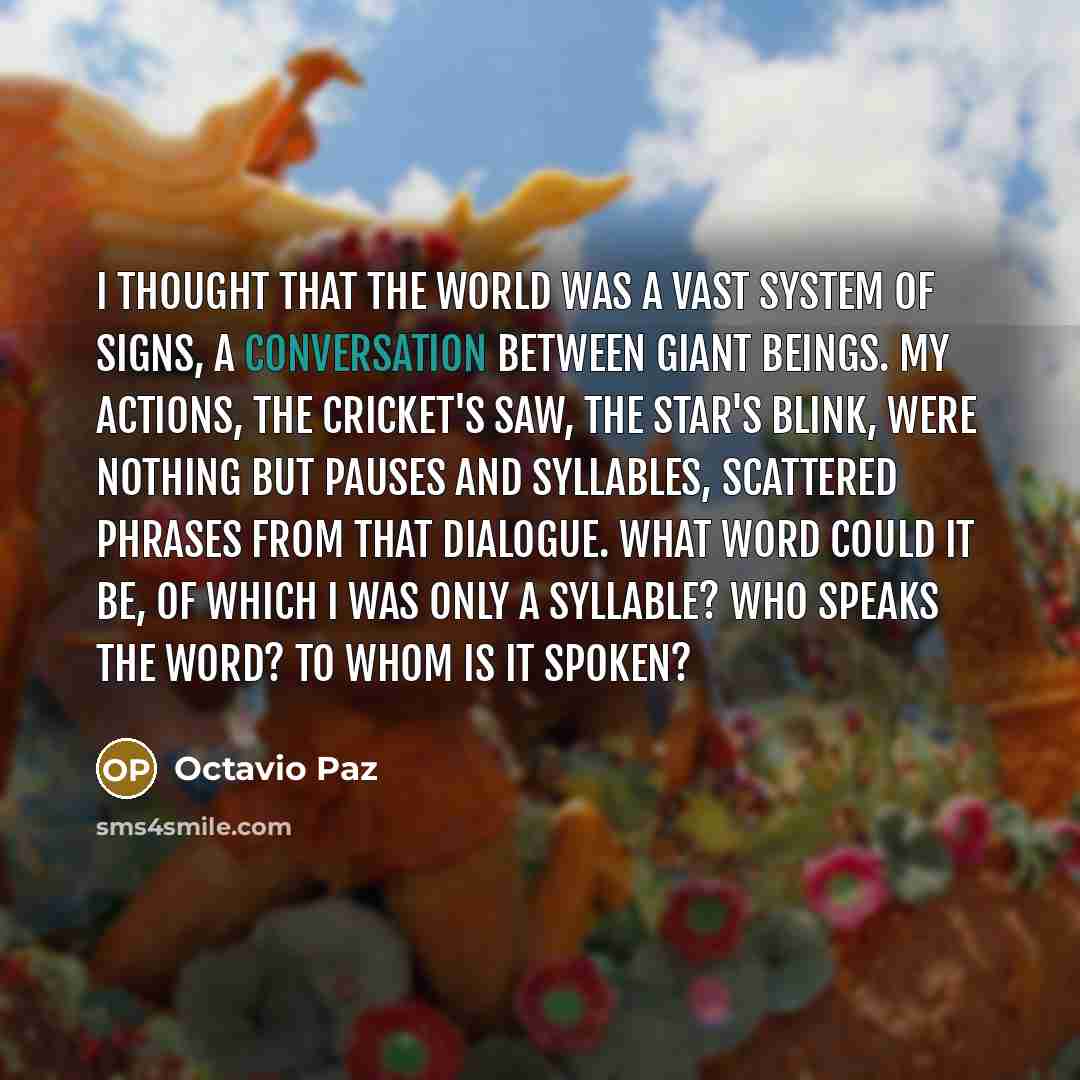
Communication Quote by Octavio Paz
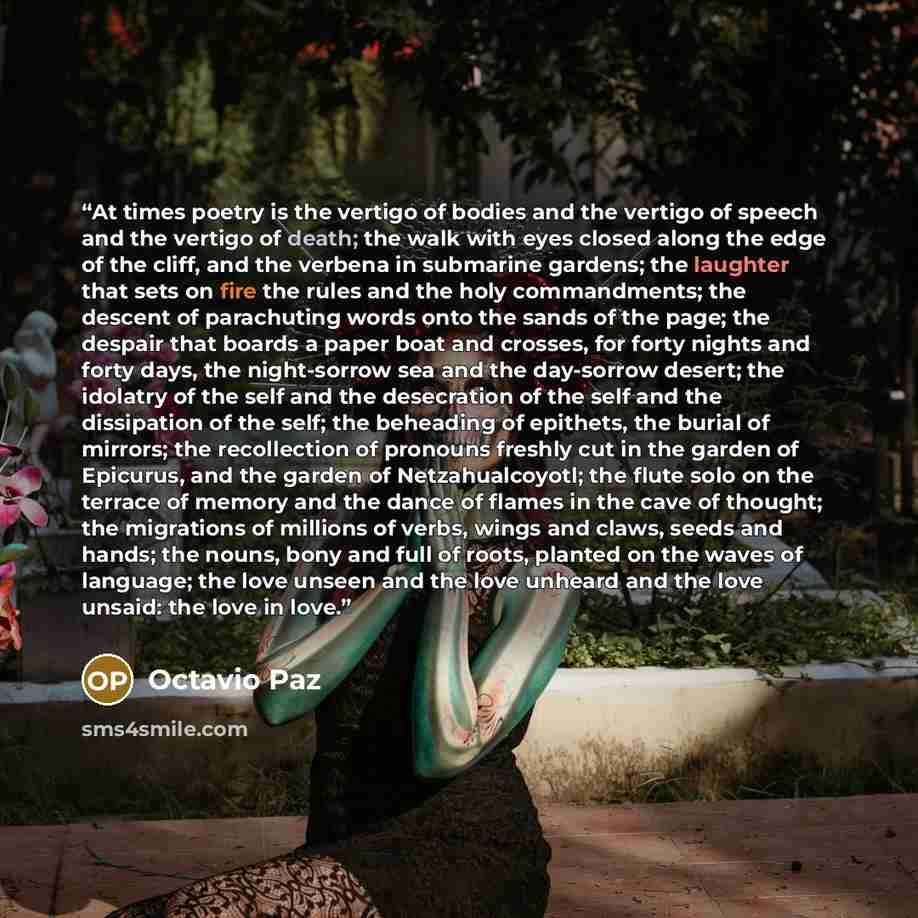
““At times poetry is the vertigo of bodies and the vertigo of speech and the vertigo of death; the walk with eyes closed along the edge of the cliff, and the verbena in submarine gardens; the laughter that sets on fire the rules and the holy commandments; the descent of parachuting words onto the sands of the page; the despair that boards a paper boat and crosses, for forty nights and forty days, the night-sorrow sea and the day-sorrow desert; the idolatry of the self and the desecration of the self and the dissipation of the self; the beheading of epithets, the burial of mirrors; the recollection of pronouns freshly cut in the garden of Epicurus, and the garden of Netzahualcoyotl; the flute solo on the terrace of memory and the dance of flames in the cave of thought; the migrations of millions of verbs, wings and claws, seeds and hands; the nouns, bony and full of roots, planted on the waves of language; the love unseen and the love unheard and the love unsaid: the love in love.””
About This Quote
Source Poetry: The Labyrinth of Solitude, 1963
Poetry confronts the chaotic, visceral experiences of existence, blending physical, emotional, and metaphysical vertigo into artistic expression.
In simple terms: Poetry captures life's intense, dizzying moments.
Key Takeaway
Embrace the wildness of feeling in art.
Themes
creativity
existence
language
paradox
emotion
Mood
intense
reflective
enigmatic
Type
literary
philosophical
When to use this quote
- writing workshops
- therapy sessions
- literary analysis
- performance art
- personal journaling
Key Concepts
vertigo
metaphor
self‑reflection
transcendence
Questions to Reflect On
- How does chaos become meaning in poetry?
- Can discomfort fuel creativity?
A Different Perspective
The intensity may alienate readers seeking clarity.