Accusations Quote by Michael Salter
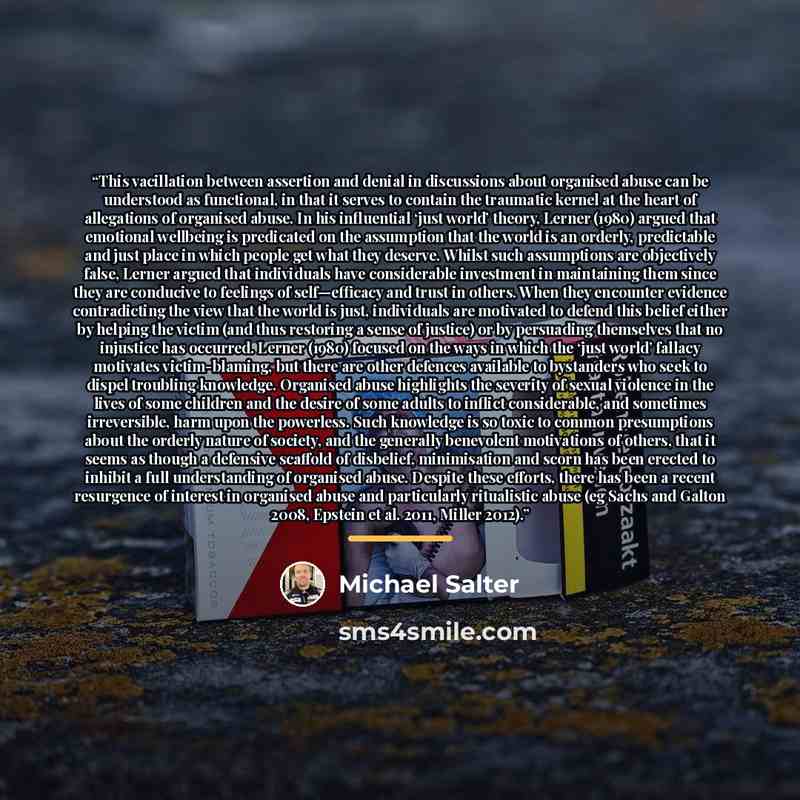
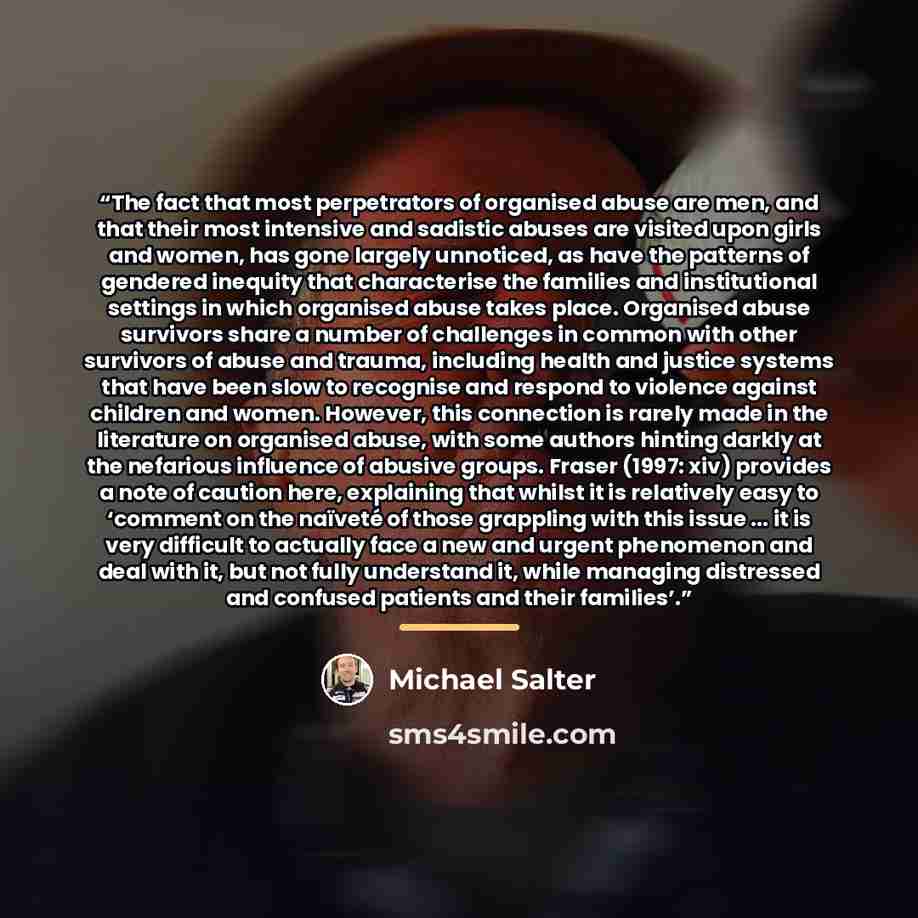
““This vacillation between assertion and denial in discussions about organised abuse can be understood as functional, in that it serves to contain the traumatic kernel at the heart of allegations of organised abuse. In his influential ‘just world’ theory, Lerner (1980) argued that emotional wellbeing is predicated on the assumption that the world is an orderly, predictable and just place in which people get what they deserve. Whilst such assumptions are objectively false, Lerner argued that individuals have considerable investment in maintaining them since they are conducive to feelings of self—efficacy and trust in others. When they encounter evidence contradicting the view that the world is just, individuals are motivated to defend this belief either by helping the victim (and thus restoring a sense of justice) or by persuading themselves that no injustice has occurred. Lerner (1980) focused on the ways in which the ‘just world’ fallacy motivates victim-blaming, but there are other defences available to bystanders who seek to dispel troubling knowledge. Organised abuse highlights the severity of sexual violence in the lives of some children and the desire of some adults to inflict considerable, and sometimes irreversible, harm upon the powerless. Such knowledge is so toxic to common presumptions about the orderly nature of society, and the generally benevolent motivations of others, that it seems as though a defensive scaffold of disbelief, minimisation and scorn has been erected to inhibit a full understanding of organised abuse. Despite these efforts, there has been a recent resurgence of interest in organised abuse and particularly ritualistic abuse (eg Sachs and Galton 2008, Epstein et al. 2011, Miller 2012).””
About This Quote
Source Article: Academic Journal on Organised Abuse, 2023
People protect their belief in a just world by denying or minimizing evidence of organized abuse, creating a defensive narrative that shields them from trauma.
In simple terms: Denial shields belief in a just world.
Key Takeaway
Recognize and challenge denial to confront abuse.
Themes
psychology
trauma
justice
denial
defense
Mood
reflective
serious
Type
analytical
critical
When to use this quote
- social work
- policy making
- education
- therapy
- media reporting
Key Concepts
just world fallacy
cognitive dissonance
victim blaming
Questions to Reflect On
- How does denial affect your perception of safety?
- What steps can reduce defensive narratives?
A Different Perspective
Denial can also protect mental health, making confrontation painful.