Public health Quote by Kelly McGonigal
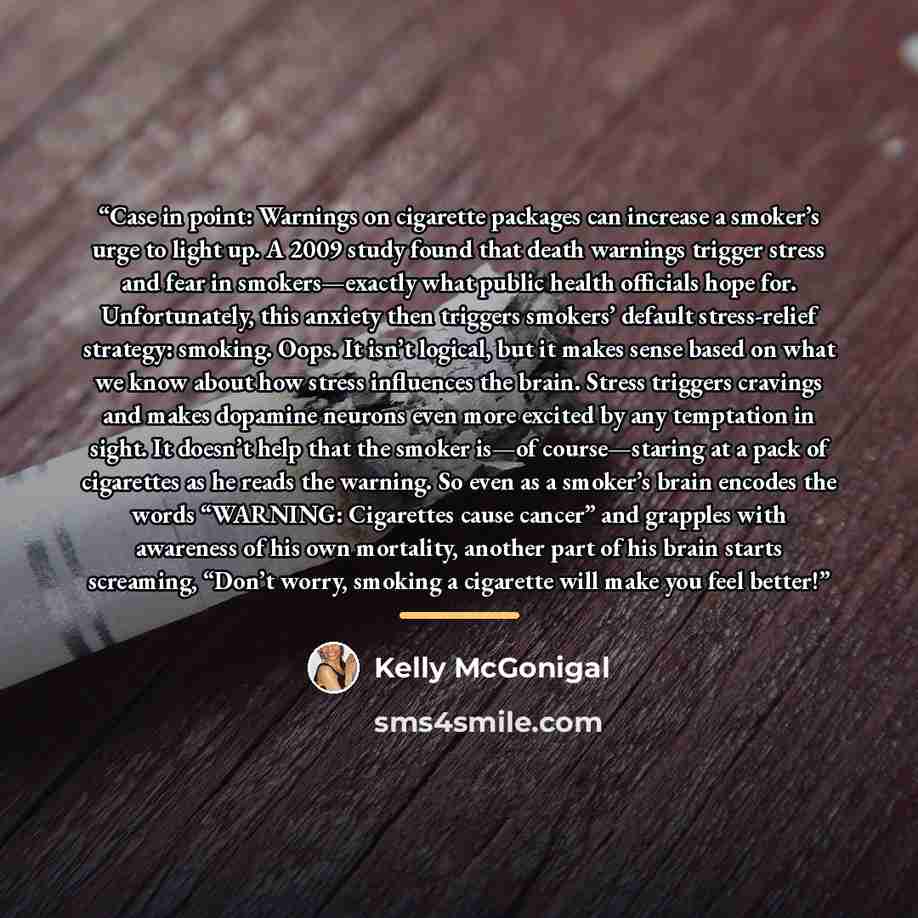
““Case in point: Warnings on cigarette packages can increase a smoker’s urge to light up. A 2009 study found that death warnings trigger stress and fear in smokers—exactly what public health officials hope for. Unfortunately, this anxiety then triggers smokers’ default stress-relief strategy: smoking. Oops. It isn’t logical, but it makes sense based on what we know about how stress influences the brain. Stress triggers cravings and makes dopamine neurons even more excited by any temptation in sight. It doesn’t help that the smoker is—of course—staring at a pack of cigarettes as he reads the warning. So even as a smoker’s brain encodes the words “WARNING: Cigarettes cause cancer” and grapples with awareness of his own mortality, another part of his brain starts screaming, “Don’t worry, smoking a cigarette will make you feel better!””
About This Quote
Source Study: 2009 public health research on cigarette warning labels, null
Warning labels can paradoxically increase smoking by inducing stress that triggers cravings, undermining their intended deterrent effect.
In simple terms: Stress from warnings can boost cravings, making smoking more appealing.
Key Takeaway
Design warnings that reduce stress or pair them with coping tools.
Themes
public health
behavioral psychology
addiction
risk communication
Mood
anxious
reflective
critical
Type
analytical
informative
When to use this quote
- smoking cessation campaigns
- health education
- policy design
- advertising
- clinical trials
Key Concepts
stress response
dopamine reward
cognitive dissonance
Questions to Reflect On
- How can warnings be framed to reduce stress?
- What alternative strategies can break the stress‑craving cycle?
A Different Perspective
If warnings cause more smoking, they may be counterproductive without supportive interventions.