Ambivalent Quote by Jeremy Holmes
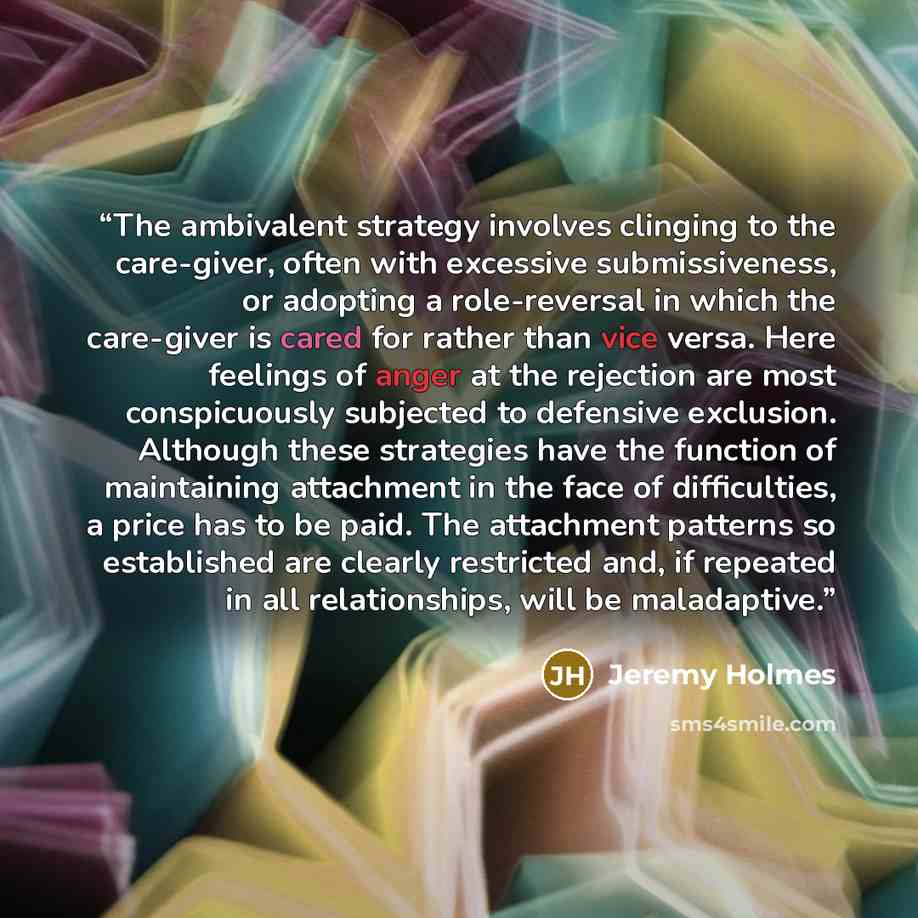
““The ambivalent strategy involves clinging to the care-giver, often with excessive submissiveness, or adopting a role-reversal in which the care-giver is cared for rather than vice versa. Here feelings of anger at the rejection are most conspicuously subjected to defensive exclusion. Although these strategies have the function of maintaining attachment in the face of difficulties, a price has to be paid. The attachment patterns so established are clearly restricted and, if repeated in all relationships, will be maladaptive.””
About This Quote
Source Book: Attachment Theory in Psychotherapy, Jeremy Holmes, 2014
People cling to caregivers or reverse roles to avoid abandonment, but these patterns become limiting and harmful if repeated.
In simple terms: Clinging or role reversal to stay attached harms future relationships.
Key Takeaway
Recognize and break restrictive attachment habits.
Themes
attachment
relationships
psychology
Mood
anxious
reflective
Type
advice
psychological
When to use this quote
- therapy sessions
- personal relationships
- family dynamics
Key Concepts
defensive exclusion
maladaptation
role reversal
Questions to Reflect On
- How do you notice these patterns in your life?
- What steps can you take to develop healthier attachment?
A Different Perspective
These strategies may provide short‑term security but hinder long‑term growth.













![“When you 'make good,' you find out who your real friends are. You find out pretty quick. And it's a very ambivalent feeling, because you're, like, happy you found out that people are [jerkfaces], but you're kinda sad because you think, 'Wow, I wasted so much time being this person's friend.'” quote by Greg Camp](https://sms4smile.com/quotes/img-quotes/7ab/greg-camp-64349_ambivalent_when-you-make-good-you-find-out-who-your_126934.jpg)