Animals Quote by James W. Goll
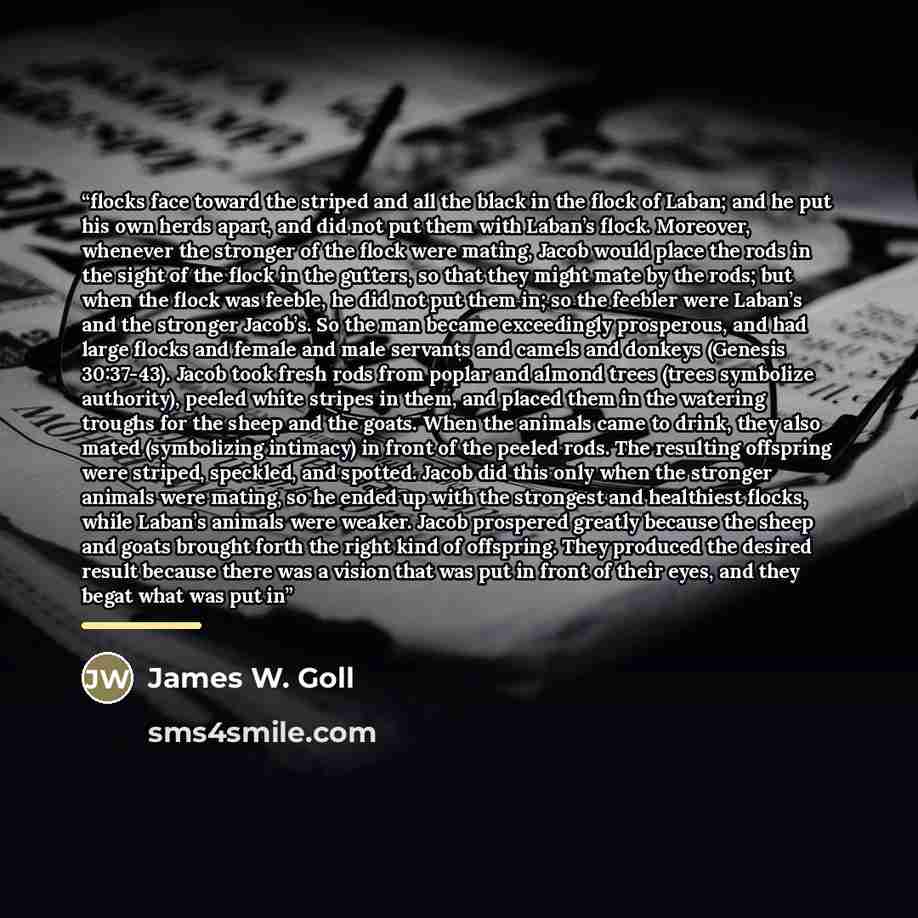
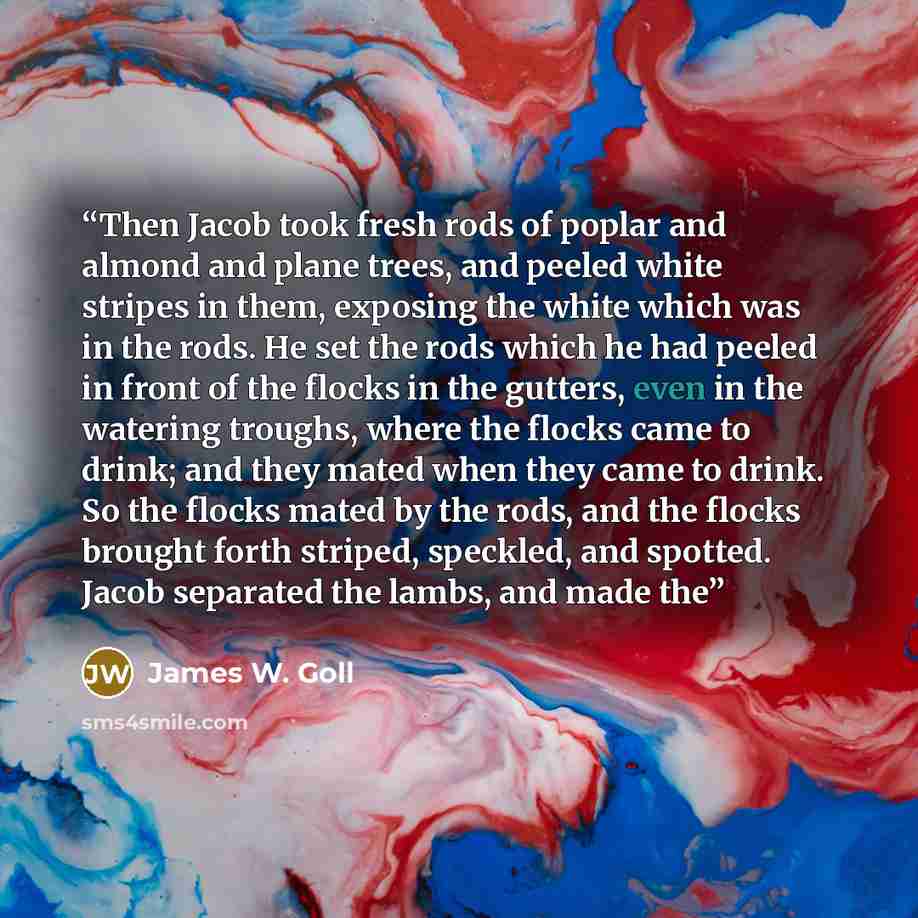
““flocks face toward the striped and all the black in the flock of Laban; and he put his own herds apart, and did not put them with Laban’s flock. Moreover, whenever the stronger of the flock were mating, Jacob would place the rods in the sight of the flock in the gutters, so that they might mate by the rods; but when the flock was feeble, he did not put them in; so the feebler were Laban’s and the stronger Jacob’s. So the man became exceedingly prosperous, and had large flocks and female and male servants and camels and donkeys (Genesis 30:37-43). Jacob took fresh rods from poplar and almond trees (trees symbolize authority), peeled white stripes in them, and placed them in the watering troughs for the sheep and the goats. When the animals came to drink, they also mated (symbolizing intimacy) in front of the peeled rods. The resulting offspring were striped, speckled, and spotted. Jacob did this only when the stronger animals were mating, so he ended up with the strongest and healthiest flocks, while Laban’s animals were weaker. Jacob prospered greatly because the sheep and goats brought forth the right kind of offspring. They produced the desired result because there was a vision that was put in front of their eyes, and they begat what was put in””
About This Quote
Source Biblical Narrative: Genesis 30:37-43, Jacob's breeding strategy
Jacob uses visual cues to influence animal mating, ensuring stronger offspring and greater wealth.
In simple terms: Use strategic signals to guide outcomes.
Key Takeaway
Apply smart incentives to achieve desired results.
Themes
strategy
leadership
resourcefulness
Mood
analytical
thoughtful
strategic
Type
advice
inspirational
When to use this quote
- business negotiations
- team management
- marketing campaigns
- education methods
Key Concepts
incentive design
visual influence
selective breeding
Questions to Reflect On
- How can ethical incentives be designed?
- When might visual cues backfire?
A Different Perspective
Manipulating behavior may raise ethical concerns and unintended consequences.


![“I'm excited by the band [White Stripes]. It really excites me. But it wouldn't excite me if there weren't those limitations, if we weren't living in that box, if we weren't trapped. Once that goes away, then I'll know that it's not worth doing it any more.” quote by Jack White](https://sms4smile.com/quotes/img-quotes/9d9/jack-white-1911_band_i-m-excited-by-the-band-white-stripes-it_80124.jpg)