Anxiety Quote by Heather Moehn
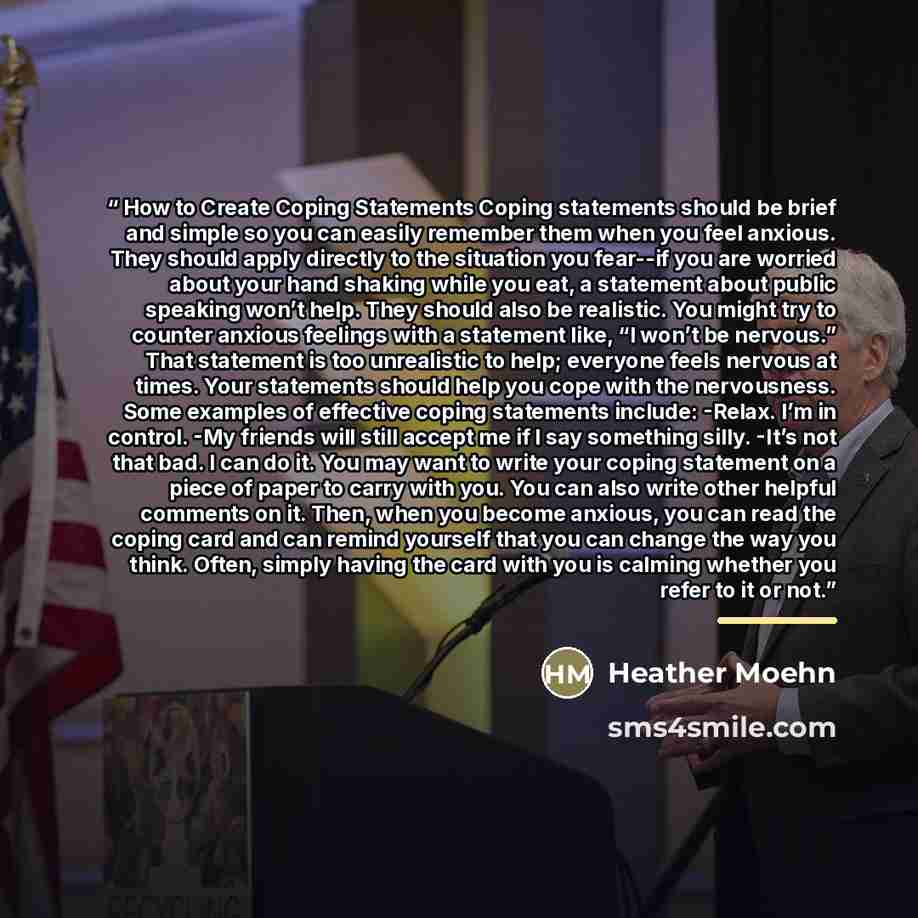
““ How to Create Coping Statements Coping statements should be brief and simple so you can easily remember them when you feel anxious. They should apply directly to the situation you fear--if you are worried about your hand shaking while you eat, a statement about public speaking won’t help. They should also be realistic. You might try to counter anxious feelings with a statement like, “I won’t be nervous.” That statement is too unrealistic to help; everyone feels nervous at times. Your statements should help you cope with the nervousness. Some examples of effective coping statements include: -Relax. I’m in control. -My friends will still accept me if I say something silly. -It’s not that bad. I can do it. You may want to write your coping statement on a piece of paper to carry with you. You can also write other helpful comments on it. Then, when you become anxious, you can read the coping card and can remind yourself that you can change the way you think. Often, simply having the card with you is calming whether you refer to it or not.””
About This Quote
Source Article: Coping Statements Guide, unknown source
Coping statements are brief, realistic affirmations tailored to specific anxieties, helping reframe thoughts and reduce fear.
In simple terms: Short, realistic affirmations for specific fears.
Key Takeaway
Use tailored, realistic affirmations to calm anxiety.
Themes
self‑help
anxiety management
mental health
Mood
calm
reassuring
focused
Type
practical
motivational
When to use this quote
- therapy sessions
- public speaking
- social events
- daily stress
- exam preparation
Key Concepts
cognitive restructuring
mindfulness
self‑talk
Questions to Reflect On
- What specific fear could you address with a simple statement?
- How can you ensure your statement feels believable?
A Different Perspective
If statements are too vague or unrealistic, they may fail to alleviate anxiety.