Health care Quote by Gregory F. Fegel

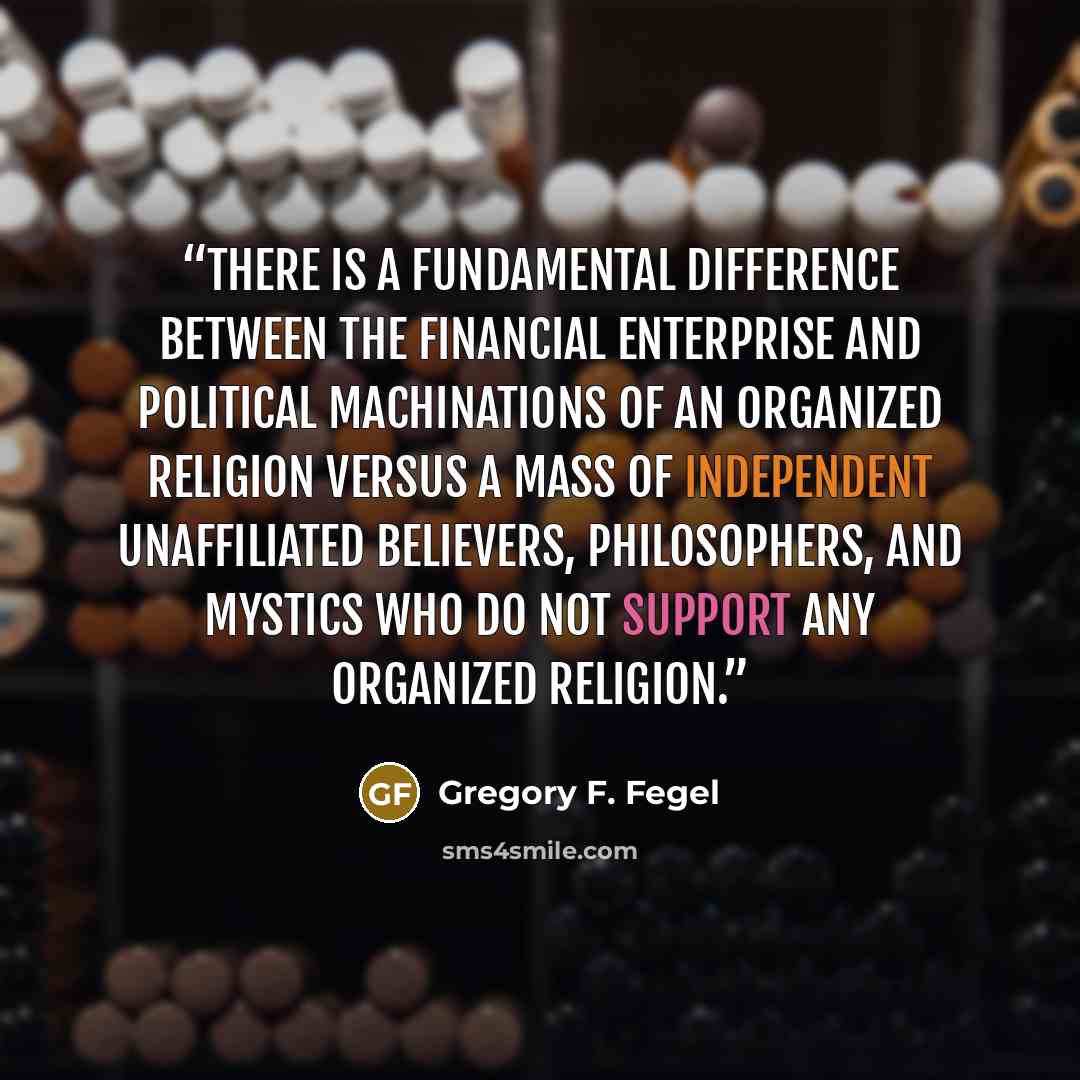
““Using your wealth to purchase other people’s loyalty is a game as old as humanity itself. Rich men use their wealth to attract women, unscrupulous employers use material incentives and disincentives to manipulate their workers, and wealthy countries like the USA use their national wealth to keep their citizens loyal to the cause of aggressive and genocidal Imperialism. But historical longevity and common practice don’t make the manipulation or exploitation morally or ethically right. Organized religions are inherently POLITICAL organizations. There is a fundamental difference between the financial enterprise and political machinations of an organized religion versus a mass of independent unaffiliated believers, philosophers, and mystics who do not support any organized religion. Christianity and Islam are known as proselytizing religions because they make an organized and systemic effort to gain converts, and they often provide services, products, or employment to attract converts. Judaism, Hinduism, and Buddhism show far less zeal about gaining converts, which is why you almost never hear about Jewish, Hindu, or Buddhist missionaries. Modern medical and nursing schools usually teach their students the moral principle that the provision of medical services should never be used as a means to proselytize or promote a religion, but that does not deter many Christian health care providers from doing exactly that. Most of the medical and charitable organizations based in Christian countries are fronts for Christian proselytizing activities.””
About This Quote
Source Essay: “The Ethics of Loyalty and Proselytism”, 2023
Wealth is used to secure loyalty, but such manipulation is ethically dubious; organized religions often exploit this tactic.
In simple terms: Money buys loyalty, yet exploiting it is morally wrong.
Key Takeaway
Question the ethics of using resources to influence beliefs.
Themes
ethics
loyalty
wealth
religion
Mood
critical
analytical
concerned
Type
Health care:0
Organized religion:1
Religion:1
Rich men:0
Religions Make:0
Organized Religions:1
Proselytizing Religions:1
Religions Inherently:0
When to use this quote
- non‑profit work
- policy advocacy
- personal belief systems
Key Concepts
manipulation
proselytism
political power
Questions to Reflect On
- How do you differentiate genuine support from manipulation?
- What alternatives exist to foster loyalty ethically?
A Different Perspective
Complex topic may oversimplify diverse religious practices.
![“If [Donald] Trump throws 20 million off of health care, that's going to be - if he handles this badly - and it's very hard to handle it right, then that's a - a huge advantage in the mid-terms for us.” quote by Van Jones](https://sms4smile.com/quotes/img-quotes/f4d/van-jones-984_advantage_if-donald-trump-throws-20-million-off-of_12893.jpg)