Abuse Quote by Graeme Galton
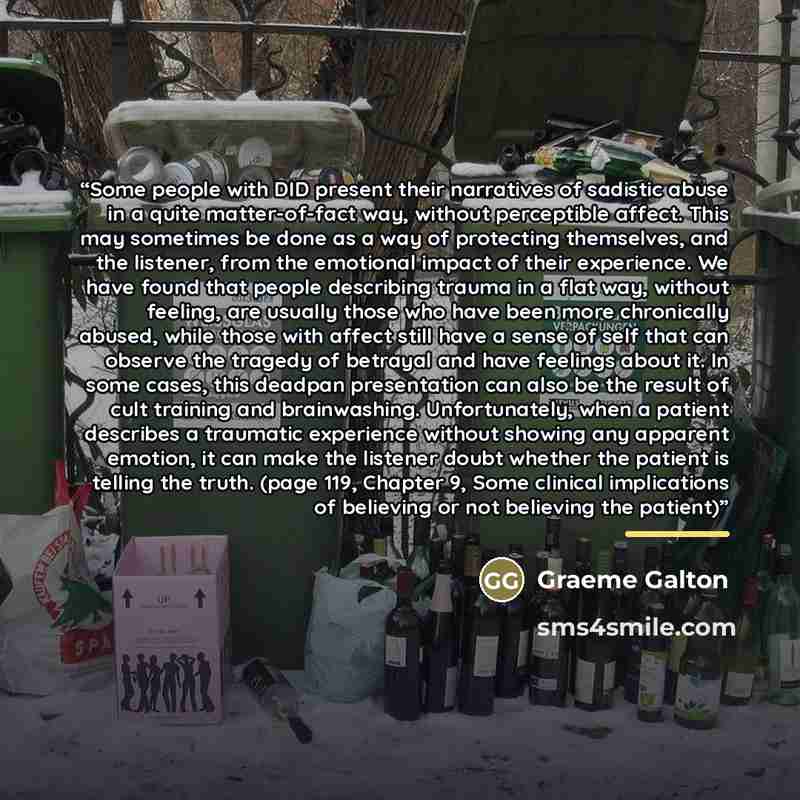
““Some people with DID present their narratives of sadistic abuse in a quite matter-of-fact way, without perceptible affect. This may sometimes be done as a way of protecting themselves, and the listener, from the emotional impact of their experience. We have found that people describing trauma in a flat way, without feeling, are usually those who have been more chronically abused, while those with affect still have a sense of self that can observe the tragedy of betrayal and have feelings about it. In some cases, this deadpan presentation can also be the result of cult training and brainwashing. Unfortunately, when a patient describes a traumatic experience without showing any apparent emotion, it can make the listener doubt whether the patient is telling the truth. (page 119, Chapter 9, Some clinical implications of believing or not believing the patient)””
About This Quote
Source Book: Clinical Implications of Believing or Not Believing the Patient, Chapter 9, 2020
Trauma survivors may narrate abuse flatly to protect themselves and listeners, often linked to chronic abuse or cult conditioning, which can cause doubt about credibility.
In simple terms: Flat trauma narratives can shield emotions but may seem unbelievable.
Key Takeaway
Recognize flat affect as possible coping, not deception.
Themes
trauma
coping
credibility
listener response
psychology
Mood
empathetic
analytical
Type
clinical
educational
When to use this quote
- Therapeutic assessment
- clinical interview
- support group
- psychiatric evaluation
Key Concepts
Dissociative identity disorder
emotional regulation
cult influence
trust dynamics
Questions to Reflect On
- How can clinicians validate flat narratives without imposing judgment?
- What strategies help listeners stay empathetic?
A Different Perspective
Flat affect may mask severity, leading to underestimation of distress.