Abuse Quote by David L. Calof
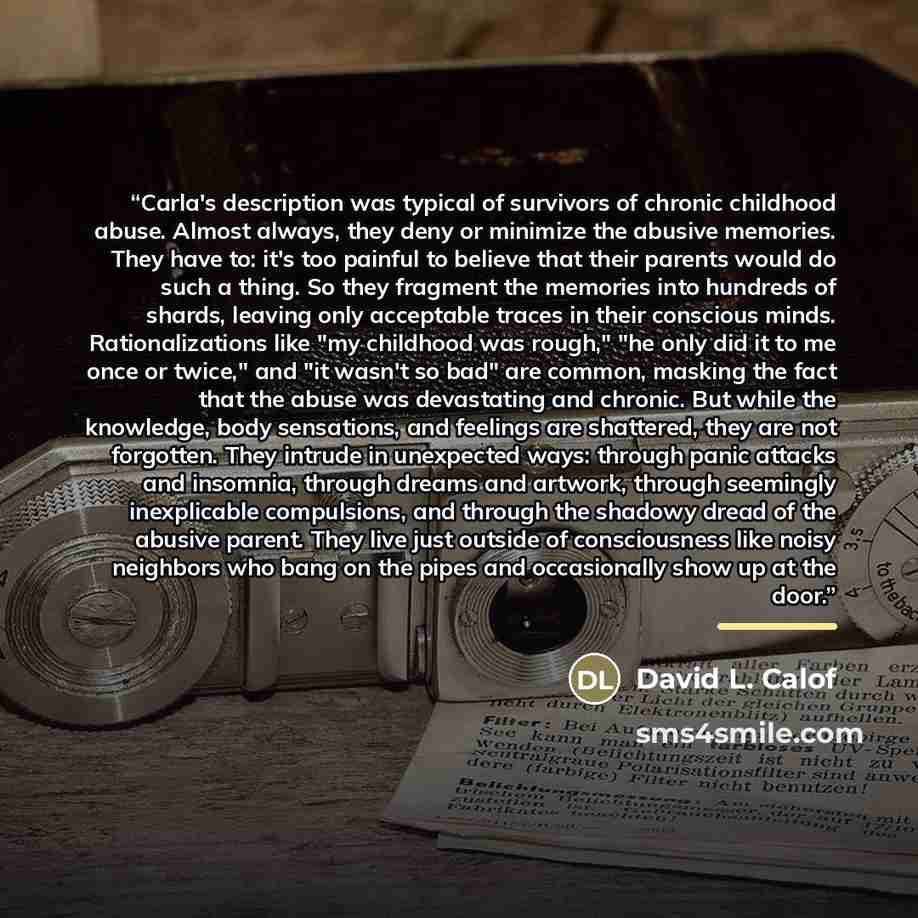
““Carla's description was typical of survivors of chronic childhood abuse. Almost always, they deny or minimize the abusive memories. They have to: it's too painful to believe that their parents would do such a thing. So they fragment the memories into hundreds of shards, leaving only acceptable traces in their conscious minds. Rationalizations like "my childhood was rough," "he only did it to me once or twice," and "it wasn't so bad" are common, masking the fact that the abuse was devastating and chronic. But while the knowledge, body sensations, and feelings are shattered, they are not forgotten. They intrude in unexpected ways: through panic attacks and insomnia, through dreams and artwork, through seemingly inexplicable compulsions, and through the shadowy dread of the abusive parent. They live just outside of consciousness like noisy neighbors who bang on the pipes and occasionally show up at the door.””
About This Quote
Source Book: Clinical Psychology Textbook, 2020
Survivors of chronic childhood abuse often suppress painful memories, fragmenting them into unconscious shards that surface as anxiety, dreams, or compulsions.
In simple terms: Abuse memories are hidden but still affect them.
Key Takeaway
Recognize hidden trauma triggers.
Themes
trauma
memory
psychology
coping
healing
Mood
anxious
reflective
hopeful
Type
clinical
educational
insightful
When to use this quote
- therapy sessions
- nighttime anxiety
- creative expression
- relationship counseling
Key Concepts
fragmentation
repression
intrusive symptoms
Questions to Reflect On
- How do you notice hidden trauma in daily life?
- What strategies help integrate fragmented memories?
A Different Perspective
Trauma can be so deep that conscious denial fails to protect mental health.
![“From 1992 to 1997, TAT [Treating Abuse Today] under my editorship published several articles by a number of respected professionals who seriously questioned the false memory syndrome (FMS) hypothesis and the methodology, ethics, and assertions of those who were rapidly pushing the concept into the…” quote by David L. Calof](https://sms4smile.com/quotes/img-quotes/06d/david-l-calof-37354_abuse-deniers_from-1992-to-1997-tat-treating-abuse-tod_274040.jpg)