To say exactly what one means, even to one's own private…
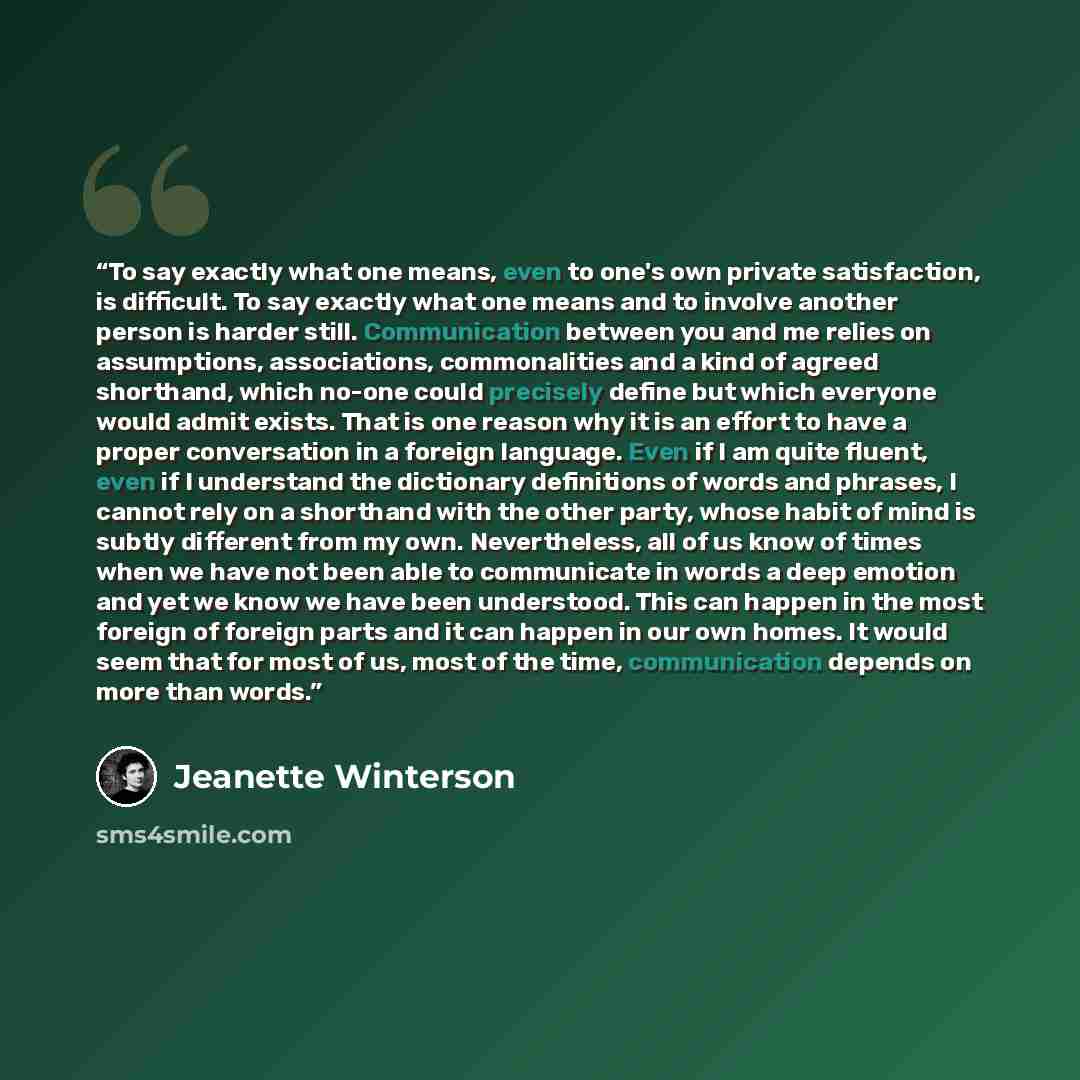
““To say exactly what one means, even to one's own private satisfaction, is difficult. To say exactly what one means and to involve another person is harder still. Communication between you and me relies on assumptions, associations, commonalities and a kind of agreed shorthand, which no-one could precisely define but which everyone would admit exists. That is one reason why it is an effort to have a proper conversation in a foreign language. Even if I am quite fluent, even if I understand the dictionary definitions of words and phrases, I cannot rely on a shorthand with the other party, whose habit of mind is subtly different from my own. Nevertheless, all of us know of times when we have not been able to communicate in words a deep emotion and yet we know we have been understood. This can happen in the most foreign of foreign parts and it can happen in our own homes. It would seem that for most of us, most of the time, communication depends on more than words.””
About This Quote
This interpretation was drafted with AI assistance. It is one reading of the quote, not the author's own explanation.
Communicating precisely is hard; even fluent speakers rely on shared assumptions, yet deep understanding can transcend words.
In simple terms: Words are limited; shared experience fills gaps.
Key Takeaway
Cultivate empathy and shared context.
Themes
communication
language
understanding
Mood
thoughtful
analytical
Type
philosophical
educational
When to use this quote
- cross‑cultural dialogue
- personal relationships
- teamwork
Key Concepts
assumptions
shorthand
empathy
Questions to Reflect On
- How do you bridge gaps when words fail?
- What non‑verbal cues help you understand?
A Different Perspective
Cultural differences can still cause misinterpretation.