The flesh,' as Saint Paul used the term, refers…
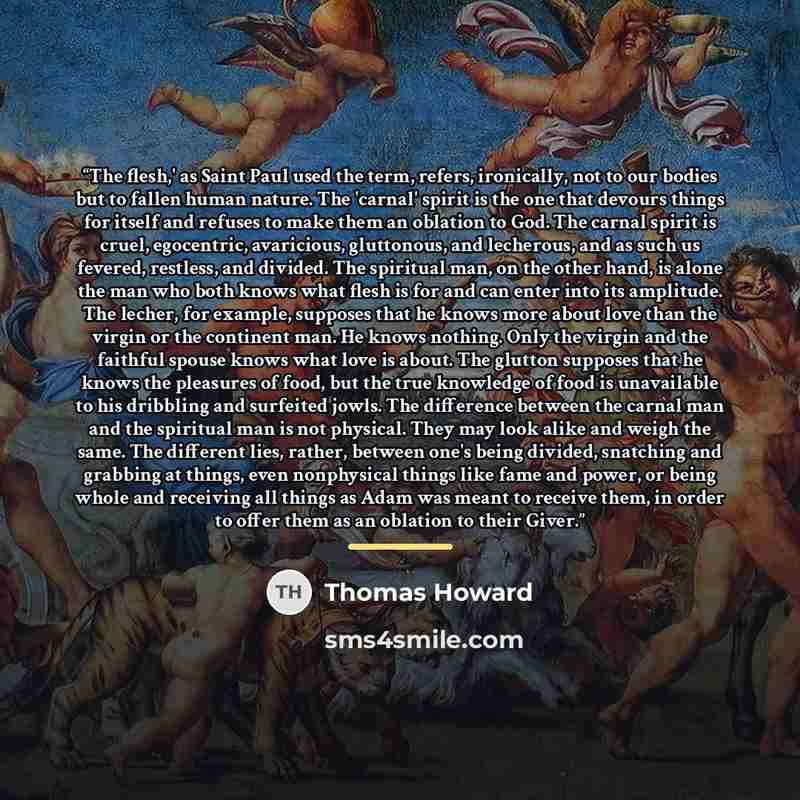
““The flesh,' as Saint Paul used the term, refers, ironically, not to our bodies but to fallen human nature. The 'carnal' spirit is the one that devours things for itself and refuses to make them an oblation to God. The carnal spirit is cruel, egocentric, avaricious, gluttonous, and lecherous, and as such us fevered, restless, and divided. The spiritual man, on the other hand, is alone the man who both knows what flesh is for and can enter into its amplitude. The lecher, for example, supposes that he knows more about love than the virgin or the continent man. He knows nothing. Only the virgin and the faithful spouse knows what love is about. The glutton supposes that he knows the pleasures of food, but the true knowledge of food is unavailable to his dribbling and surfeited jowls. The difference between the carnal man and the spiritual man is not physical. They may look alike and weigh the same. The different lies, rather, between one's being divided, snatching and grabbing at things, even nonphysical things like fame and power, or being whole and receiving all things as Adam was meant to receive them, in order to offer them as an oblation to their Giver.””
About This Quote
Source Treatise: Christian Spirituality, 20th century, unknown source
The quote contrasts the selfish, indulgent nature of the carnal spirit with the selfless, whole-hearted spiritual man who offers all to God.
In simple terms: Carnal self‑indulgence vs. spiritual self‑sacrifice
Key Takeaway
Seek wholeness, not self‑service
Themes
spirituality
human nature
self‑control
Mood
reflective
serious
Type
philosophical
inspirational
When to use this quote
- personal growth
- religious practice
- ethical decision making
- relationship counseling
Key Concepts
carnal vs. spiritual
oblation
division
Questions to Reflect On
- How do you distinguish self‑interest from genuine self‑sacrifice?
- What practices help transform carnal impulses into spiritual offerings?
A Different Perspective
Spiritual wholeness may be idealized and hard to achieve in daily life