Angels Gender Quote by Richard Dyer
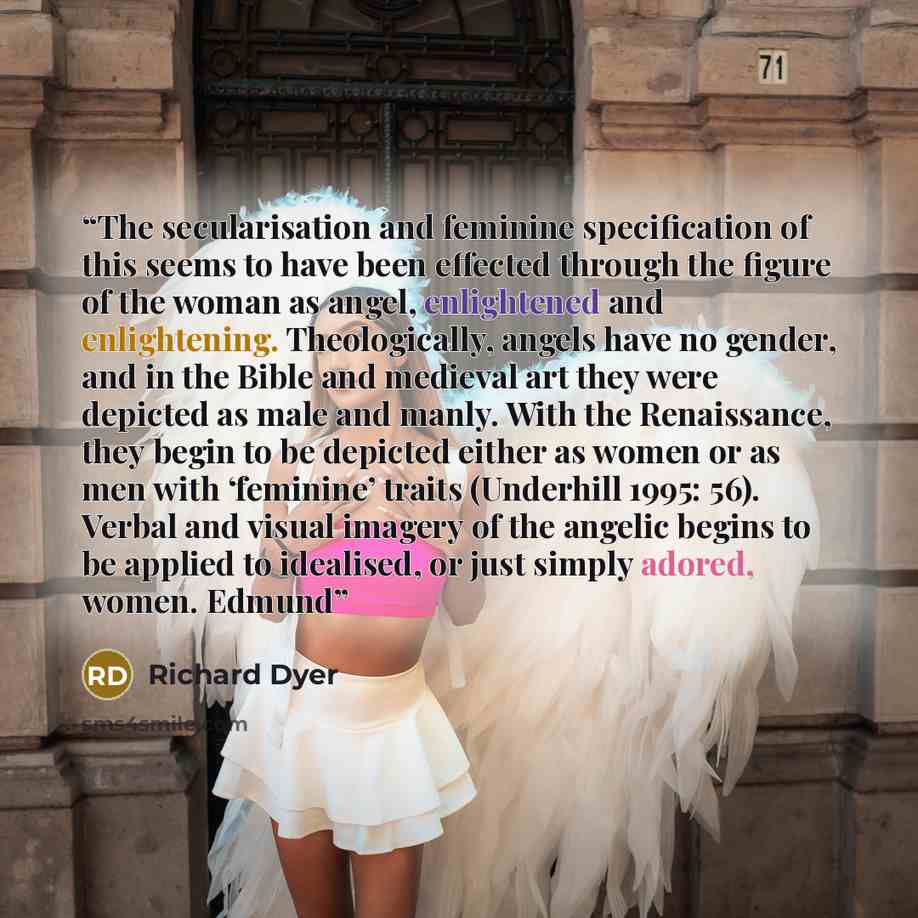
““The secularisation and feminine specification of this seems to have been effected through the figure of the woman as angel, enlightened and enlightening. Theologically, angels have no gender, and in the Bible and medieval art they were depicted as male and manly. With the Renaissance, they begin to be depicted either as women or as men with ‘feminine’ traits (Underhill 1995: 56). Verbal and visual imagery of the angelic begins to be applied to idealised, or just simply adored, women. Edmund””
About This Quote
Source Book: The Queer Art of Cinema, Richard Dyer, 1993
The concept of angels shifted from genderless male figures to feminine representations, linking women with idealized, enlightened qualities.
In simple terms: Angels became gendered, often portrayed as women, reflecting cultural changes.
Key Takeaway
Recognize how gendered imagery shapes perception of women.
Themes
gender
representation
culture
religion
art
Mood
critical
analytical
Type
theoretical
critical
scholarly
When to use this quote
- film analysis
- art criticism
- gender studies
- cultural history
Key Concepts
feminist theory
iconography
media studies
Questions to Reflect On
- How does gendered symbolism affect real women?
- What alternatives exist for representing women?
A Different Perspective
The shift may oversimplify women's identities to idealized symbols.