Brain surgery Quote by Paul Kalanithi
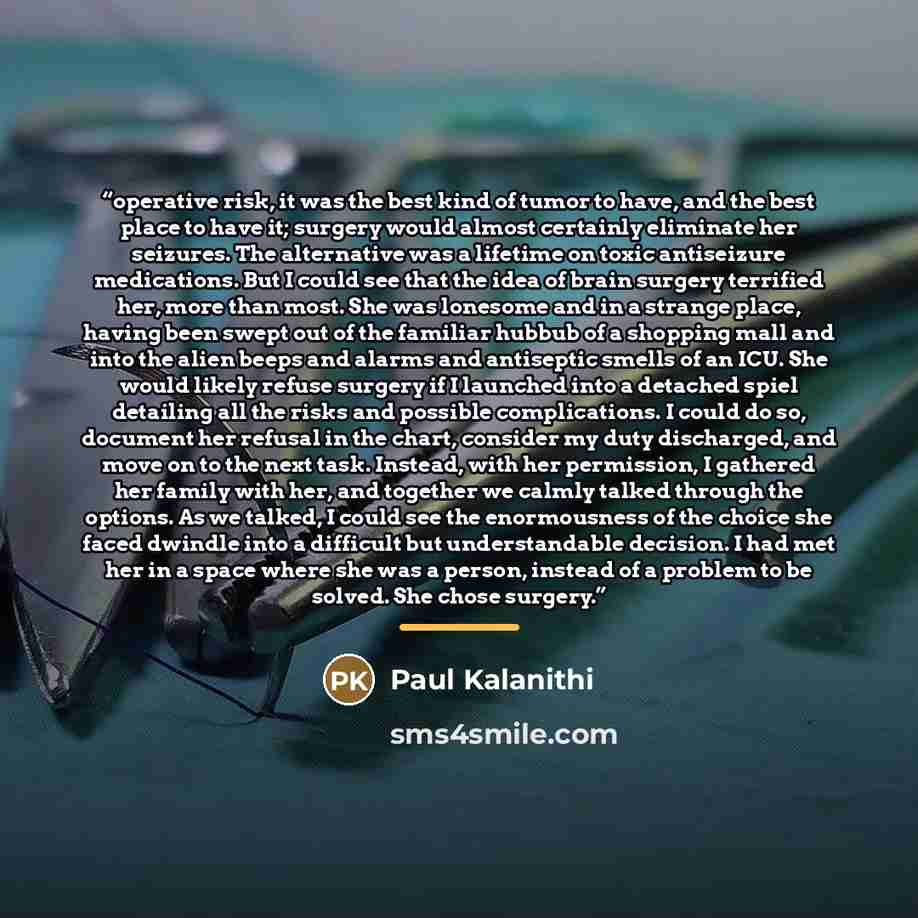
““operative risk, it was the best kind of tumor to have, and the best place to have it; surgery would almost certainly eliminate her seizures. The alternative was a lifetime on toxic antiseizure medications. But I could see that the idea of brain surgery terrified her, more than most. She was lonesome and in a strange place, having been swept out of the familiar hubbub of a shopping mall and into the alien beeps and alarms and antiseptic smells of an ICU. She would likely refuse surgery if I launched into a detached spiel detailing all the risks and possible complications. I could do so, document her refusal in the chart, consider my duty discharged, and move on to the next task. Instead, with her permission, I gathered her family with her, and together we calmly talked through the options. As we talked, I could see the enormousness of the choice she faced dwindle into a difficult but understandable decision. I had met her in a space where she was a person, instead of a problem to be solved. She chose surgery.””
About This Quote
The physician chooses shared decision‑making, turning a complex medical choice into a personal, understandable option, empowering the patient to act.
In simple terms: Humanizing medical communication.
Key Takeaway
Empathy transforms consent.
Themes
patient autonomy
shared decision‑making
clinical empathy
risk communication
ethical care
Mood
hopeful
compassionate
Type
narrative
clinical anecdote
When to use this quote
- explaining treatment options
- addressing patient fear
- family involvement in care
- ICU decision contexts
Key Concepts
informed consent
doctor‑patient relationship
clinical ethics
Practical Applications
- shared decision‑making workshops
- communication training for clinicians
Questions to Reflect On
- How does empathy affect patient outcomes?
- What barriers exist to shared decision‑making?







![“'Why do you think it is...', I asked Dr. Cook ... 'that brain surgery, above all else-even rocket science-gets singled out as the most challenging of human feats, the one demanding the utmost of human intelligence?' [Dr. Cook answered,] 'No margin for error.'” quote by Michael J. Fox](https://sms4smile.com/quotes/img-quotes/2e7/michael-j-fox-1653_brain_why-do-you-think-it-is-i-asked-dr-cook-t_431339.jpg)