2000 Quote by Marcelo Figueras
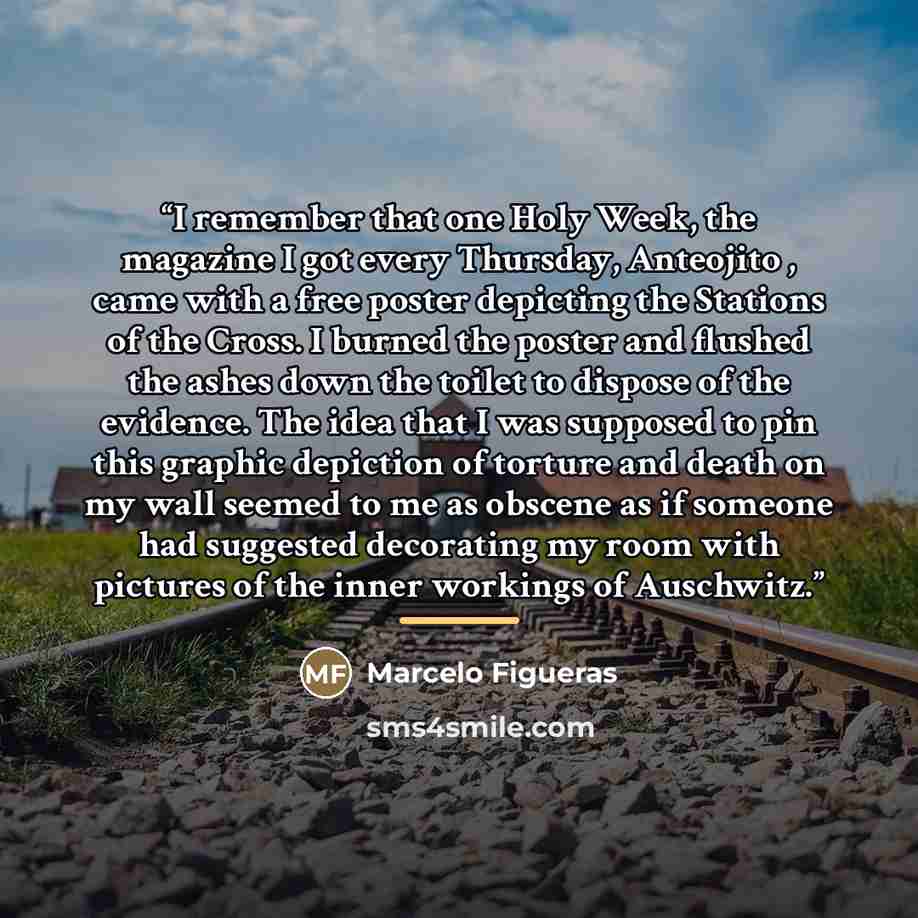
““I remember that one Holy Week, the magazine I got every Thursday, Anteojito , came with a free poster depicting the Stations of the Cross. I burned the poster and flushed the ashes down the toilet to dispose of the evidence. The idea that I was supposed to pin this graphic depiction of torture and death on my wall seemed to me as obscene as if someone had suggested decorating my room with pictures of the inner workings of Auschwitz.””
About This Quote
The narrator rejects glorifying religious imagery that depicts suffering, equating it to displaying horrific historical atrocities, and chooses to destroy it as a protest against commodification of pain.
In simple terms: Rejecting sacred symbols that sensationalize suffering.
Key Takeaway
Violent imagery can be dehumanizing when commercialized.
Themes
religion
memory
violence
censorship
art
Mood
defiant
disgusted
reflective
Type
personal anecdote
cultural critique
When to use this quote
- seeing a religious poster at home
- receiving a magazine with graphic content
- feeling discomfort with sacred art
Key Concepts
symbolic representation
cultural trauma
personal agency
Practical Applications
- critique of religious commodification
- advocacy for respectful representation of trauma
Questions to Reflect On
- Does displaying graphic religious art educate or exploit?
- How should societies handle sacred symbols that depict violence?