Mental health Quote by Julian Boon
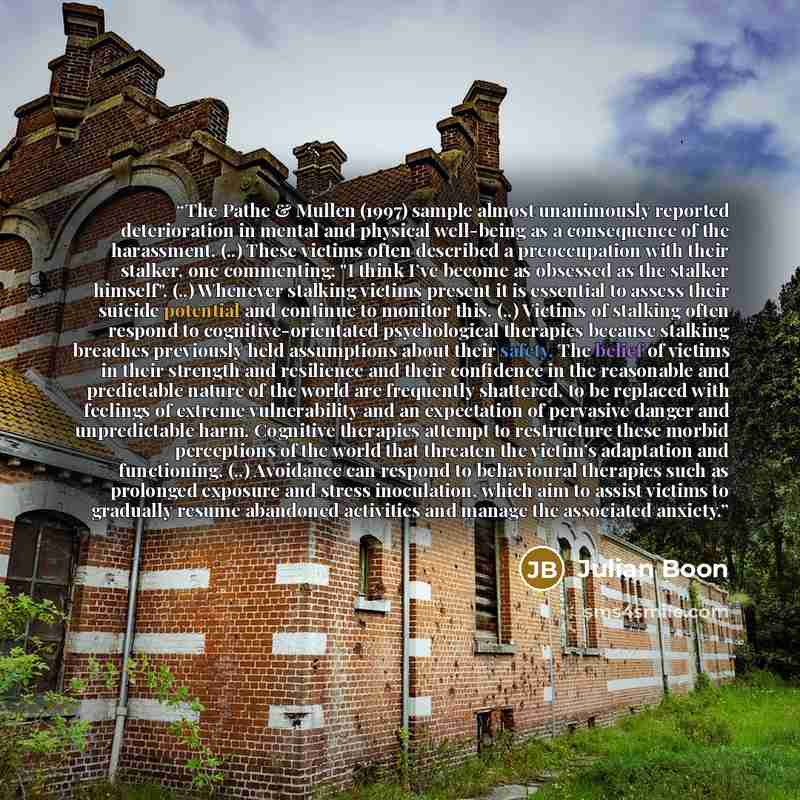
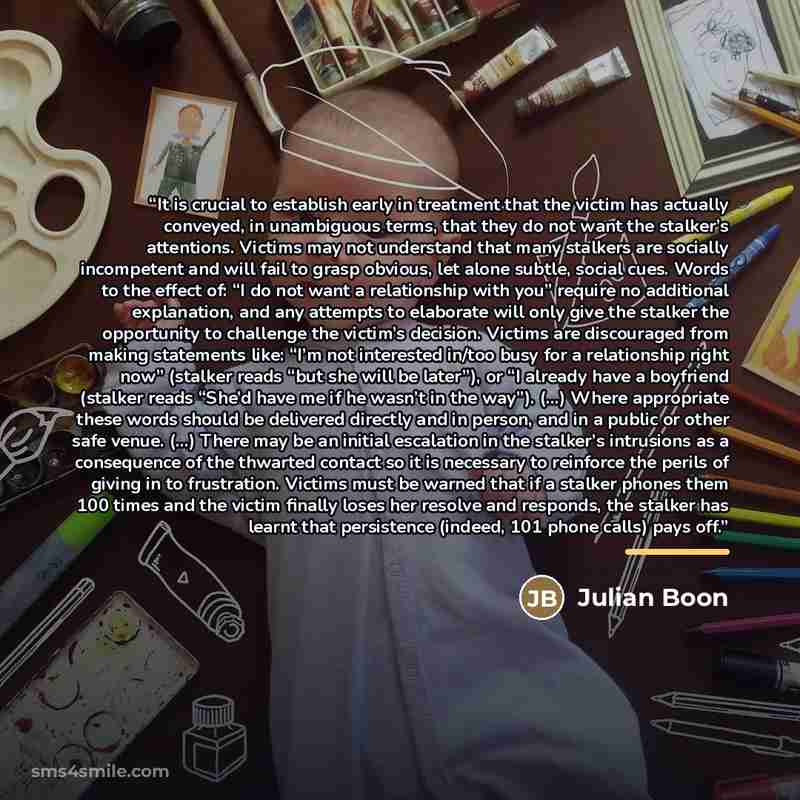
““The Pathe & Mullen (1997) sample almost unanimously reported deterioration in mental and physical well-being as a consequence of the harassment. (..) These victims often described a preoccupation with their stalker, one commenting: "I think I’ve become as obsessed as the stalker himself". (..) Whenever stalking victims present it is essential to assess their suicide potential and continue to monitor this. (..) Victims of stalking often respond to cognitive-orientated psychological therapies because stalking breaches previously held assumptions about their safety. The belief of victims in their strength and resilience and their confidence in the reasonable and predictable nature of the world are frequently shattered, to be replaced with feelings of extreme vulnerability and an expectation of pervasive danger and unpredictable harm. Cognitive therapies attempt to restructure these morbid perceptions of the world that threaten the victim’s adaptation and functioning. (..) Avoidance can respond to behavioural therapies such as prolonged exposure and stress inoculation, which aim to assist victims to gradually resume abandoned activities and manage the associated anxiety.””
About This Quote
Source Research article: “Stalking Victim Mental Health,” Journal of Clinical Psychology, 1997
Stalking harms victims’ mental and physical health, creating obsession, vulnerability, and shattered safety beliefs; therapies aim to rebuild resilience and reduce avoidance.
In simple terms: Stalking damages health and sense of safety; therapy helps recovery.
Key Takeaway
Provide trauma-informed care and monitor suicide risk.
Themes
trauma
mental health
victim support
therapy
Mood
empathetic
serious
Type
clinical
educational
When to use this quote
- clinical practice
- support groups
- policy development
- public awareness
Key Concepts
cognitive restructuring
behavioral exposure
resilience building
risk assessment
Questions to Reflect On
- How can clinicians balance safety and autonomy?
- What long‑term supports aid recovery?
A Different Perspective
Therapies may not fully restore trust; ongoing support needed.

![“There's three sort of fundamental things that happen when someone's suffering from these issues [post-traumatic stress disorder ]. First, they get intrusive thoughts.The second issue is you become startled quickly.And the third key point is it's avoidance.Those are the three sort of pillar…” quote by Jon Soltz](https://sms4smile.com/quotes/img-quotes/74e/jon-soltz-41151_avoidance_there-s-three-sort-of-fundamental-things_1907828.jpg)