Believe in god Quote by John Irving
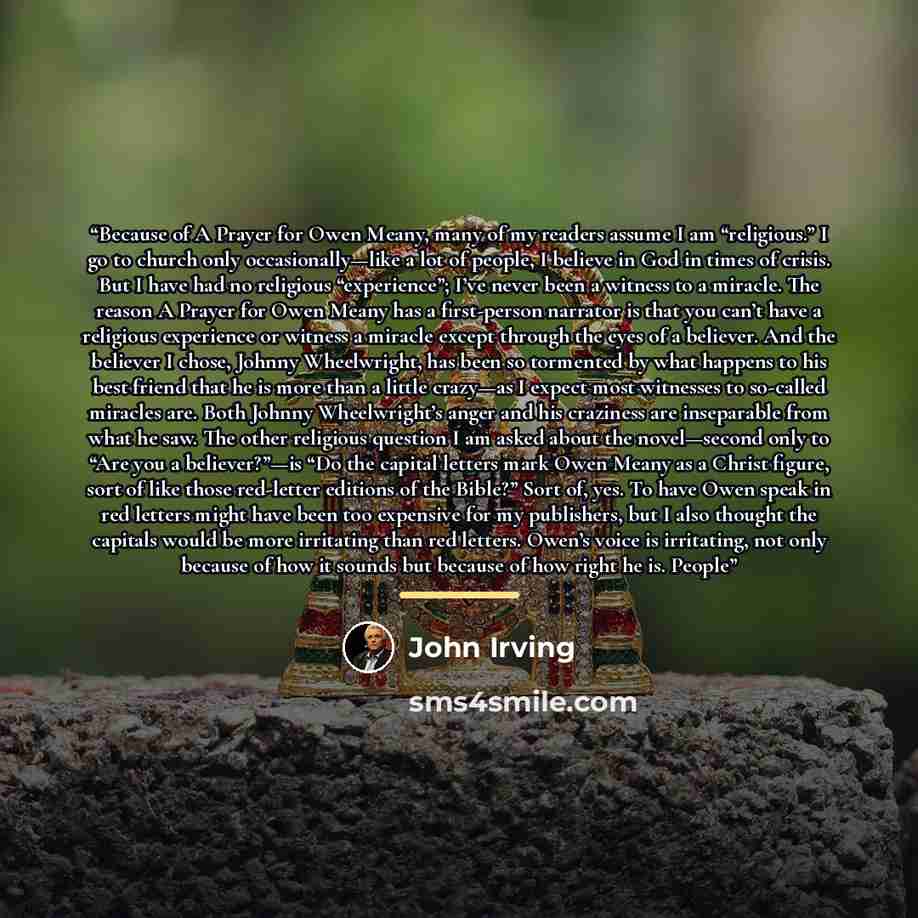
““Because of A Prayer for Owen Meany, many of my readers assume I am “religious.” I go to church only occasionally—like a lot of people, I believe in God in times of crisis. But I have had no religious “experience”; I’ve never been a witness to a miracle. The reason A Prayer for Owen Meany has a first-person narrator is that you can’t have a religious experience or witness a miracle except through the eyes of a believer. And the believer I chose, Johnny Wheelwright, has been so tormented by what happens to his best friend that he is more than a little crazy—as I expect most witnesses to so-called miracles are. Both Johnny Wheelwright’s anger and his craziness are inseparable from what he saw. The other religious question I am asked about the novel—second only to “Are you a believer?”—is “Do the capital letters mark Owen Meany as a Christ figure, sort of like those red-letter editions of the Bible?” Sort of, yes. To have Owen speak in red letters might have been too expensive for my publishers, but I also thought the capitals would be more irritating than red letters. Owen’s voice is irritating, not only because of how it sounds but because of how right he is. People””
About This Quote
The author explains that his novel’s narrator, a believer traumatized by his friend’s fate, provides a lens for depicting religious experience, while capitalizing Owen’s name hints at a Christ‑like symbolism without overt visual cues.
In simple terms: Narrative perspective shapes religious meaning
Key Takeaway
Belief and trauma intertwine
Themes
faith
narrative voice
symbolism
trauma
miracle perception
Mood
reflective
introspective
skeptical
Type
explanatory
defensive
analytical
When to use this quote
- discussing author intent at a literary panel
- analyzing religious symbolism in a book club
- teaching narrative techniques in a writing class
- responding to reader assumptions about the author’s faith
Key Concepts
first‑person narration
capitalization as visual metaphor
authorial intent
character psychology
Practical Applications
- literary criticism
- creative writing workshops
Questions to Reflect On
- How does a narrator’s personal crisis affect the portrayal of faith?
- What impact does subtle visual emphasis (like capitals) have on reader interpretation?
![“JUST BECAUSE A BUNCH OF ATHEISTS ARE BETTER WRITERS THAN THE GUYS WHO WROTE THE BIBLE DOESN'T NECESSARILY MAKE THEM RIGHT!" [Owen Meany] said crossly. "LOOK AT THOSE WEIRDO TV MIRACLE-WORKERS--THEY'RE TRYING TO GET PEOPLE TO BELIEVE IN MAGIC! BUT THE REAL MIRACLES AREN'T ANYTHING YOU CAN…” quote by John Irving](https://sms4smile.com/quotes/img-quotes/70e/john-irving-337_atheists_just-because-a-bunch-of-atheists-are-bet_31804.jpg)