Happiness Quote by James Thomson
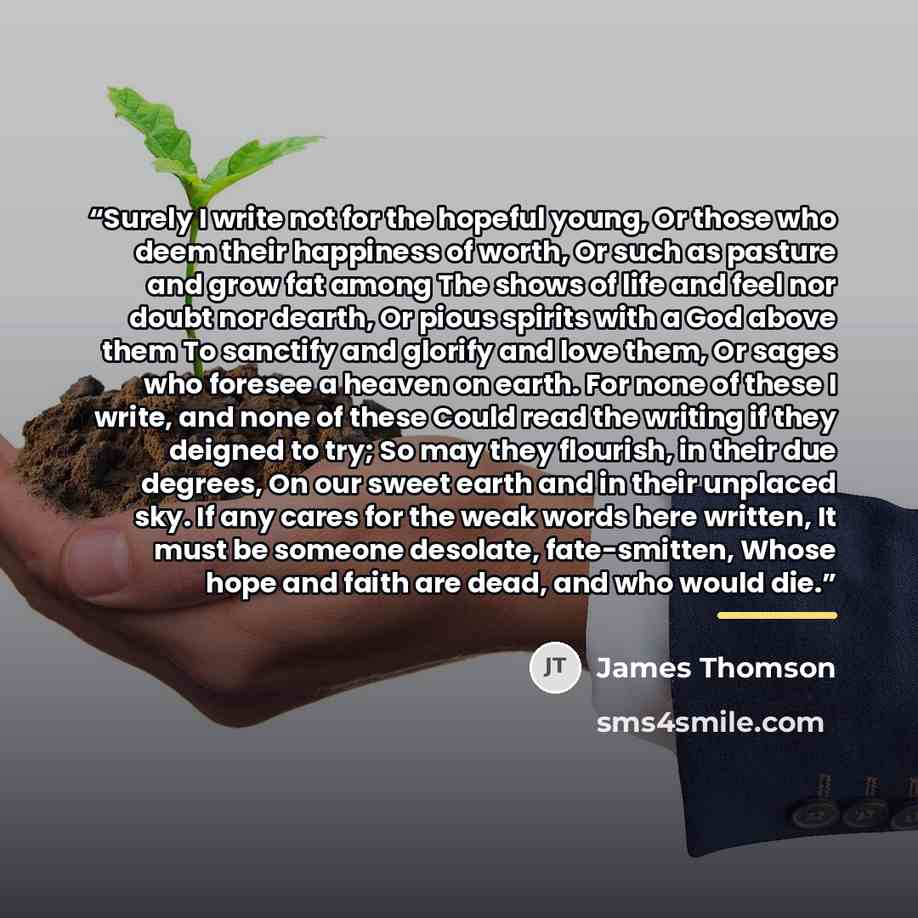
““Surely I write not for the hopeful young, Or those who deem their happiness of worth, Or such as pasture and grow fat among The shows of life and feel nor doubt nor dearth, Or pious spirits with a God above them To sanctify and glorify and love them, Or sages who foresee a heaven on earth. For none of these I write, and none of these Could read the writing if they deigned to try; So may they flourish, in their due degrees, On our sweet earth and in their unplaced sky. If any cares for the weak words here written, It must be someone desolate, fate-smitten, Whose hope and faith are dead, and who would die.””
About This Quote
The poet declares he writes for the despondent, the outcast, and the dead‑hearted, not for the hopeful or the pious, implying that true art speaks to those who have lost hope.
In simple terms: He writes for the broken‑hearted, not the hopeful.
Key Takeaway
Art is for the desolate, not the optimistic.
Themes
existentialism
loneliness
artistic purpose
spiritual alienation
Mood
melancholic
somber
Type
philosophical
lament
When to use this quote
- a grieving friend reading poetry
- a prison inmate finding solace
- a therapist using literature with depressed patients
Key Concepts
nihilism
social marginalization
Practical Applications
- target writing to audiences feeling alienated
- use bleak tone to validate suffering
Questions to Reflect On
- What does it mean for art to serve only the broken?
- Can hope coexist with despair in creative work?
A Different Perspective
It may alienate readers seeking hope, limiting broader impact.