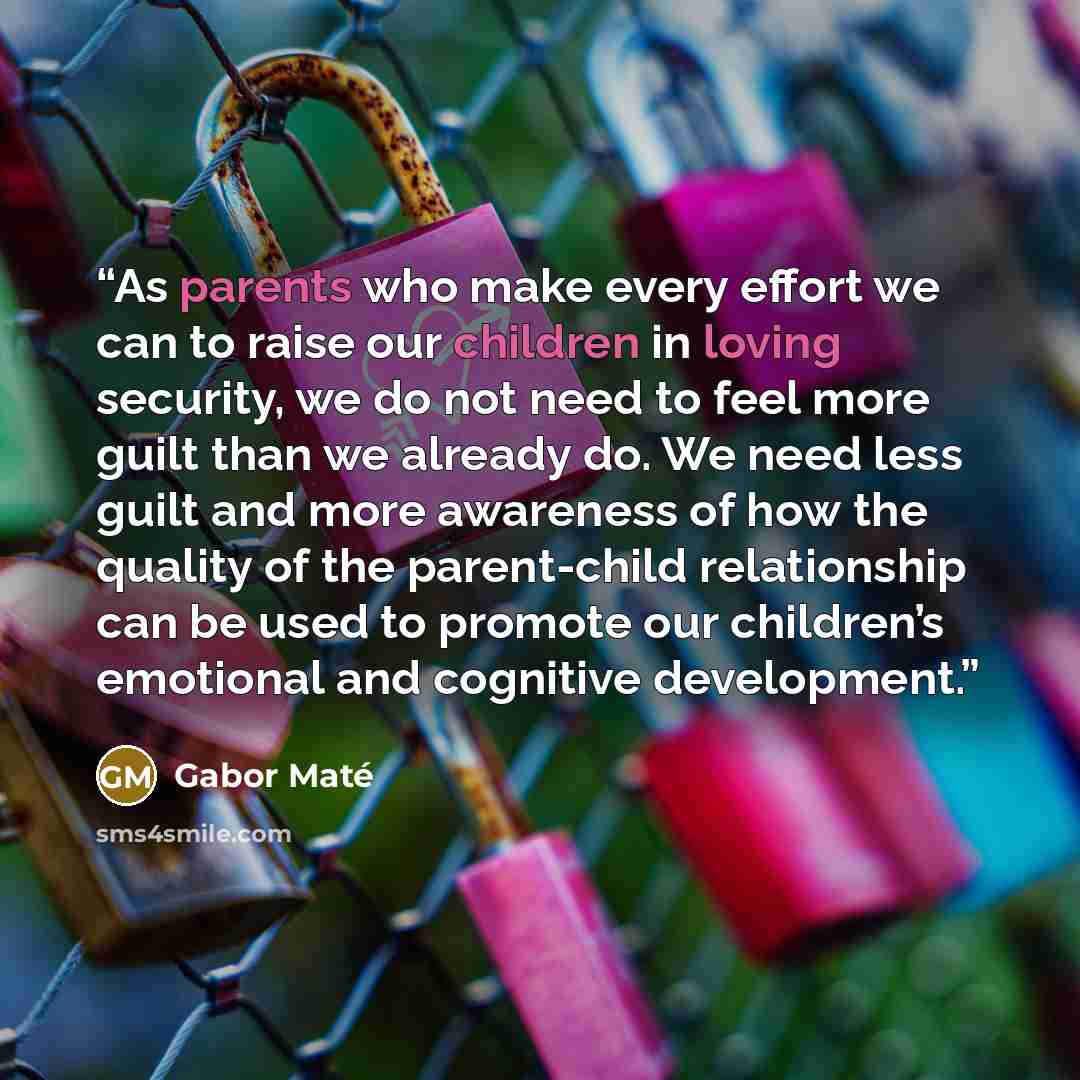
Child Quote by Gabor Maté

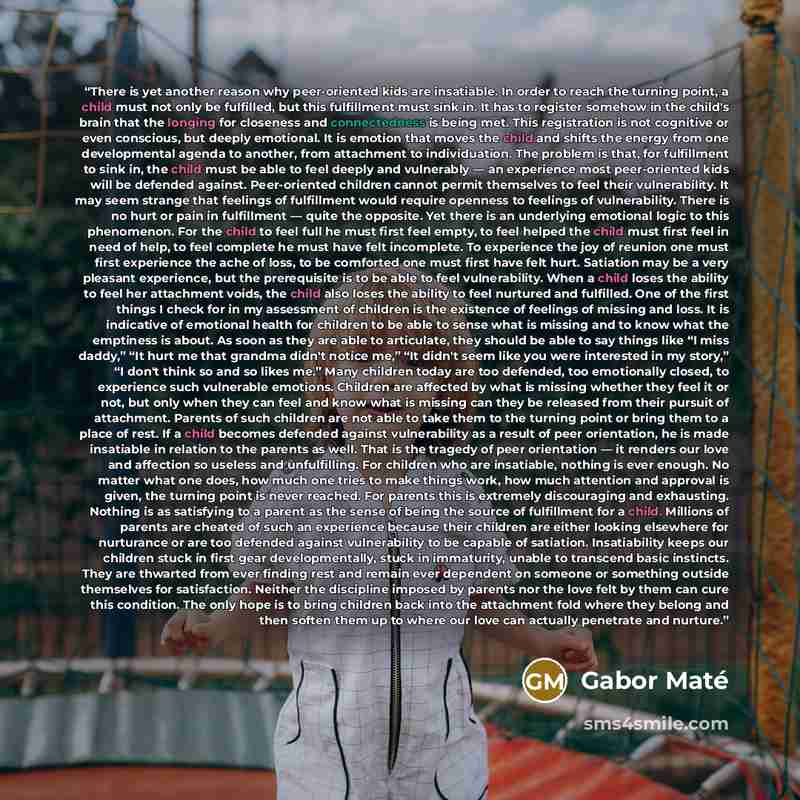
““The primary culprit is assumed to be peer rejection: shunning, exclusion, shaming, taunting, mocking, bullying. The conclusion reached by some experts is that peer acceptance is absolutely necessary for a child's emotional health and well-being, and that there is nothing worse than not being liked by peers. It is assumed that peer rejection is an automatic sentence to lifelong self-doubt. Many parents today live in fear of their children's not having friends, not being esteemed by their peers. This way of thinking fails to consider two fundamental questions: What renders a child so vulnerable in the first place? And why is this vulnerability increasing? It is absolutely true that children snub, ignore, shun, shame, taunt, and mock. Children have always done these things when not sufficiently supervised by the adults in charge. But it is attachment, not the insensitive behavior or language of peers, that creates vulnerability. The current focus on the impact of peer rejection and peer acceptance has completely overlooked the role of attachment. If the child is attached primarily to the parents, it is parental acceptance that is vital to emotional health and well-being, and not being liked by parents is the devastating blow to self-esteem. The capacity of children to be inhumane has probably not changed, but, as research shows, the wounding of our children by one another is increasing. If many kids are damaged these days by the insensitivity of their peers, it is not necessarily because children today are more cruel than in the past, but because peer orientation has made them more susceptible to one anothers taunts and emotional assaults.””
About This Quote
Children's emotional health depends more on secure parental attachment than on peer acceptance; peer rejection amplifies vulnerability but is not the root cause.
In simple terms: Parental love matters more than peer approval for kids.
Key Takeaway
Foster strong parent‑child bonds.
Themes
attachment
emotional health
peer dynamics
parenting
vulnerability
Mood
concerned
reflective
hopeful
Type
analytical
advisory
When to use this quote
- family counseling
- school environments
- parent‑child activities
- mental health programs
Key Concepts
attachment theory
social development
psychology
Questions to Reflect On
- What can parents do to strengthen attachment?
- How can schools support both peer and family relationships?
A Different Perspective
Overemphasis on peer acceptance can overlook deeper attachment issues.


![“I think the most important thing is being in healthy relationships. That might be a weird answer, but I think emotional health is a big contributor to physical health. I think [having] good romantic relationships, but even friendships and family, around you and having strong, supportive people…” quote by April Rose](https://sms4smile.com/quotes/img-quotes/ece/april-rose-38814_answers_i-think-the-most-important-thing-is-bein_579303.jpg)