Civilians Quote by Elliott Kay
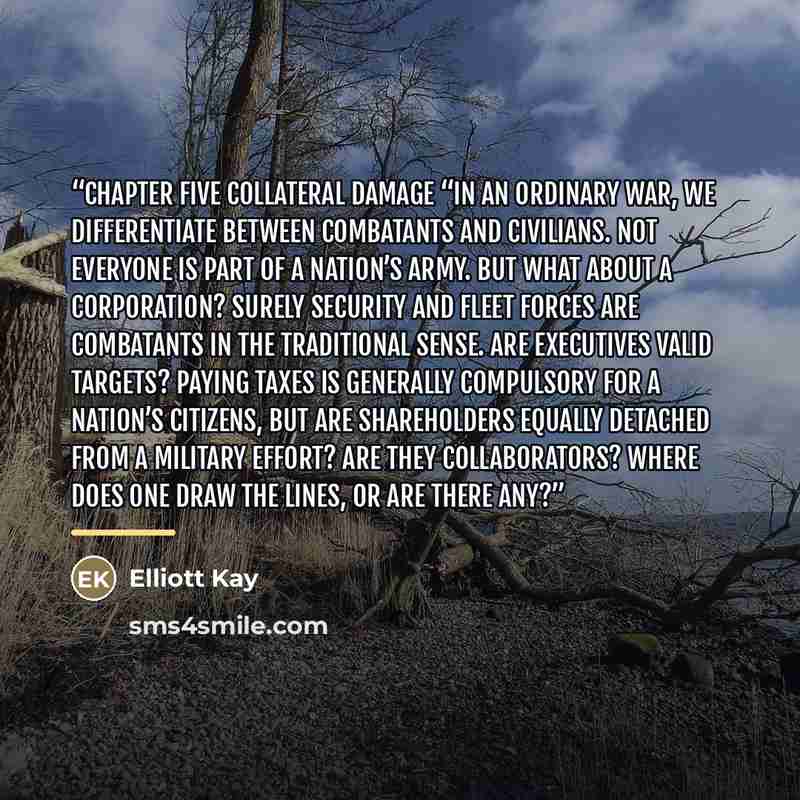
““CHAPTER FIVE Collateral Damage “In an ordinary war, we differentiate between combatants and civilians. Not everyone is part of a nation’s army. But what about a corporation? Surely security and fleet forces are combatants in the traditional sense. Are executives valid targets? Paying taxes is generally compulsory for a nation’s citizens, but are shareholders equally detached from a military effort? Are they collaborators? Where does one draw the lines, or are there any?””
About This Quote
Source Essay: “Collateral Damage” Chapter Five, date unknown
War’s definition of combatants blurs when corporations influence conflict, raising moral questions about targeting executives and shareholders.
In simple terms: Corporate influence complicates who is a combatant.
Key Takeaway
Consider ethical limits of targeting non‑military actors.
Themes
ethics
war
corporate power
responsibility
Mood
critical
thought‑provoking
Type
essay
analytical
When to use this quote
- policy making
- journalism
- activism
- investment
- military strategy
Key Concepts
political theory
law
economics
Questions to Reflect On
- Should shareholders be held accountable for corporate actions?
- How can law differentiate civilian from combatant roles?
A Different Perspective
The argument may oversimplify complex legal and strategic realities.




![“The other thing we did as government is to open gates for the civilians to leave that [ eastern part] area [in Aleppo], and at the same time for the humanitarian convoys and help to go through those gates inside that part of Aleppo, but the terrorists publicly refused any solution, so they wanted…” quote by Bashar al-Assad](https://sms4smile.com/quotes/img-quotes/6dc/bashar-al-assad-1027_areas_the-other-thing-we-did-as-government-is_37737.jpg)
![“[General Curtis] LeMay recognized that what he was doing would be thought immoral if his side has lost. But what makes it immoral if you lose and not immoral if you win?” quote by Robert McNamara](https://sms4smile.com/quotes/img-quotes/165/robert-mcnamara-12738_burned_general-curtis-lemay-recognized-that-wha_43443.jpg)