Antinatalism Quote by David Benatar
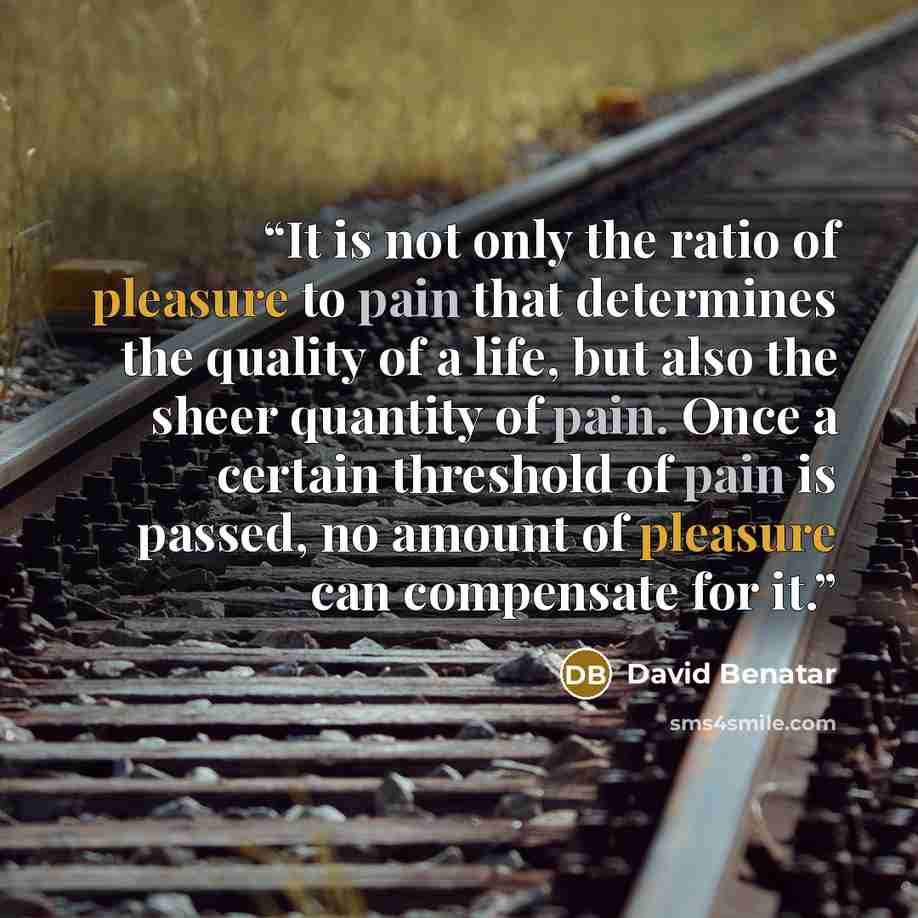
““There is a further (non-distributional) consideration that can affect an assessment of a life’s quality. Arguably, once a life reaches a certain threshold of badness (considering both the amount and the distribution of its badness), no quantity of good can outweigh it, because no amount of good could be worth that badness. It is just this assessment that Donald (‘Dax’) Cowart made of his own life—or at least of that part of his life following a gas explosion that burnt two-thirds of his body. He refused extremely painful, life-saving treatment, but the doctors ignored his wishes and treated him nonetheless. His life was saved, he achieved considerable success, and he reattained a satisfactory quality of life. Yet, he continued to maintain that these post-burn goods were not worth the costs of enduring the treatments to which he was subjected. No matter how much good followed his recovery, this could not outweigh, at least in his own assessment, the bad of the burns and treatment that he experienced.””
About This Quote
Source Book: The Human Predicament by David Benatar, 2017
A life with extreme suffering may be judged as having a quality that no amount of later good can compensate for, especially when the suffering is severe and pervasive.
In simple terms: Severe suffering can outweigh later benefits.
Key Takeaway
Recognize that some harms are irredeemable.
Themes
ethics
quality of life
pain
medical decision
making
Mood
reflective
somber
Type
philosophical
ethical
When to use this quote
- end‑of‑life care
- severe injury recovery
- patient autonomy
- medical ethics
Key Concepts
threshold theory
non‑distributional assessment
subjective valuation
Questions to Reflect On
- How do we balance past trauma against future wellbeing?
- When should medical intervention respect a patient’s assessment of suffering?
A Different Perspective
Even after recovery, the initial trauma may dominate personal assessment of life value.