Childhood-abuse Quote by Christine A. Courtois
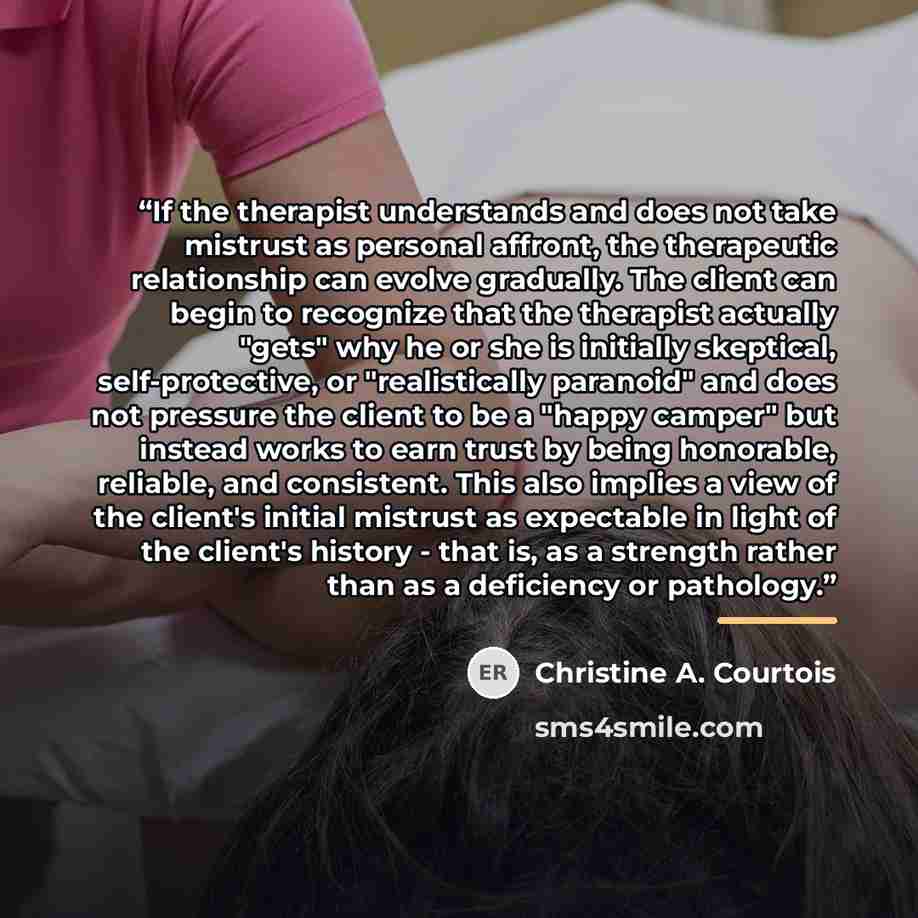
““If the therapist understands and does not take mistrust as personal affront, the therapeutic relationship can evolve gradually. The client can begin to recognize that the therapist actually "gets" why he or she is initially skeptical, self-protective, or "realistically paranoid" and does not pressure the client to be a "happy camper" but instead works to earn trust by being honorable, reliable, and consistent. This also implies a view of the client's initial mistrust as expectable in light of the client's history - that is, as a strength rather than as a deficiency or pathology.””
About This Quote
Source Book: Treating Complex PTSD, Christine A. Courtois, 2006
Therapist should view client mistrust as understandable, not personal, building trust through reliability and honor.
In simple terms: Mistrust is normal; earn trust with consistency.
Key Takeaway
Treat clients with empathy and steady reliability.
Themes
trust
therapy
empathy
Mood
cautious
hopeful
Type
clinical
educational
When to use this quote
- initial counseling sessions
- crisis intervention
- long‑term therapy
Key Concepts
attachment
boundaries
resilience
Questions to Reflect On
- How can you demonstrate reliability early?
- What signals show a client’s mistrust is protective?
A Different Perspective
If therapist misreads mistrust as hostility, alliance may break down.