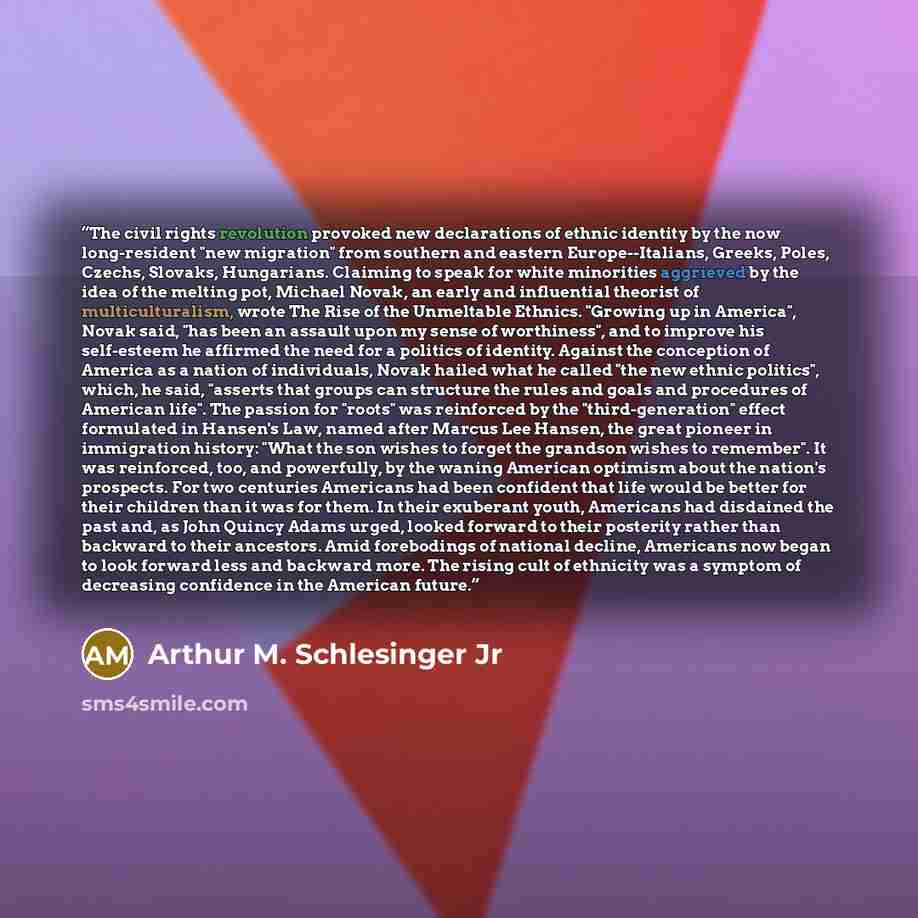
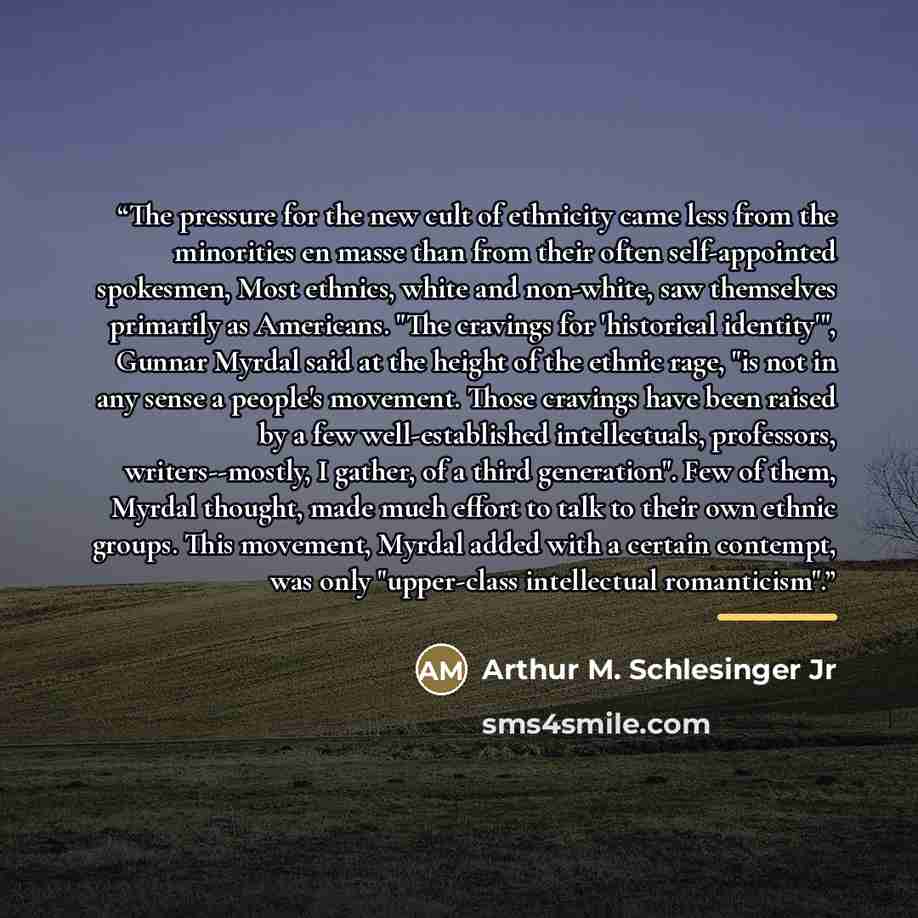
““The civil rights revolution provoked new declarations of ethnic identity by the now long-resident "new migration" from southern and eastern Europe--Italians, Greeks, Poles, Czechs, Slovaks, Hungarians. Claiming to speak for white minorities aggrieved by the idea of the melting pot, Michael Novak, an early and influential theorist of multiculturalism, wrote The Rise of the Unmeltable Ethnics. "Growing up in America", Novak said, "has been an assault upon my sense of worthiness", and to improve his self-esteem he affirmed the need for a politics of identity. Against the conception of America as a nation of individuals, Novak hailed what he called "the new ethnic politics", which, he said, "asserts that groups can structure the rules and goals and procedures of American life". The passion for "roots" was reinforced by the "third-generation" effect formulated in Hansen's Law, named after Marcus Lee Hansen, the great pioneer in immigration history: "What the son wishes to forget the grandson wishes to remember". It was reinforced, too, and powerfully, by the waning American optimism about the nation's prospects. For two centuries Americans had been confident that life would be better for their children than it was for them. In their exuberant youth, Americans had disdained the past and, as John Quincy Adams urged, looked forward to their posterity rather than backward to their ancestors. Amid forebodings of national decline, Americans now began to look forward less and backward more. The rising cult of ethnicity was a symptom of decreasing confidence in the American future.””






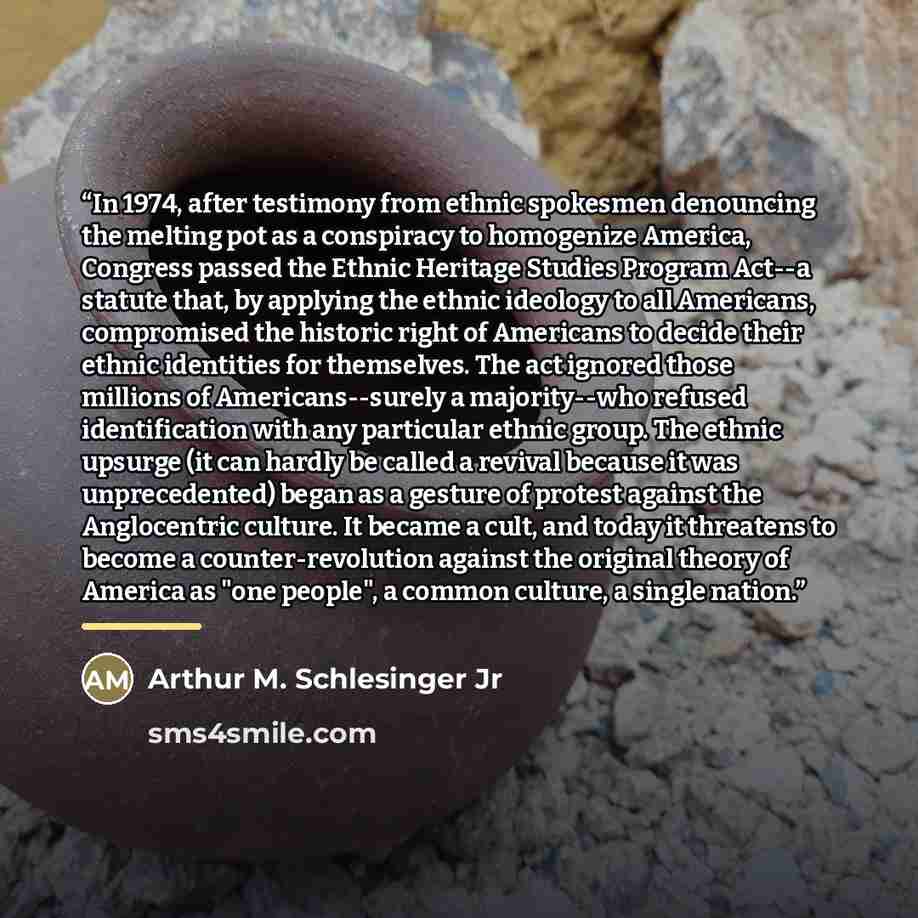

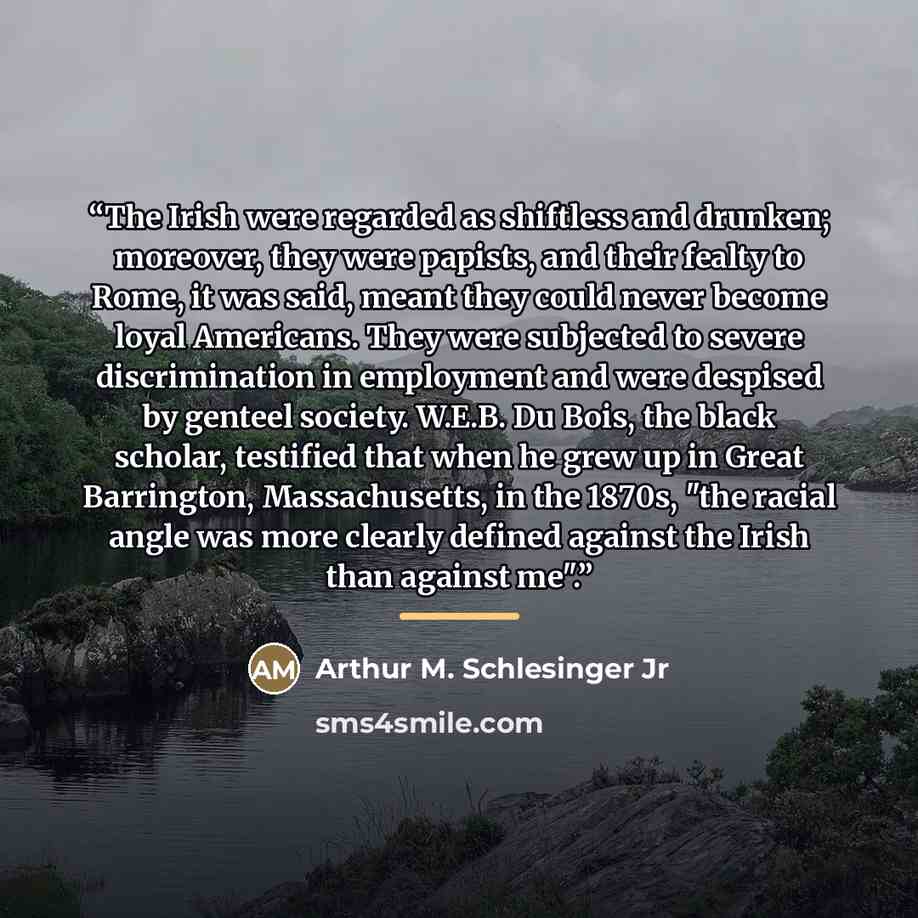
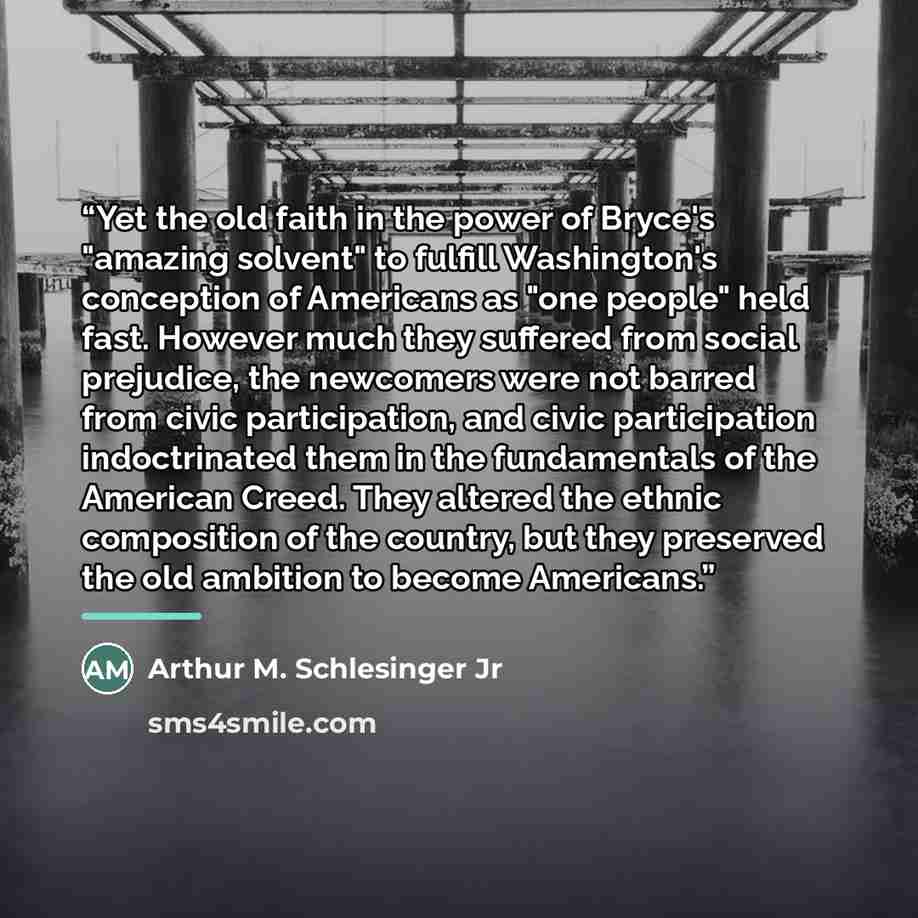
![“[P]ressed too far, the cult of ethnicity has had bad consequences too. The new ethnic gospel rejects the unifying vision of individuals from all nations melted into a new race. Its underlying philosophy is that America is not a nation of individuals at all but a nation of groups, that ethnicity is…” quote by Arthur M. Schlesinger Jr](https://sms4smile.com/quotes/img-quotes/bd0/arthur-m-schlesinger-jr-2-2017_american-history_p-ressed-too-far-the-cult-of-ethnicity-h_881791.jpg)
![“[I]s there not something basically hostile to the actor's art in the consanguinity principle? After all, what is acting but an exercise in dissimulation? The challenge to actors is to create characters on the stage; and these characters may be very different from what the actors are in real life…” quote by Arthur M. Schlesinger Jr](https://sms4smile.com/quotes/img-quotes/b7b/arthur-m-schlesinger-jr-2-2017_art_i-s-there-not-something-basically-hostil_1210985.jpg)