“Orange-Scented Rice SERVES 4 … Rice,—what will this sister of mine do with rice? But my father hath made her mistress of the feast, and she lays it on. THE WINTER’S TALE, 4.3 COSTLY PERFUME INGREDIENTS such as ambergris and musk,… — Francine Segan Copy Share Image
“White potatoes, although introduced into England during Shakespeare’s lifetime, were not commonly eaten until late in the eighteenth century. White potatoes originated from South… — Francine Segan Copy Share Image
“Children and fried food; the more you make, the better they come out.” — Francine Segan Copy Share Image
“Elizabethan cookbooks included not only carving instructions, but the proper terminology for each type of meat such as “breake that deer, leach that brawn,… — Francine Segan Copy Share Image
“Renaissance Rice Balls SERVES 10 (APPROXIMATELY 36 RICE BALLS) RICE BALLS like these, today known as “arancine,” or little oranges, are still made in… — Francine Segan Copy Share Image
“Romans introduced the practice of gelding to England, changing chickens into tender, plump capons. In The Castle of Health, William Elyot wrote, “The capon… — Francine Segan Copy Share Image
“PEASE PORRIDGE in the pot, nine days old” fairly well summarizes the technique of stew preparation in Shakespeare’s day. A thick soup would have… — Francine Segan Copy Share Image
“The Elizabethans used many more herbs than we do today, including those rarely seen in modern kitchens, such as hyssop, pennyroyal, tansy, and rue.… — Francine Segan Copy Share Image
“Here on this grass-plot, in this very place, To come and sport: her peacocks fly amain … THE TEMPEST, 4.1 Peacock, long a symbol of… — Francine Segan Copy Share Image
“Cauliflower Chowder SERVES 4 TO 6 VERJUICE, THE JUICE of unripe grapes now available in most gourmet grocers, adds a lovely touch to this… — Francine Segan Copy Share Image
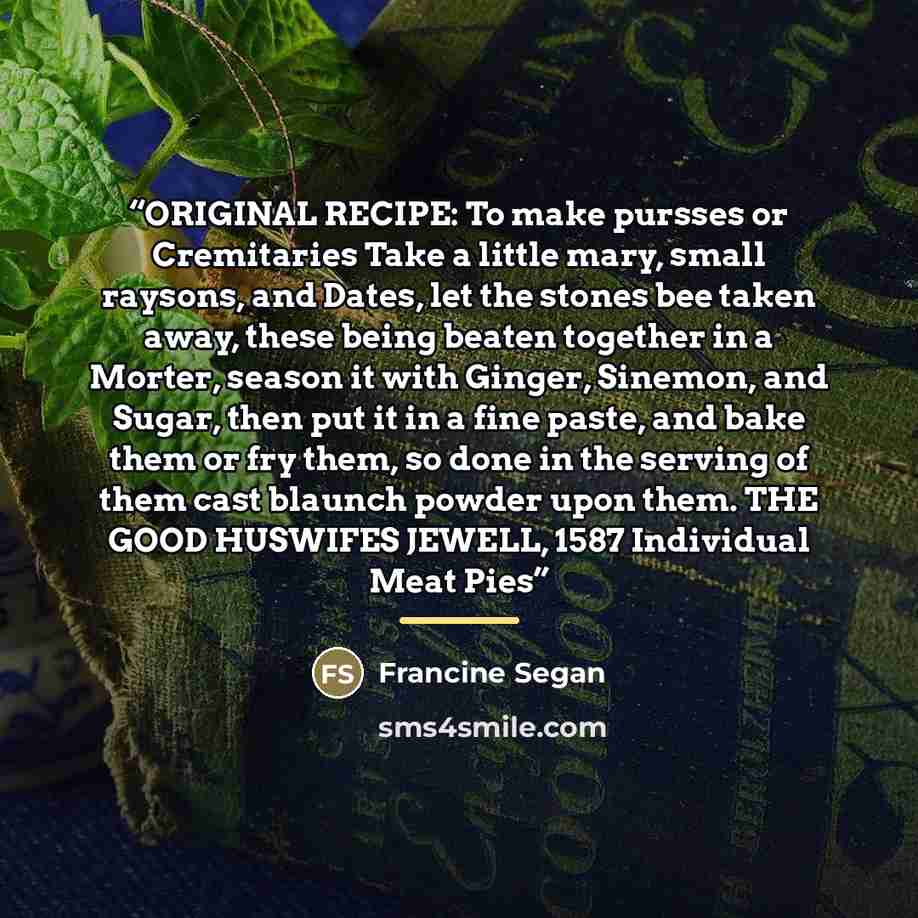
“ORIGINAL RECIPE: To make pursses or Cremitaries Take a little mary, small raysons, and Dates, let the stones bee taken away, these being beaten… — Francine Segan Copy Share Image
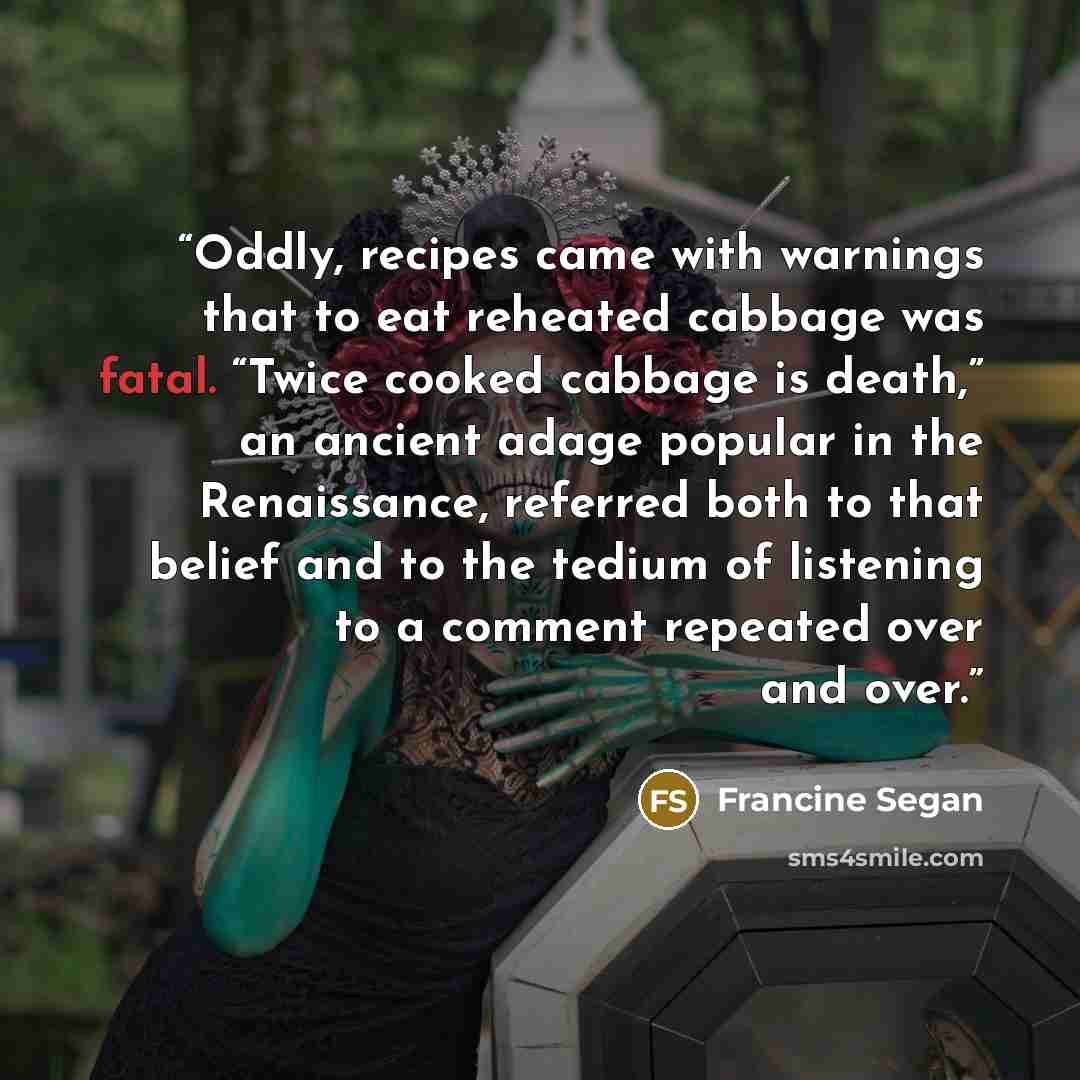
“Oddly, recipes came with warnings that to eat reheated cabbage was fatal. “Twice cooked cabbage is death,” an ancient adage popular in the Renaissance,… — Francine Segan Copy Share Image