I don't think you can have an authentic connection when one person is diagnosing the other. — Marshall B. Rosenberg Copy Share Image
NVC is a reminder; to focus our attention where we are most likely to get our needs met. — Marshall B. Rosenberg Copy Share Image
Thinking based on who deserves what blocks compassionate communication. — Marshall B. Rosenberg Copy Share Image
Judgments of others contribute to self-fulfilling prophecies. — Marshall B. Rosenberg Copy Share Image
The first step in healing is to put the focus on what's alive now, not what happened in the past. — Marshall B. Rosenberg Copy Share Image
What others do may be the stimulus of our feelings, but never the cause. — Marshall B. Rosenberg Copy Share Image
NVC gives us tools and understanding to create a more peaceful state of mind. — Marshall B. Rosenberg Copy Share Image
In NVC, no matter what words others may use to express themselves, we simply listen for their observations, feelings, needs, and requests. — Marshall B. Rosenberg Copy Share Image
NVC is interested in learning that is motivated by reverence for life, by a desire to learn skills, to contribute better to… — Marshall B. Rosenberg Copy Share Image
Most of us live in a Jackal world where we take turns using the other person as a waste basket for our… — Marshall B. Rosenberg Copy Share Image
We want to take action out of the desire to contribute to life rather than out of fear, guilt, shame, or obligation. — Marshall B. Rosenberg Copy Share Image
Our survival as a species depends on our ability to recognize that our well-being and the well-being of others are in fact… — Marshall B. Rosenberg Copy Share Image
Unless we as social change agents come from a certain spirituality, we're likely to create more harm than good. — Marshall B. Rosenberg Copy Share Image
In these long-standing conflicts, I find that most cases it gets resolved in about twenty minutes after each side can tell me… — Marshall B. Rosenberg Copy Share Image
Interpretations, criticisms, diagnoses, and judgments of others are actually alienated expressions of our unmet needs. — Marshall B. Rosenberg Copy Share Image
There are the two main reasons we don't get our needs met. First, we don't know how to express our needs to… — Marshall B. Rosenberg Copy Share Image
Public education for some time has been heavily focused on what curricula we believe will be helpful to students. Life-Enriching Education is… — Marshall B. Rosenberg Copy Share Image
I find that my cultural conditioning leads me to focus attention on places where I am unlikely to get what I want.… — Marshall B. Rosenberg Copy Share Image
The objective of Nonviolent Communication is not to change people and their behavior in order to get our way: it is to… — Marshall B. Rosenberg Copy Share Image
Clinical training in psychoanalysis has a deficit. It teaches how to sit and think about what a person is saying and how… — Marshall B. Rosenberg Copy Share Image
Nonviolent Communication is a way of keeping our consciousness tuned in moment by moment to that beauty within ourselves and others, and… — Marshall B. Rosenberg Copy Share Image
When we express our needs indirectly through the use of evaluations, interpretations, and images, others are likely to hear criticism. When people… — Marshall B. Rosenberg Copy Share Image
I try never to hear what another person thinks of me. I enjoy life a lot more when I spend as little… — Marshall B. Rosenberg Copy Share Image
Understanding the other persons' needs does not mean you have to give up on your own needs. — Marshall B. Rosenberg Copy Share Image
People heal from their pain when they have an authentic connection with another human being. — Marshall B. Rosenberg Copy Share Image
The key to fostering connection in the face of a 'no' is always hearing 'yes' to something else. — Marshall B. Rosenberg Copy Share Image
They have most likely said it because they have an unmet need. — Marshall B. Rosenberg Copy Share Image
Empathize, rather than put your "but" in the face of an angry person. — Marshall B. Rosenberg Copy Share Image
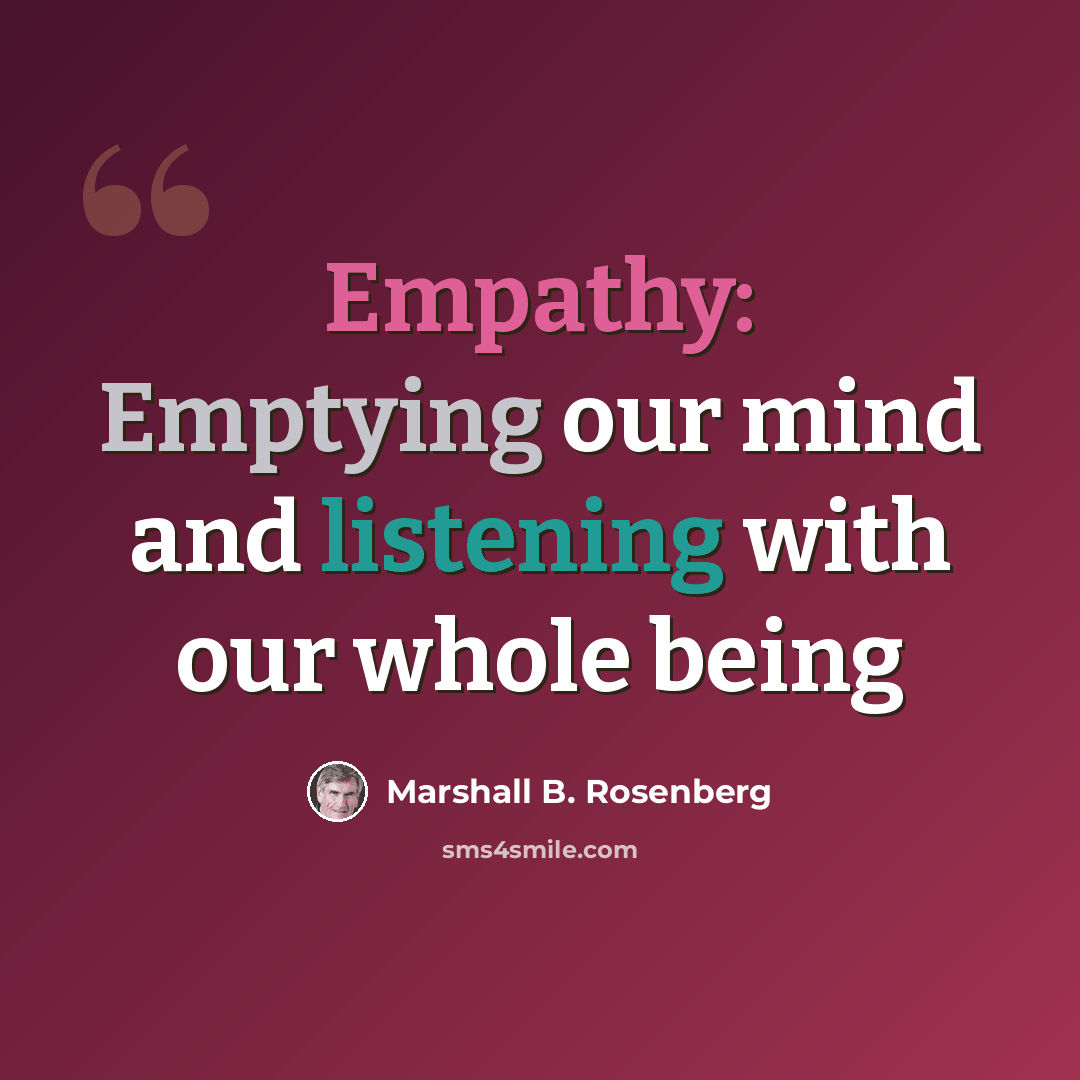
Empathy: Emptying our mind and listening with our whole being — Marshall B. Rosenberg Copy Share Image
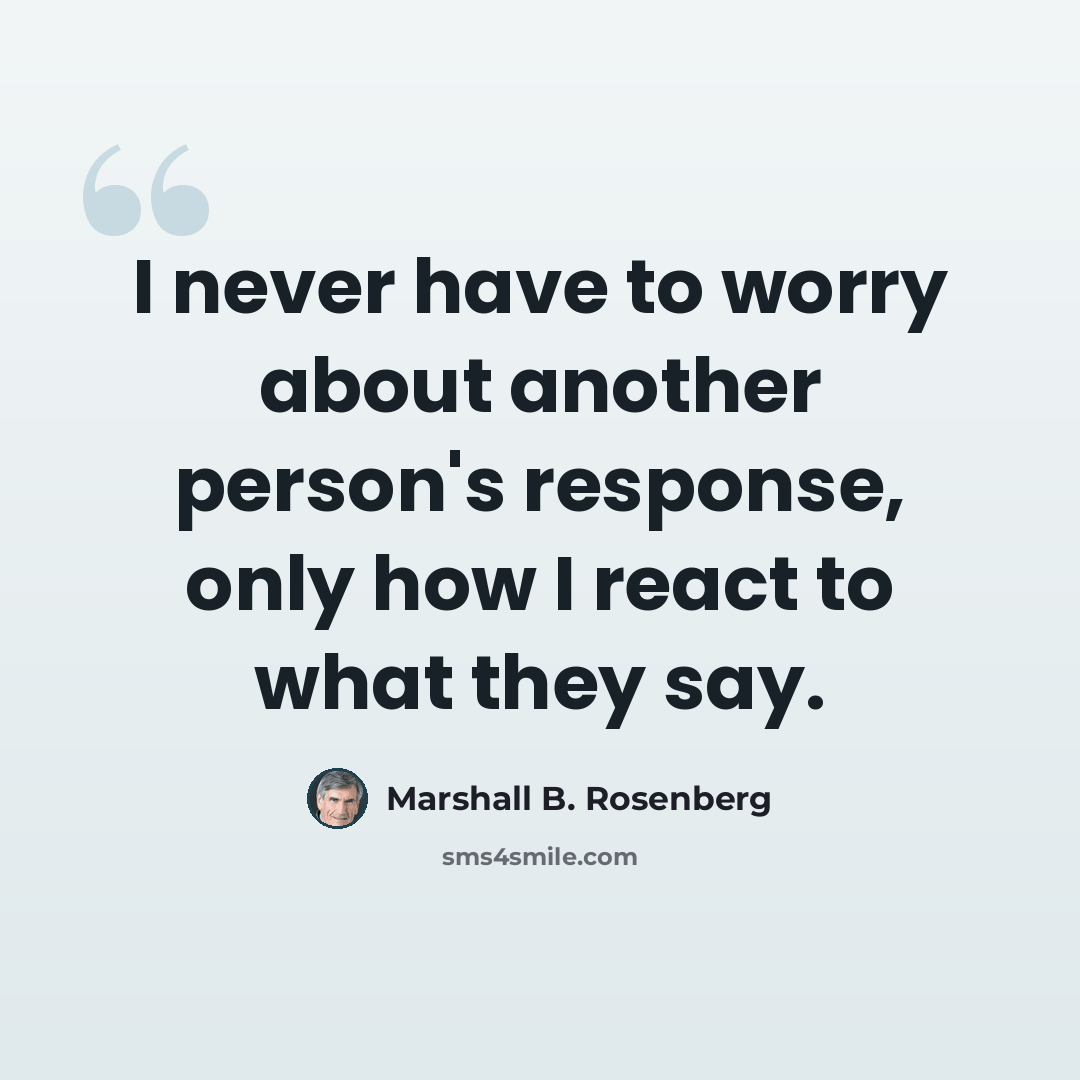
I never have to worry about another person's response, only how I react to what they say. — Marshall B. Rosenberg Copy Share Image
Understanding the other persons' needs does not mean you have to give up on your own needs. — Marshall B. Rosenberg Copy Share
NVC gives us tools and understanding to create a more peaceful state of mind. — Marshall B. Rosenberg Copy Share
What I want in my life is compassion a flow between myself and others based on mutual giving from the heart. — Marshall B. Rosenberg Copy Share
Analyses of others are actually expressions of our own needs and values — Marshall B. Rosenberg Copy Share
Staying with empathy we allow speakers to touch deeper levels of themselves. — Marshall B. Rosenberg Copy Share
Often, instead of offering empathy, we have a strong urge to give advice or reassurance and to explain our own position or feeling. — Marshall B. Rosenberg Copy Share
NVC is founded on language and communication skills that strengthen our ability to remain human, even under trying conditions. — Marshall B. Rosenberg Copy Share
If you think ahead to what to say next - like how to fix it or make the person feel better - BOOM! Off… — Marshall B. Rosenberg Copy Share
Two questions help us see why we are unlikely to get what we want by using punishment... The first question is: What do I… — Marshall B. Rosenberg Copy Share
Praise and reward create a system of extrinsic motivations for behavior. Children (and adults) end up taking action in order to receive the praise… — Marshall B. Rosenberg Copy Share
Everything we do is in service of our needs. When this one concept is applied to our view of others, we'll see that we… — Marshall B. Rosenberg Copy Share