As a movement (rather than a preference), the goal of…
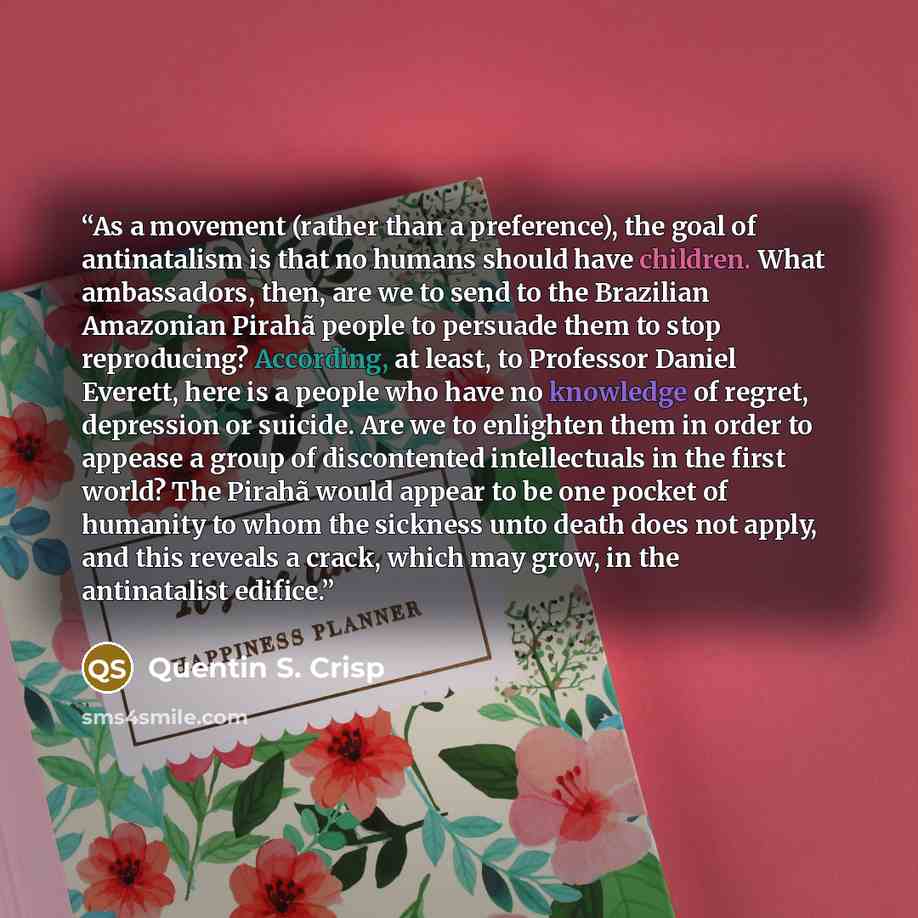
““As a movement (rather than a preference), the goal of antinatalism is that no humans should have children. What ambassadors, then, are we to send to the Brazilian Amazonian Pirahã people to persuade them to stop reproducing? According, at least, to Professor Daniel Everett, here is a people who have no knowledge of regret, depression or suicide. Are we to enlighten them in order to appease a group of discontented intellectuals in the first world? The Pirahã would appear to be one pocket of humanity to whom the sickness unto death does not apply, and this reveals a crack, which may grow, in the antinatalist edifice.””
About This Quote
This interpretation was drafted with AI assistance. It is one reading of the quote, not the author's own explanation.
The quote questions whether imposing antinatalist ideals on a culture without concepts of regret is ethical, highlighting a moral tension between ideological goals and cultural autonomy.
In simple terms: It challenges forcing anti‑birth ideas on people who don’t suffer from regret.
Key Takeaway
Respect cultural differences when discussing reproductive ethics.
Themes
ethics
culture
population
philosophy
Mood
thoughtful
critical
Type
philosophical
ethical
When to use this quote
- policy making
- anthropology research
- human rights advocacy
Key Concepts
antinatalism
cultural relativism
moral philosophy
Questions to Reflect On
- How should we balance universal moral claims with cultural specificity?
- What responsibilities do intellectuals have toward societies they study?